


Circumstances of disappearance
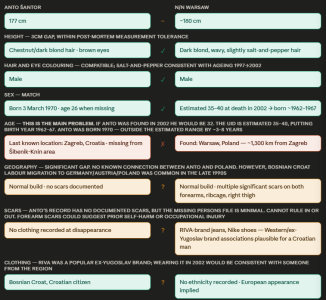
On or around 20 January 1997, Anto left home to travel to Drniš in the Šibenik-Knin County region of Dalmatia for work. At some point during that trip he passed through Zagreb, from where he called his father by phone. That call is the last confirmed contact with him. His whereabouts after that phone call are unknown. The case is registered with the Šibenik-Knin Police Administration, which is the county covering Drniš — suggesting he may have reached or been expected to reach that area.
Anto Šantor was born on 3 March 1970 in Pećnik, Bosnia and Herzegovina, to Petar and Jela (née Ančić) Šantor. The family were Bosnian Croats who relocated to Croatia, likely as war refugees around 1992, and settled in the small village of Cret Viljevski in Osijek-Baranja County, where the family home was at S. Radića 32. At the time of his disappearance Anto was 26 years old, married, and had at least one child.

 nestali.gov.hr
On or around 20 January 1997, Anto left home to travel to Drniš in the Šibenik-Knin County region of Dalmatia for work. At some point during that trip he passed through Zagreb, from where he called his father by phone. That call is the last confirmed contact with him. His whereabouts after that phone call are unknown. The case is registered with the Šibenik-Knin Police Administration, which is the county covering Drniš — suggesting he may have reached or been expected to reach that area.
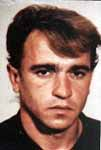
Anto Šantor was born on 3 March 1970 in Pećnik, Bosnia and Herzegovina, to Petar and Jela (née Ančić) Šantor. The family were Bosnian Croats who relocated to Croatia, likely as war refugees around 1992, and settled in the small village of Cret Viljevski in Osijek-Baranja County, where the family home was at S. Radića 32. At the time of his disappearance Anto was 26 years old, married, and had at least one child.