Good point, we don't know definitively.@gerardo20
I thought somebody on here refuted the claim that Gus's parents were separated? It came from a Daily Mail headline but nothing was mentioned in the article linked. Iirc.



You are using an out of date browser. It may not display this or other websites correctly.
You should upgrade or use an alternative browser.
You should upgrade or use an alternative browser.
Australia AUSTRALIA - 4YO AUGUST (GUS) Missing from rural family home in Outback, Yunta, South Australia, 27th Sept 2025
- Thread starter jypsijemini
- Start date
-
- Tags
- south australia


_sleuthdog_
Well-Known Member
- Joined
- Nov 14, 2025
- Messages
- 80
- Reaction score
- 852
@gerardo20
I thought somebody on here refuted the claim that Gus's parents were separated? It came from a Daily Mail headline but nothing was mentioned in the article linked. Iirc.
A day or so ago I gave my opinion that they were not married but I thought possibly together. Not sure if that is what you are referring to.
- Joined
- Nov 24, 2020
- Messages
- 1,396
- Reaction score
- 10,237
No. See post #4643 from @SouthAussieA day or so ago I gave my opinion that they were not married but I thought possibly together. Not sure if that is what you are referring to.
Sry I'm not good at linking from my phone.
Also @gerardo20
_sleuthdog_
Well-Known Member
- Joined
- Nov 14, 2025
- Messages
- 80
- Reaction score
- 852
Gotcha, I assume you're referring to this one then 
Notice in your linked article where it says "Gus Lamont's parents had split up just months before the toddler vanished from his grandparents' outback sheep station, a family friend has revealed."
When I follow the blue "revealed" link, it takes me to an Oct 2025 article that says nothing about them splitting up.
The family friend in the Oct 2025 article says that Jess & Josh didn't live together because Josh clashes with Josie.
The friend also says that Jess & Josh have a commuter relationship.
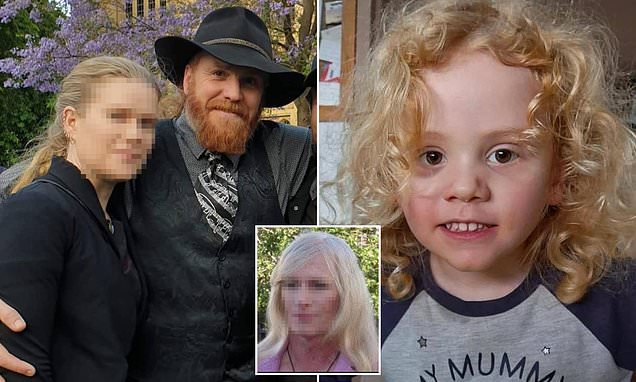
The elusive mother of missing Gus is pictured for the first time
The devastated mother and grandmother of missing boy Gus Lamont have been pictured for the first time - two and a half weeks after he vanished from his grandparents' remote Outback station.www.dailymail.co.uk

Old Soul
Well-Known Member
- Joined
- Apr 30, 2025
- Messages
- 188
- Reaction score
- 2,710
This video is worth watching, it’s basically all the rumours from the Daily Mail but with some footage of the Yunta area.
It is good to be able to picture the locations.


- Joined
- May 2, 2012
- Messages
- 9,225
- Reaction score
- 106,736
Speaking to news.com.au, Gary Jubelin, the former lead investigator in the William Tyrell case, said it is “clear” police had moved onto the next phase of the investigation.
“I think it’s best [for the public] not to speculate what’s been done. The police have kept the public informed. They will have a strategy and an investigation plan in place,” he said.
“One thing I learnt through William Tyrrell thing is that speculation and rumours can impact on a lot of people. I don’t think there’s need for this.
“I think we should put our trust in the South Australia Police. They’ve kept the public informed where they need to.
“Now, I think the best thing would be to step back and let police do their job. The investigation would be best served if we (don’t) speculate what happened to Gus and let’s wait and find out at the conclusion of the investigation.”
I think we should put our trust in the South Australia Police.
Agreed, but only a qualified trust. Remember the policeman convicted in illegally pursuing a person of interest in the William Tyrrell case. Tyrrell foster parents speak out after former detective found guilty over recordings
Police have appealed for both respect for the family and for any leads from the public (facts, not opinions).
I do not trust DM reporters, and object to approaching the family home when told not to.
However, unfortunately, my trust in the SA police was not helped by the claim that Josie Murray was waving a gun while speaking to the DM reporter because Josie had wanted to shoot a snake on the porch....

I read this recently, it was posted Feb 9th, 2026, it's fascinating: Australia - AUSTRALIA - 4YO AUGUST (GUS) Missing from rural family home in Outback, Yunta, South Australia, 27th Sept 2025
M s
s
M
s
linge
Well-Known Member
- Joined
- Feb 7, 2026
- Messages
- 70
- Reaction score
- 782
I want to own something I’ve been short sighted on.
I’ve seen the reporting that Jess and Josie were about 10km away doing station work when Gus went missing. I didn’t give it much weight for two reasons.
First, I’ve always disliked the initial timeline, especially the three hour gap before police were called. Because that gap never sat right with me, anything tied to it got discounted as well.
Second, that 10km detail initially seemed to come from one outlet only. It felt like a leak, and I treated it like an unconfirmed media detail rather than something to build a full scenario around.
For the purpose of this post, I’m doing the opposite. I’m giving that 10km detail full weight and pressure testing what the case looks like if it’s true.
Assumptions
Assumption 1
Jess and Josie really were away from the homestead area around the time Gus was last seen and then noticed missing.
Assumption 2
They may have been away working for a large part of the day, not just for one moment. Meaning the “gap” is potentially bigger than the three hours everyone fixates on.
Assumption 3
Police are now effectively ruling out wandered off and ruling out stranger abduction, and are focusing on someone known to him, with timeline discrepancies central to that.
If those assumptions hold, this pulls a lot together.
The three hour gap no longer needs to be interpreted as the mother choosing not to call police. It can be interpreted as the call being made when the away pair returned and insisted on escalating, while the person at the homestead was the one making the initial decisions and setting the initial narrative.
And this is the part I think I’ve underweighted the whole time.
If only one adult was physically present for the critical window, then everyone else is downstream of that person’s account. The baseline story becomes whatever that person says happened, and the others are reacting to it, searching within it, and repeating it, even if doubts form later. That also explains why discrepancies and inconsistencies can become such a big deal months later. Because if the foundation account is wrong, everything built on top of it is wrong, and it takes time and objective checking to expose that.
It also means the “cleanest” structure is not complicated. It’s a single point of truth problem. One person has the fullest information about what happened in the critical window, and everyone else has fragments and assumptions.
If the 10km away detail is wrong, this whole framework collapses. If it’s right, it explains why the early narrative could hold for as long as it did, and why police are now talking about timeline discrepancies as the driver for suspect focus.
That’s my updated thinking.
Interested in how others interpret the 10km detail and whether they think it changes the three hour gap the way it does for me.
A couple of things to maybe factor into your thinking about the version of the timeline we've been told (some we have no way of actually getting the answers to, but still might be worth thinking about):
It says Shannon was making dinner and called Gus in for dinner when she noticed he was missing at 17:30. Was she preparing a separate little kid dinner, or was it a dinner for the whole family to eat together? If the latter, it could possibly indicate an approximate time for when the other two were expected to come back to the homestead.
Second, it could be worth remembering that even today, agriculture work is often very tied to daylight hours, particularly anything out on the land instead of in structures with lighting to work by (yes, you can work by headlights/flashlights/headlamps in a pinch, but don't recommend it if it isn't something that urgently needs to get finished). Sunset was 18:11 that day (link to earlier post establishing time) , about 40 minutes after Gus was first noticed missing in the timeline given, so they'd probably be heading back to the homestead by then, even if they weren't frantically called back (whether by satellite phone, radio, walkie-talkie...they did probably keep some form of communication between them when working far afield). Yes it would likely have taken them some time to cover that distance back, but not hours. Believe it was established that the police got there within about an hour of being called, arriving at around 21:30. That still leaves a long chunk of time after night fell not calling the police for a missing child when you could reasonably expect everyone to be home and apprised of the situation.
linge
Well-Known Member
- Joined
- Feb 7, 2026
- Messages
- 70
- Reaction score
- 782
There was another person interviewed, a neighbor in Adelaide, who stated that they had last seen them all as a family, Gus included, just a few weeks before he went missing, so at the very least there are conflicting statements on that, timing-wise, even just exclusively going by shite the Daily Mail has published.@gerardo20
I thought somebody on here refuted the claim that Gus's parents were separated? It came from a Daily Mail headline but nothing was mentioned in the article linked. Iirc.
You are correct in your analysis packetgravy and thank you for clarifying these key issues.I think its important to distinguish available evidence/public information from assumption here. Much of the public have now hypothesised murder in Gus’s case… even though there’s no indication of this yet.
Once that assumption is made, behaviours (like that of Josie’s) are going to be analysed and on occasion misinterpreted. (I am not exempt of course.)
Public speculation often ignores probability, context and psychology. This suggests preexisting bias and/or beliefs drive personal hypothesis.
Regardless of what outcome the blame will go back to the relationship that exists and existed between Josie and Shannon and the collective perception. The ideal is to split the psychology of the blind narrative (controlled study) as against perceived collective dynamics and try to elevate and understand the 'true perspective'
Naturally our understanding is based on fact rather than the conflicted narratives from the press which is often well versed in this forum and correctly questioned by many members here which is a really good thing.

Just pondering could Gus have wandered off looking for his Mummy? Especially if the person he was left with was less than pleasant. Just my musings although interesting the law enforcement have discounted the wandering off possibilityI have been repeatedly asking myself, did all three adults know beginning at the time Gus was reportedly called in for dinner that he was missing? Or just grandmother S? Or both grandparents?
Because we don't know exactly who was searching when, do we?
Also, we don't know if Gus was routinely allowed to be out of sight for any amounts of time. Maybe there was a good deal of time that innocent adult(s) did not know where Gus was, but were not worried, because he always returned.
LE has said the timelines didn't hold up. But they really haven't released the timelines they were given, or by whom, either. We know when LE arrived and that's about it.
MOO

- Joined
- Jun 9, 2012
- Messages
- 2,943
- Reaction score
- 25,153
The trouble is, we never knew what time the 2 returned from tending the sheep. So anything about that timeline is speculation.I want to own something I’ve been short sighted on.
I’ve seen the reporting that Jess and Josie were about 10km away doing station work when Gus went missing. I didn’t give it much weight for two reasons.
First, I’ve always disliked the initial timeline, especially the three hour gap before police were called. Because that gap never sat right with me, anything tied to it got discounted as well.
Second, that 10km detail initially seemed to come from one outlet only. It felt like a leak, and I treated it like an unconfirmed media detail rather than something to build a full scenario around.
For the purpose of this post, I’m doing the opposite. I’m giving that 10km detail full weight and pressure testing what the case looks like if it’s true.
Assumptions
Assumption 1
Jess and Josie really were away from the homestead area around the time Gus was last seen and then noticed missing.
Assumption 2
They may have been away working for a large part of the day, not just for one moment. Meaning the “gap” is potentially bigger than the three hours everyone fixates on.
Assumption 3
Police are now effectively ruling out wandered off and ruling out stranger abduction, and are focusing on someone known to him, with timeline discrepancies central to that.
If those assumptions hold, this pulls a lot together.
The three hour gap no longer needs to be interpreted as the mother choosing not to call police. It can be interpreted as the call being made when the away pair returned and insisted on escalating, while the person at the homestead was the one making the initial decisions and setting the initial narrative.
And this is the part I think I’ve underweighted the whole time.
If only one adult was physically present for the critical window, then everyone else is downstream of that person’s account. The baseline story becomes whatever that person says happened, and the others are reacting to it, searching within it, and repeating it, even if doubts form later. That also explains why discrepancies and inconsistencies can become such a big deal months later. Because if the foundation account is wrong, everything built on top of it is wrong, and it takes time and objective checking to expose that.
It also means the “cleanest” structure is not complicated. It’s a single point of truth problem. One person has the fullest information about what happened in the critical window, and everyone else has fragments and assumptions.
If the 10km away detail is wrong, this whole framework collapses. If it’s right, it explains why the early narrative could hold for as long as it did, and why police are now talking about timeline discrepancies as the driver for suspect focus.
That’s my updated thinking.
Interested in how others interpret the 10km detail and whether they think it changes the three hour gap the way it does for me.
linge
Well-Known Member
- Joined
- Feb 7, 2026
- Messages
- 70
- Reaction score
- 782
The police have not divulged enough evidence for us to understand why it is not considered a possibility that Gus was abducted through an arrangement by at least one member of the family.
The SAPOL presser drew a slightly odd distinction (IMO) between 'abduction' and 'whether people known to Gus were involved in his disappearance.' That said, the time they spent covering why they've mostly ruled out 'abduction' (ostensibly by strangers) also makes a fair case for why being spirited away by a family member would be difficult to pull off. That it would require vehicles and vehicles would be noticed (whether themselves or the dust clouds they leave behind), not just by the Oak Park Station residents but also adjoining neighbors. Lack of foreign tracks arriving or leaving the property. It sounds like they also put in a fair bit of work tracking the movements of a number of people at that time and are confident they weren't near the property when Gus disappeared, put in time ruling out neighbor involvement.
That said, I hope you're right. It would be the best possible outcome for this whole thing if this little boy were alive and well with a family member who loves him and is taking good care of him and this was all about custody. But that seems like an incredibly slim chance at this point.
Last edited:
One continuous chain with links and if the original link is corrupt then a conflation is formed.If only one adult was physically present for the critical window, then everyone else is downstream of that person’s account. The baseline story becomes whatever that person says happened, and the others are reacting to it, searching within it, and repeating it, even if doubts form later. That also explains why discrepancies and inconsistencies can become such a big deal months later. Because if the foundation account is wrong, everything built on top of it is wrong, and it takes time and objective checking to expose that.
It also means the “cleanest” structure is not complicated. It’s a single point of truth problem. One person has the fullest information about what happened in the critical window, and everyone else has fragments and assumptions.
If the 10km away detail is wrong, this whole framework collapses. If it’s right, it explains why the early narrative could hold for as long as it did, and why police are now talking about timeline discrepancies as the driver for suspect focus.
1. What if GL is not playing outside where there are snakes which Josie later claims to use a rifle against a snake?
2. What if SM is performing another task, another errand outside and GL is injured and SM is unable to cope?
3. What if GL accidentally harms or injures RL and a crisis envelopes and the electronic devices, say laptop and mobile is used to research on how to remedy the crisis? This creates a set of dynamics that pulls the pieces together nicely.
4. We do not have any information about whether Ronnie was medically evaluated on the day Gus went 'missing' (?) to draw matters closer to our analysis of what happened?
Just my observations.

- Joined
- Jan 6, 2023
- Messages
- 5,028
- Reaction score
- 46,998
Thanks for your post. I'm just commenting on the photo topic raised..I don't think we can say with any certainty at all, or assume that family members (one, some, all?) held back the police from releasing a photo in the first days and so forth. We have no idea. This is all total assumption IMO.That's interesting.
The thing that sticks out to me about this heart-breaking case is that Gus has a number of adults in his life.
There were no more volunteer community searches for Gus after the first week of Oct, true. .
I wish I were able to read the notes or pick the brains of investigators who requested photos and the response. Did they dig though momentos, digital archive, etc., and try to find some? Did they seem troubled when not producing photos? Is it possible they just said no without seeming concerned that they were not producing one? Reading your post, I have some new vocabulary for the observations I wish I could make.
Did each parent seem protective, or did they seem to distance themselves and/or attempt to control the narrative?
I can't imagine anything more traumatic than not being able to find a precious child. I don't want to pile on to them. But I really wish I knew more about: what happened with each adult when photos were not produced. I think the sources you suggested look like legit starting places to interpret that information.
MOO
I tend to think ultimately it was SAPOL's call re the timing of the photo release.
For instance, we have this, which references what SAPOL (Commissioner Grant Stevens) communicated to the public on Sept 30th 2022.
Emergency services and community members continue search for 4yo boy
Police are continuing to search for a four-year-old boy who vanished while playing in sand at his family's isolated sheep grazing property near Yunta in a remote part of South Australia's north.
 www.abc.net.au
"He said police believed Gus was still on the property, had not been taken and that releasing his image would serve no purpose in the search".
JMO
- Joined
- Jan 6, 2023
- Messages
- 5,028
- Reaction score
- 46,998
RBBM. Just on the making dinner thing. I don't believe the time line per SAPOL ever included anything beyond public statements that per SMA couple of things to maybe factor into your thinking about the version of the timeline we've been told (some we have no way of actually getting the answers to, but still might be worth thinking about):
It says Shannon was making dinner and called Gus in for dinner when she noticed he was missing at 17:30. Was she preparing a separate little kid dinner, or was it a dinner for the whole family to eat together? If the latter, it could possibly indicate an approximate time for when the other two were expected to come back to the homestead.
Second, it could be worth remembering that even today, agriculture work is often very tied to daylight hours, particularly anything out on the land instead of in structures with lighting to work by (yes, you can work by headlights/flashlights/headlamps in a pinch, but don't recommend it if it isn't something that urgently needs to get finished). Sunset was 18:11 that day (link to earlier post establishing time) , about 40 minutes after Gus was first noticed missing in the timeline given, so they'd probably be heading back to the homestead by then, even if they weren't frantically called back (whether by satellite phone, radio, walkie-talkie...they did probably keep some form of communication between them when working far afield). Yes it would likely have taken them some time to cover that distance back, but not hours. Believe it was established that the police got there within about an hour of being called, arriving at around 21:30. That still leaves a long chunk of time after night fell not calling the police for a missing child when you could reasonably expect everyone to be home and apprised of the situation.
1) She saw Gus playing in sand/on dirt mound out front 'as he usually did' ( paraphrase) at about 5pm.
2) When she went to check on him about half an hour later (ie at c5.30pm) he was no longer there.
I think the making dinner thing came from discussion in the thread and was speculation. I may be misremembering, but I've seen no msm reports that cite police stating SM was making dinner and went out to call Gus in to eat. Moo
- Joined
- Jan 6, 2023
- Messages
- 5,028
- Reaction score
- 46,998
Good point as to who consents. I can't see why it couldn't have gone something like this;For all we know there may be thousands of photos of the boy.
I expect that in order for the police to publish a photo of a child, the parents have to consent. I expect that a grandparent cannot provide authorization to publish photos of a grandchild.
Police to parents; 'We would now like to release Gus' photo' ( explanation).
Parents to police; 'Ok. Whatever you think will help or might help' (discussion ensues about the best photo to release).'. Just Occam's razor speculation.
linge
Well-Known Member
- Joined
- Feb 7, 2026
- Messages
- 70
- Reaction score
- 782
RBBM. Just on the making dinner thing. I don't believe the time line per SAPOL ever included anything beyond public statements that per SM
1) She saw Gus playing in sand/on dirt mound out front 'as he usually did' ( paraphrase) at about 5pm.
2) When she went to check on him about half an hour later (ie at c5.30pm) he was no longer there.
I think the making dinner thing came from discussion in the thread and was speculation. I may be misremembering, but I've seen no msm reports that cite police stating SM was making dinner and went out to call Gus in to eat. Moo
Good call. I do remember wondering the same thing when first reading through the thread, but then saw it reported (at least by DM...). But you're right, it isn't clear if that's coming from police or just...one of the many inaccurate things that were swirling around MSM in the early days of all of this (for all we know, they were reading the speculation here and then reporting it as fact). So if it isn't something the police have mentioned directly, that's another thing to downgrade to the 'unverified rumors' pile, rather than the 'reported timeline with inconsistencies' pile.
Linked because found it mentioned in this one.

The mystery of angelic Gus, 4, who disappeared in the Outback
His grandmother says she saw him playing there at 5pm two Saturday evenings ago.Half an hour later, when Gus was called in for dinner, he had gone.
Guardians Monthly Goal

Goal Reached! We hit our target of 75 new Guardians!
New stretch goal: 100!
Our goal for the month is 75 new Guardians members to sign up. Have you been thinking about becoming a member?
Click here to find out how!


Staff online
-
 CarlK90245UID Moderator
Online statistics
- Members online
- 59
- Guests online
- 1,043
- Total visitors
- 1,102
Totals may include hidden visitors.
Forum statistics
Community Rules
-
Be CivilTreat all members with respect. No personal attacks, harassment, or inflammatory language.
-
Victim FriendlyAlways show respect for victims and their families. No victim blaming or insensitive speculation.
-
Fact-based SourcingProvide credible sources for claims. Distinguish between verified facts and personal theories.
-
Social Media UseDo not post direct links to personal social media profiles of private individuals.
-
Copyright and PaywallsDo not copy full articles. Summarize and link to the original source instead.
-
Privacy and Personal InformationDo not post personal information such as addresses, phone numbers, or workplaces.
-
Registered Sex-OffendersDo not name or speculate about RSOs unless officially named in connection to a case.
-
Stay On TopicKeep discussions relevant to the case or topic at hand. Avoid off-topic tangents.
-
Accounts, Moderation, and DisputesOne account per person. Contact moderators privately for disputes or concerns.
-
Solicitation and FundraisingNo solicitation, fundraising, or promotion of personal ventures without approval.