

• #81
I'm posting the proposal that the US concocted for the people of Gaza, as I believe the war goal for both Gaza and Cuba is the same: remove the local population, build US owned hotel resorts, profit through tourism.

Everyone knows that selling land for a year of food, and $5000 over four years, is insulting. The US government is banking on local populations being unaware that the proposal is nothing more than being cheated and tricked.


"The Trump administration is weighing a proposal for the postwar reconstruction of Gaza that would put the Strip under US control for a decade and pay roughly a quarter of its population to relocate, many of them permanently, according to a Sunday report.
..

Palestinians would be encouraged to relocate outside the Strip. Those who choose to leave Gaza — either temporarily or permanently — would receive “a $5,000 cash payment and subsidies to cover four years of rent elsewhere, as well as a year of food,” according to the report."​

 
  • #82
"The United States has told Cuba that for meaningful progress to be made in negotiations, President Miguel Díaz-Canel must step down, said people familiar with the talks.
...

The ouster of the top official in Cuba’s leadership would give President Trump a symbolic win that would allow him to tell the American public that he had brought down the leader of a leftist government long opposed to the United States, as he did in Venezuela, one of the people said.

The move, though intended to show the Cuban exile community and other Americans that the Trump administration seeks political as well as economic change, would likely disappoint many conservative Cuban exiles in the United States, who want to see wholesale political transformation in Cuba.
...

From the perspective of U.S. officials, the talks are focused on having Cuba gradually open its economy to American businesspeople and companies."

https://www.nytimes.com/2026/03/16/world/americas/trump-cuba-president-diaz-canel.html

Wouldn't it just be a whole lot easier if the US simply lifted the long-standing US embargo on Cuba?


  • #83
  • #84
Lifting the embargo would not entitle the US to build hotel resorts.

It wouldn't entitle Americans, but it would allow them to invest in Cuba by buying property and erecting buildings ... the normal way that people invest in foreign real estate.
 
  • #85
Lifting the embargo would not entitle the US to build hotel resorts.
Nor to exploit, oppress and marginalize the Cuban people. MOO JMO
 
  • #86
  • #87
That is horrible!!! Why doesn't their government do something? Why don't nations aligned with Cuba provide aid? Canada???? Where are you?
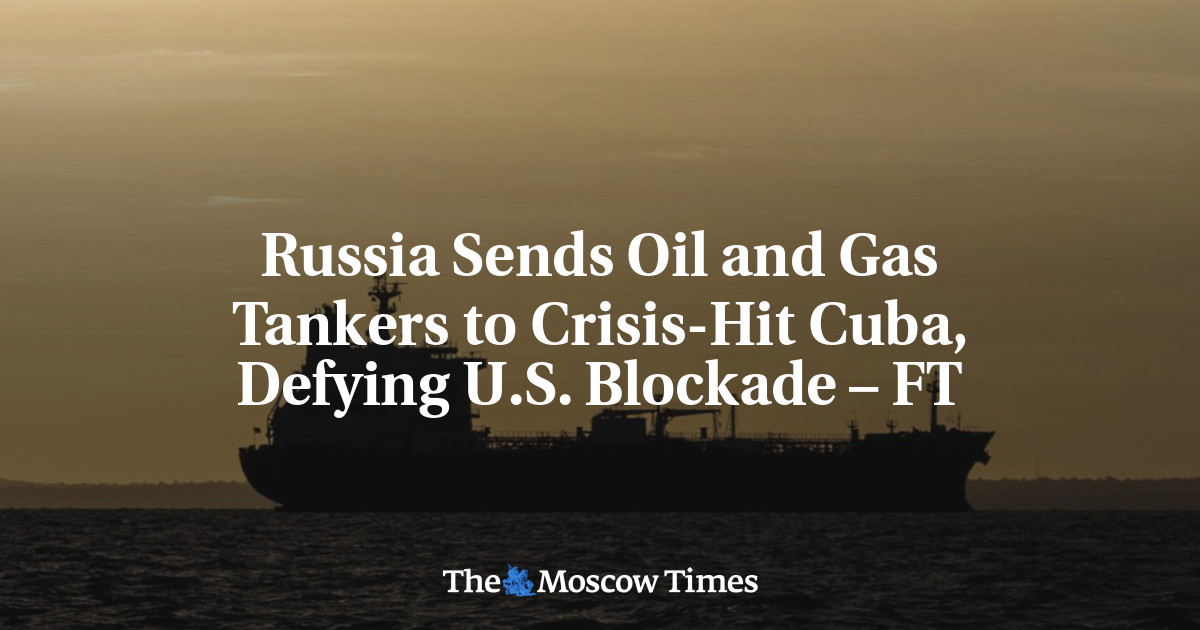
Canada? No, Russia is the main country providing aid - they have announced they will defy the blockade and send two oil tankers.

I could write lots about the situation for Mexico (who used to send oil) and Canada (who never has) but I think everyone 'in the know' knows, this is going to be a long-awaited show-down between the US and Russia and the outcome may have global consequences far into the future...

I've heard commentators complain why Trump should care about tiny Cuba, while at war with Iran, but I think it's because this is directly about Putin...Will he let Cuba go?

JMO
 
  • #88
It wouldn't entitle Americans, but it would allow them to invest in Cuba by buying property and erecting buildings ... the normal way that people invest in foreign real estate.
That's was the problem in the 1950s. People from the US bought up acres of land for pennies, displaced local populations, built sprawling estates, and used the Island as their private resorts. The local population served foreigners.

Cuba belongs to Cubans, not to foreign investors.
 
  • #89
That's was the problem in the 1950s. People from the US bought up acres of land for pennies, displaced local populations, built sprawling estates, and used the Island as their private resorts. The local population served foreigners.

Cuba belongs to Cubans, not to foreign investors.
BBM El patio trasero de EEUU! Where Cubans were left to serve rather than benefit.

MOO JMO
 
  • #90
Donald Trump thinks he can bully himself around the world and take over this country or that country or whatever country he wants,” Rep. Jim McGovern (D-Mass.) previously told host Joe Mathieu on Bloomberg’s “Balance of Power.”

“That’s going to come back to bite us in the rear end, quite frankly,” McGovern continued. “And it’s a really dangerous precedent. I can only imagine what China and Russia are thinking right now.”

Speaking to reporters this week, Mr Trump said he believed he would have “the honour of taking Cuba”.

Asked what he meant by “taking” the country, he said: “Whether I free it, take it - I think I can do anything I want with it.”
 
  • #91
Rep. Jim McGovern..."Donald Trump thinks he can bully himself around the world and take over this country or that country or whatever country he wants...I can only imagine what China and Russia are thinking right now.”

IMO China and Russia have heard Trump loud and clear, for eg in his January 2026 State of the Union address and his speech at Davos around the same time, when he spoke directly and at length about his intention to dominate all countries in the Western Hemisphere: Greenland, Venezuala, the Panama Canal, Canada and Mexico, and now Cuba. That is his doctrine of the US possessing a 'Hemisphere of Influence', formerly known as the Munroe Doctrine (1823).

Meanwhile, his indifference to the Ukraine war, and to the UN, and reluctance about NATO, IMO, signal his clear willingness to let China and Russia have their own spheres of influence.

Iran, of course, is about protecting Israel, IMO the US's only true remaining ally.

 
  • #92
Two-thirds of Havana had power again in the afternoon, the capital's electricity company said, a day after the energy ministry reported a "total disconnection" of the national electric system in the country of nearly 10 million people.

But authorities were still working to bring all of the country's thermoelectric plants back online while microsystems were set up to maintain power at hospitals and other vital infrastructure.

A crowd of people lined the roadway near the Publix by the bridge leading to MaraLago on Sunday, gathering to watch former President Donald Trump’s motorcade as it departed the area.

Dozens stood along the route waving American and Cuban flags. Some held a long banner written in Spanish reading “Liberty for Cuba’s political prisoners,” alongside photos of individuals described as political detainees.

Video from the scene shows the group pressed along the roadside, cheering, holding signs, and recording as Trump’s motorcade passed. Trump could be seen inside one of the vehicles, briefly waving back before the caravan continued on. The gathering remained peaceful and did not disrupt traffic.
 
  • #93
Some held a long banner written in Spanish reading “Liberty for Cuba’s political prisoners,”
Instead of a banner written in Spanish reading "Libertad para los presos políticos de Cuba", they should have banners saying: ‘Fin al embargo de EEUU contra Cuba!’, written in English so #47 could read it! MOO JMO
 
  • #94
The Cuban government is prepared to offer compensation to Americans and American firms that saw property nationalized after the 1959 revolution, Deputy Foreign Minister Carlos Fernandez de Cossio told Drop Site News in an interview.

The “lump sum” agreement—meaning that Cuba would pay the U.S., which would then handle the claims—would need to be a part of a broader “holistic” deal that would address U.S. sanctions and the blockade and also allow for an amount of American investment in Cuba that previously had been forbidden, he said.

Cuban President Miguel Díaz-Canel revealed last week that his government was in direct talks with the United States. After the New York Times reported that the U.S. officials are pushing for the ouster of Díaz-Canel, Cuba rejected outright the possibility that the Cuban president’s role or the Communist-run political system is up for negotiation.

After the revolution, Cuba negotiated lump sum compensation agreements with countries such as Canada, Switzerland, the United Kingdom, Spain, and France, but the United States refused to participate, planning to overthrow Fidel Castro’s government instead.

“[Cuba made] lump sum agreements with the six governments whose property was nationalized in Cuba, all of them had compensation schemes, all of them were compensated with the exception of the U.S.,” said Cossio.
 
  • #95
From 1898 to 1959, the American government essentially ran Cuba as a colony within its empire.

Americans repeatedly decided who would occupy the presidential palace, while Cuban politicians protected U.S. investments and supported U.S. supremacy in the Caribbean. American gangsters ran the hotels and the gambling.

That relationship ended with the revolution and Fidel Castro’s assumption of power. But if Trump has his way, the future of the U.S. and Cuba will look very much like it did in the pre-Castro era: a partnership of unequals

"Cuba’s leadership vacuum is the result of a system that has spent decades making sure no independent leadership can exist in the first place," Melissa Ford Maldonado, AFPI director of the Western Hemisphere Initiative, told Fox News Digital.

She added that the regime has "controlled communication, restricted the gathering of people, surveilled its own people, killed press freedom, criminalized dissent and ultimately made a powerful opposition force highly unlikely."

"Who replaces Díaz-Canel is more symbolic than anything else," Sebastián A. Arcos, interim director of the Cuban Research Institute at Florida International University,

"If you are thinking of giving up, don’t give up, keep going, keep going," said Pastor Daniel Cisnero, sweat on his brow, eyes closed, his voice a shout.

"It’s not the time to give up, it’s the time to keep walking holding God’s hand."

Over and over again he said, "Don’t give up."

"We are living hard times, as you know, moments when our faith is [tested]. But faith in [God] is enough for us," said Monterrey, in an interview with CBC News after the service.

"Sometimes we don’t have anything in the refrigerators, we are living hard times with the blackouts ... God is above the difficult times. He is above sometimes not having a plate of food to eat," he said.

The Renewal in Christ Church provides its members with a meal on Sundays and runs a program to send food to the elderly during the week.

"Our church not only does the spiritual work, but we also do social work in our community to help the needy," said Cisnero. "Jesus preached, but he also met the needs of the people."
 
Last edited:
  • #96
Since the beginning of the year, the United States has imposed what amounts to a blockade on Cuba, thus far preventing it from receiving oil from its allies, including Mexico and Russia. Before the blockade, Anderson writes, “Cuba was on life support; Trump’s action effectively shut the oxygen off.”

Anderson is intimately familiar with Cuba in crisis: he and his family lived there during an exceptionally bleak moment in the nineties, after the island lost its Soviet backing, and he has been one of the finest chroniclers of Cuba’s politics, people, and culture. What he sees now is a government trapped in perhaps irreparable decline. Reports suggest that the U.S. position is that Cuba’s President, Miguel Díaz-Canel, needs to go. But, “even if negotiations with the U.S. yield an agreement to hold elections,” Anderson writes, “Cuba has no organized political opposition that could run against the Communist Party, let alone take over the country.” And he adds, “The best-known dissidents are dead, imprisoned, or in exile, too far removed from recent politics to be taken seriously.”

Amid this power vacuum, the Trump Administration has been negotiating with Raúl Guillermo Rodríguez Castro, Raúl Castro’s grandson and personal bodyguard, who, despite a taste for flashy displays of wealth, hardly represents a break with the past. It’s simply not clear what regime change, or whatever else the Administration chooses to call it, would look like in Cuba. “They’re dealing with Trump’s unpredictability on one side and their own imminent collapse on the other,” Joe Garcia, a former Democratic congressman from Florida and longtime Cuba watcher, says. “But countries don’t collapse. They simply continue to go down
 
  • #97
  • Discussions have included talks with Raúl Castro's grandson and could involve economic reforms in exchange for lifting some U.S. sanctions.
  • Many Cuban Americans in Florida express trust in Rubio to negotiate a deal that could lead to a free Cuba.
MIAMI — For Marco Rubio, disdain of the Cuban government was practically a birthright.

Raised among Cuban exiles in Florida, his political ascent from local politician to U.S. senator was propelled by an unwavering hardline toward Fidel Castro and his successors.

But the old guard was out. Donald Trump was on his way back in. And a Cuba deal reached by members of President Joe Biden’s administration – which called for the U.S. to remove Havana from its list of state sponsors of terror to win the freedom of 553 political prisoners – would rest in Rubio’s hands.

As members of Biden’s team briefed the incoming secretary of state on the agreement, most expected the zealous Republican to squash the deal as too soft on Cuba’s authoritarian government, according to two people familiar with the meeting.

Instead, a different Rubio emerged, one who appeared to see the world through the lens of America’s top diplomat, rather than a politician winning votes through anti-Castro slogans. He listened carefully with Mike Waltz, the incoming national security adviser. (They put Cuba back on the list, within hours of Trump being sworn in last January.)

Now it’s Rubio himself, the hardliner who disavowed rapprochement, conducting talks at Trump’s behest as the communist island teeters on the verge of collapse. The discussions with the Castro family have revolved around a possible agreement focused on economic reforms as a way to ease the Cuban peoples’ oppression. Trump’s administration has said the economic pressure Cuba is under will bring about the communist government’s demise.

“Cuba has an economy that doesn’t work and a political and governmental system that can’t fix it. So they have to change dramatically,” Rubio said on March 17. “They’ve got some big decisions to make over there.”
 
  • #98
President Trump has made clear he expects to have the honor of taking Cuba, delivering a blunt assessment as the island nation's Soviet-style system crumbles.
With blackouts crippling hospitals, no oil imports for months, and the economy in freefall, Trump stated plainly: "I do believe I'll have the honor of taking Cuba." He added that the U.S. can do whatever it wants with a country now weakened to the point of humanitarian crisis.
This comes after months of pressure: choking off Venezuelan oil shipments, tightening the embargo, and watching the regime's grip slip. Earlier comments from Trump pointed to Cuba as next after successes against Iran and Venezuela, with hints of a potential "friendly takeover" or outright change.
The communist government has brought this on itself through decades of mismanagement, repression, and reliance on anti-American alliances that have now failed. Protests rage, power is gone island-wide, and even regime officials admit talks with the Trump administration amid desperation.
Critics abroad cry sovereignty, but the reality is stark: a failed state on America's doorstep threatens regional stability and invites outside interference from adversaries. Trump's straightforward approach signals the end of tolerating a hostile, collapsing dictatorship 90 miles from Florida.
America has the power and the moral case to end this relic of the Cold War. If the regime falls—or is removed—the Cuban people finally get a real shot at freedom and prosperity instead of more blackouts and empty promises from Havana's elite.
Promises made, promises kept. Cuba's time may be up.

 
  • #99
Oh please. "is this a problem that Canada should solve, or is this a problem that the US population should solve? Everyone knows that the US is responsible for causing an humanitarian disaster in many countries,..."
Really? The US feeds half the world. Provides funding to half their projects. Why? Now that we are finally saying "WHY", we are accused of creating humanitarian crisis? Why can't cuba feed itself and fuel itself? They boasted of the support of the PRC. Cuban resorts are full of Canadians. Why do they starve? It is NOT the USA job to support this country.
The US feeds half the world source please?
 
  • #100
Cuba’s fuel crisis has frozen major Canadian assets, pushed payment risk higher and turned a long-standing sanctions workaround into a potential liability.

According to CBC News, the Moa nickel and cobalt joint venture between Toronto-based Sherritt International and the Cuban state — one of the largest open-pit mines in the world with refining in Fort Saskatchewan, Alberta — is now idle due to a lack of fuel.

Sherritt negotiated a repayment plan after Cuba fell behind on obligations, but the outstanding debt still reached US$344m by the second quarter of last year.
In its own filings cited by CBC News, Sherritt warned that “any operational improvement is conditioned on the stability of the country’s economic conditions” and on its Cuban partner’s ability to meet financing and foreign currency commitments.

Tourism, the other big Canadian exposure, is also under pressure.

Many Canadian firms saw lucrative opportunities over the past 15 years, with Sunwing expanding from fewer than 400 hotel rooms on the island in 2010 to nearly 9,000 by the time of the pandemic through its Blue Diamond Resorts unit, now Royalton.

While the Kremlin declined to confirm reports of Russian oil heading to Cuba, it also has made little effort to conceal its hand.

That’s because the tanker was never really about Cuba at all, people close to the White House, former ambassadors and Russia observers told POLITICO. It’s a message, they said — a negotiating chit, a provocation designed to force a disproportionate American response while Washington is consumed elsewhere.

“Russia loves to poke us in the eye,” Lawrence Gumbiner, who led the U.S. Embassy in Havana during President Donald Trump’s first term, said in an interview. Russia, he said, isn’t “serious about coming to Cuba’s rescue.”

“It’s not in their interest to pick a fight with Trump over something that is so, so clearly within the U.S. orbit as Trump has defined it,” Gumbiner said — a reference to Trump’s so-called “Donroe Doctrine” to assert U.S. dominance in the Western Hemisphere and diminish the influence of adversaries like Russia and China.
 
Last edited:

Guardians Monthly Goal

Members online

Online statistics

Members online
149
Guests online
2,066
Total visitors
2,215

Forum statistics

Threads
645,218
Messages
18,836,091
Members
245,587
Latest member
MidwestEvidence
Top