



AdamRed222
New Member
- Joined
- Sep 12, 2025
- Messages
- 5
- Reaction score
- 6
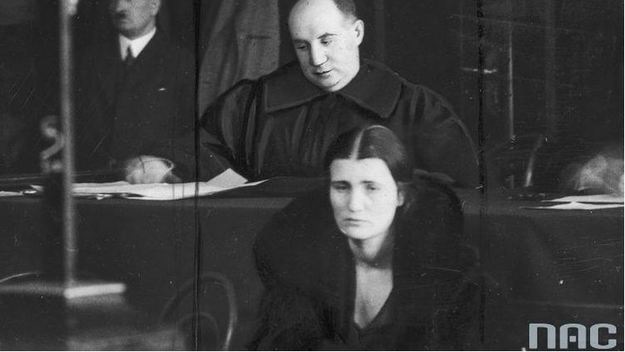
Rita Gorgonowa was a governess involved in one of the most infamous trials of the Second Polish Republic. In 1924, Gorgonowa became a governess at the house of the 41-year-old architect Henryk Zaremba. She lived at his villa in Brzuchowice and later started an affair with him. This often led to conflict between the governess and Zaremba's 14-year-old daughter, Elzbieta "Lusia" Zaremba.
In the night of 30–31 December 1931, Elżbieta/Lusia, who was sleeping in her bed, was hit in the head by a blunt object, possible with an icepick, and died as a result. The murder was discovered by Elzbieta's brother, Stas, who woke after hearing the family dog whine. When they arrived at the scene, the police concluded that someone inside the house had committed the murder. The police based this on the fact that there were no footsteps on the windowsill and in the snow around the building. Furthermore, no traces of a break-in were found and the opening in the window of Lusia's room was too small for someone to crawl through. According to official police report, Gorgonowa crossed the corridor from her room to Lusia's room, killing the girl, and then opened the window to simulate a break-in. She also penetrated Lusia's vagina to make it look like she was sexually assaulted. Upon leaving Lusia's room, Gorgonowa noticed the dog, whom she hit in the head. This caused the dog to wail, waking Stas Zaremba, who was sleeping in the dining room. The boy entered the corridor, noticing a person dressed in a sheepskin, standing next to a Christmas tree. Stas later claimed that it was Rita. Later on, a bloodstained handkerchief was found in the house's cellar. Additionally, traces of blood were found on Rita's sheepskin. However, it was later claimed that the blood on the handkerchief was menstrual blood.
Gorgonowa's trial lasted from 25th April to 14th May 1932, and she was sentenced to death for the murder of Lusia. However, her sentences was later reduced to eight years following an appeal. On 3rd September 1939, two days after the outbreak of World War Two, Gorgonowa was released from prison thanks to an amnesty. Afterwards, its unknown what happened with her but its alleged she stayed in Poland and lived in the 1950s. The case is controversial and, in 2014, Gorgonowa's daughter and granddaughter have demanded that the case be reopened as they believe Gorgonowa is innocent. The problem with the evidence which led to Gorgonowa's imprisonment was that it was mostly circumstantial and far from scientifically conclusive.

 europebetweeneastandwest.wordpress.com
In the night of 30–31 December 1931, Elżbieta/Lusia, who was sleeping in her bed, was hit in the head by a blunt object, possible with an icepick, and died as a result. The murder was discovered by Elzbieta's brother, Stas, who woke after hearing the family dog whine. When they arrived at the scene, the police concluded that someone inside the house had committed the murder. The police based this on the fact that there were no footsteps on the windowsill and in the snow around the building. Furthermore, no traces of a break-in were found and the opening in the window of Lusia's room was too small for someone to crawl through. According to official police report, Gorgonowa crossed the corridor from her room to Lusia's room, killing the girl, and then opened the window to simulate a break-in. She also penetrated Lusia's vagina to make it look like she was sexually assaulted. Upon leaving Lusia's room, Gorgonowa noticed the dog, whom she hit in the head. This caused the dog to wail, waking Stas Zaremba, who was sleeping in the dining room. The boy entered the corridor, noticing a person dressed in a sheepskin, standing next to a Christmas tree. Stas later claimed that it was Rita. Later on, a bloodstained handkerchief was found in the house's cellar. Additionally, traces of blood were found on Rita's sheepskin. However, it was later claimed that the blood on the handkerchief was menstrual blood.
Gorgonowa's trial lasted from 25th April to 14th May 1932, and she was sentenced to death for the murder of Lusia. However, her sentences was later reduced to eight years following an appeal. On 3rd September 1939, two days after the outbreak of World War Two, Gorgonowa was released from prison thanks to an amnesty. Afterwards, its unknown what happened with her but its alleged she stayed in Poland and lived in the 1950s. The case is controversial and, in 2014, Gorgonowa's daughter and granddaughter have demanded that the case be reopened as they believe Gorgonowa is innocent. The problem with the evidence which led to Gorgonowa's imprisonment was that it was mostly circumstantial and far from scientifically conclusive.
Murder & Margerita: Reopening Krakow's First Celebrity Trial | The Krakow Post
83 years after Rita Gorgonowa was convicted of murder in a sensational trial, her descendants are fighting to reopen the case to clear her name.
www.krakowpost.com
Shadows of a Doubt: The Murder of Lusia Zaremba – Lviv’s Most Famous Crime Part 2 (Lviv: The History of Just One City Part 55)
From that midnight moment when Stanislaw Zaremba first saw Rita Gorgonowa standing next to the family Christmas tree and then a few minutes later discovered the still warm body of his sister Lusia,…
europebetweeneastandwest.wordpress.com