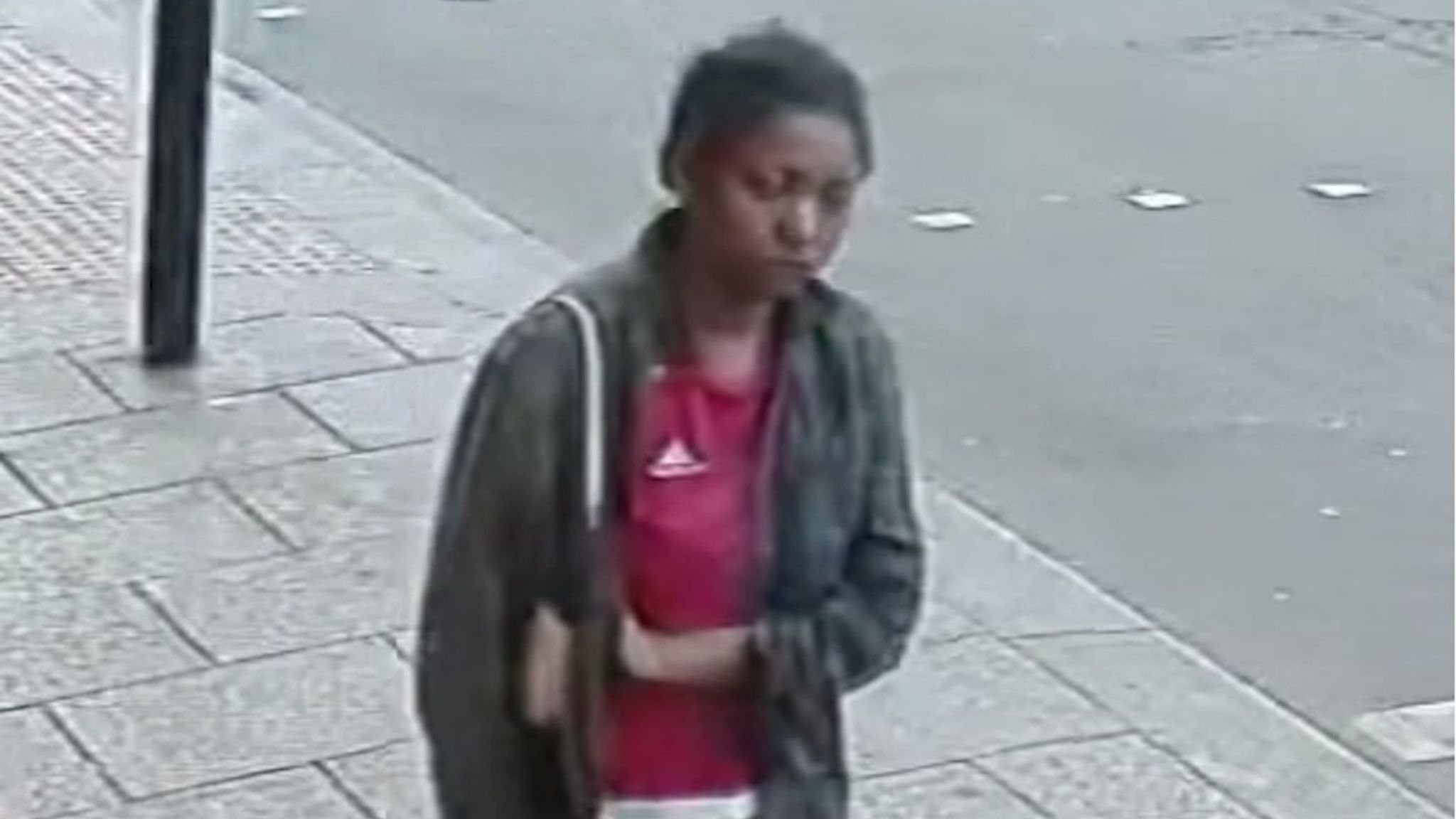
Found Safe UK - Owami Davies, 24, from Chafford Hundred, Essex, last seen in Croydon, Surrey, 6 Jul 2022

  • #321
  • #322
It's unfair for the paper to criticise the police for not taking her into custody, or taking her home imo.
She hadn't committed a crime so couldn't be taken into custody, and is 24 so doesn't have to go back to her parents if she doesn't want to.

As a point of fact:

1. Police have power to detain a person who is in a public place under s.136 of the Mental Health Act who is in immediate need of care and control and take them to a place of safety (ideally a hospital) for the purposes of assessment by a mental health professional. This need for care and control is the officers perception, not ours.

2. If OD was drunk and consequentially was believed to be a risk to herself, then she could have been arrested for being drunk and incapable and take to a police station to sober up. She may have been assessed by a doctor in police custody and her poor mental health may have been identified and addressed appropriately.

N.B. Police officers are deemed to be expert witnesses as to whether a person is drunk.
 
Last edited:
  • #323
A missing person report was made to Essex Police by Ms Davies’s family on July 6

It has now been revealed that officers from the Met Police spoke to her later that night.

Footage - recently released by the Met of Ms Davies - was captured on an officer’s body-worn camera during the encounter and shows her looking dazed and worried.

Officers attended and called (the London Ambulance Service), but the woman stated she did not want assistance and left.


Interesting to consider what might have justified calling out LAS, given what you're saying, @Whitehall 1212.
 
  • #324
The police can build up a better picture if everyone who sees something odd/concerning, reports it.
 
  • #325
Interesting to consider what might have justified calling out LAS, given what you're saying, @Whitehall 1212.

Essentially, police sound like there were concerned for OD's welfare and so called the LAS, possibly to cover themselves too.

Police are aware there are not medical experts and so pass on the responsibility. If treatment is refused by the 'patient' then there is nothing the ambulance service can do.

I don't have all the information, not being there, but if the ambulance crew indicated any concern over OD's mental state or drunkeness, then the ball fell firmly back into the police's court, as they have the powers of detention if they either feel that OD was in immediate need of care and control or drunk and incapable and thereby presented a risk to herself, e.g. having an accident or being a victim of crime.

Of course hindsight is a wonderful thing and few coppers will risk the wrath of the Custody Sergeant by bringing a drunk into his/her cell block, particularly if cell space is at a premium.
 
Last edited:
  • #326
A missing person report was made to Essex Police by Ms Davies’s family on July 6

It has now been revealed that officers from the Met Police spoke to her later that night.

Footage - recently released by the Met of Ms Davies - was captured on an officer’s body-worn camera during the encounter and shows her looking dazed and worried.

Officers attended and called (the London Ambulance Service), but the woman stated she did not want assistance and left.


More from above article.


"Officers attended and called (an ambulance), but the woman stated she did not want assistance and left. As a result of the subsequent missing person investigation, this woman has been confirmed as Owami Davies.

"The Met’s Directorate of Professional Standards (DPS) were consulted and, as there has been contact with police, the IOPC were informed. The IOPC has requested the matter be referred to them.

"The officers are not subject to any current investigation by the DPS.

"The interaction recorded on the officers' body-worn video has been viewed by members of the Independent Advisory Group and Owami's family to ensure openness and transparency."

 
  • #327

She was reported missing to Essex Police by her family on 6 July, with the force later handing the file over to the Met on 23 July.

However, on Saturday, Scotland Yard revealed its officers had spoken to Ms Davies on 6 July, after responding to an address in Croydon to concerns over the welfare of a woman.

Both the police and ambulance service attended and spoke to Ms Davies, who told them she did not want help.


At the time, she had not been marked as a missing person on the police database, and was only established later to be Ms Davies during the investigation to find her.

 
  • #328
At the time, she had not been marked as a missing person on the police database

This is the bit that upsets me. Police (rightly in some ways) feel that missing people are a slightly bogus part of their workload until a case blows up into a full-on murder enquiry, by which time it's too late to intervene and prevent harm, and sometimes too late to gather evidence. But the phenomenon of missing people is the visible face of a multitude of social problems, some of which have an intimate relationship with crime even if no one ends up getting murdered. In my opinion, there needs to be a modern, fit-for-purpose system for capturing and updating information relating to missing people on a rolling, real-time basis, that any officer in any force in England and Wales (at least) can access instantly, at a desk or in the field, because so often time is of the essence. The technology is there.
 
  • #329

She was reported missing to Essex Police by her family on 6 July, with the force later handing the file over to the Met on 23 July.

However, on Saturday, Scotland Yard revealed its officers had spoken to Ms Davies on 6 July, after responding to an address in Croydon to concerns over the welfare of a woman.

Both the police and ambulance service attended and spoke to Ms Davies, who told them she did not want help.


At the time, she had not been marked as a missing person on the police database, and was only established later to be Ms Davies during the investigation to find her.


So it seems to me like (and I am not a LE expert):

-- The Met did not receive the report about OD being a Misper as she was reported to Essex police. So the officers who attended on 6 July did not know OD was a missing person.

-- OD refused treatment and could not be forced by LAS

-- Police didn't think it was serious enough to merit detaining her under mental health act or as a drunk (perhaps she did not present as drunk, but more confused and odd).

Sadly this reflects the state of London's streets now--there are just so many people on the streets who are homeless, have mental health issues, drug issues, etc sometimes all at once. The police must be inundated with calls and have to prioritize and sometimes things are missed or fall through gaps like here.

I see so many people in bad states in central London. Drugs, street prostitution around some major stations, homeless people who are clearly suffering horribly. Of all ages too. Many more begging. A few weeks ago I passed a middle aged male who had passed out in a tiny garden of a council flat just off a main road in a crowded area. He was topless, perhaps had been drinking in the heat and collapsed. People were walking past, noticing him, just letting him be. I think people don't know what to do or are scared to get involved or do the wrong thing. Persuaded someone to call for medical help (my phone was dead or I would have done it). I don't know what happened to him in the end but hopefully he is safe and well. A few days ago walked past a scene where paramedics were attending another male, most likely homeless from his physical appearance, who had collapsed in a central London street. The male looked young. I can imagine that at night, things get much more hectic.

I hope Owami is safe, and can get the help she desperately needs.
 
  • #330
A Met Police spokesperson said officers were called to Clarendon Road, Croydon on Wednesday 6 July due to “concerns for the welfare of a woman at the location”.

“Officers attended and called London Ambulance Service but the woman stated she did not want assistance and left”, the spokesperson said, “As a result of the subsequent missing person investigation, this woman has been confirmed as Owami Davies.

“The Met’s Directorate of Professional Standards (DPS) were consulted and as there has been contact with police the IOPC (Independent Office for Police Conduct) were informed.

“The IOPC has requested the matter be referred to them.”
 
  • #331
A lost opportunity. OD’s family must be so sad.

I wonder what OD said to the Officers. What was the conversation?
 
  • #332
A few new facts from the latest article in the Guardian (plus my observations):
  • Owami's mobile phone and bank cards haven't yielded any information (presumably this means they haven't been used). Interestingly, there's no mention of an Oyster card, so perhaps that has.
  • The incident in Clarendon Road involved Met officers going "to a home" to investigate "concerns about the welfare of a woman", suggesting to me that she was on someone's property rather than just on the street. She gave her name at that time simply as Owami.
  • Officers offered to call an ambulance for her, but she declined. (Probably my mistake, but I had been under the impression that an ambulance actually attended but was sent away.)
  • Essex police were still in charge of the investigation until 23 July, which chimes with our observation that Croydon Police took it over on or around 26 July. To me that suggests that it took from 6 to 23 July for the encounter in Clarendon Road to be linked to the missing person report in Essex, and makes me question whether it was known before then that she was in Croydon. (The early press was ambiguous on this.)
  • As of Tuesday this week police had recovered 50,000 hours of CCTV and had viewed 10,000 of those.
  • "The Guardian understands" that detectives believe at least some of the arrested men were known to Owami before 4 July.

Owami Davies: Met police pours ‘huge resources’ into search for missing nurse
 
  • #333
The Sunday Times has just now published a story about Owami.

Owami Davies: retracing the steps of the nurse who vanished

The reporters say they retraced Owami's steps to try to figure out what happened to her. Although they say they spoke to multiple sources, tbh they didn't really get very far and much of the detail in the story is taken from sources already published (I am surprised, you'd think they would have more from asking people on the roads where Owami was seen. THe house she was photographed outside is very easy to locate, why not knock on it and ask questions? But maybe a longer version of the story will be published later...) but they did add some detail to what has already been published.

They talked to the shop owner of the store where Owami appeared on CCTV buying some items, and they give one detail about one of the males arrested that I hadn't seen before (but others may well have already known this info from MSM)

Article also clearly states she had trained at Guys and St Thomas's sites in London, so had never been at any hospital in Croydon training, as had been brought up here by someone. The accompanying picture is a new one too with article in pink scrubs.
 
  • #334
A few new facts from the latest article in the Guardian (plus my observations):
  • Owami's mobile phone and bank cards haven't yielded any information (presumably this means they haven't been used). Interestingly, there's no mention of an Oyster card, so perhaps that has.
  • The incident in Clarendon Road involved Met officers going "to a home" to investigate "concerns about the welfare of a woman", suggesting to me that she was on someone's property rather than just on the street. She gave her name at that time simply as Owami.
  • Officers offered to call an ambulance for her, but she declined. (Probably my mistake, but I had been under the impression that an ambulance actually attended but was sent away.)
  • Essex police were still in charge of the investigation until 23 July, which chimes with our observation that Croydon Police took it over on or around 26 July. To me that suggests that it took from 6 to 23 July for the encounter in Clarendon Road to be linked to the missing person report in Essex, and makes me question whether it was known before then that she was in Croydon. (The early press was ambiguous on this.)
  • As of Tuesday this week police had recovered 50,000 hours of CCTV and had viewed 10,000 of those.
  • "The Guardian understands" that detectives believe at least some of the arrested men were known to Owami before 4 July.

Owami Davies: Met police pours ‘huge resources’ into search for missing nurse


I also thought an ambulance had attended. Good to have clearer details on that.

I thought ( MOO ) that phone tracking was what had enabled police to discover, quickly, that Owami was in Croydon on July 6. Now it seems that's not correct and it was down to the Clarendon Road encounter.
 
  • #335
I also thought an ambulance had attended. Good to have clearer details on that.

I thought ( MOO ) that phone tracking was what had enabled police to discover, quickly, that Owami was in Croydon on July 6. Now it seems that's not correct and it was down to the Clarendon Road encounter.
Clearly Owami was in distress to the point a citizen called LE concerning her welfare. LE, in turn, felt that Owami should be seen in hospital and attempted to call an ambulance for her.

Something was very “off” about Owami’s behaviour that people were taking notice.

Was she intoxicated? Did LE think she was on drugs or mentally unwell? A combination of any of these?

I just have the feeling that an overdose could be a real possibility.

MOO
 
  • #336
Another possibility is that she was self-harming.
Ambulance delays are well-publicised, so they may have thought they would get a quicker result from calling the police.
 
  • #337
According to this new timeline put together by MyLondon, Owami's missing report was added to the PNC on 7 July, and the Met identified her as the person who had been spoken to in Clarendon Road on 13 July.

Full timeline of sightings and information about missing Owami Davies

I'm curious to know why the investigation remained with Essex Police until 23 July (per the Guardian article cited above), given that. Would the Met want to satisfy themselves that that was the last sighting of her, or need to demonstrate that she was still in the area, before the case could be transferred to them? And do we think that 10 days to 2 weeks was a reasonable timeframe for that process? (The first public appeal by the Met was a tweet by Croydon Police on 26 July.)

I'm not (necessarily) criticising, just interested in understanding the process of something being passed from one force to another and how much drag that really causes. I'm not sure I understand why we even have distinct regional constabularies in this day and age rather than a nationwide police force, so if anyone wants to comment I'd be interested in that too.

JMO
 
  • #338

Mirror contacted Essex Police to find out why Owami’s details were not visible to Met Police officers in the crucial moments when she was spoken to in Croydon.

A spokesperson for Essex Police said: “Owami Davies was reported missing to us on 6 July.

"As with any missing person investigation, we carried out a number of enquiries to locate her including financial and phone checks, address checks and enquiries with friends and family, CCTV investigations and enquiries with local hospitals.

“On the 11th July an investigative decision was made to issue a proactive media appeal.

“As a result of the appeal and through these enquiries we established Owami had last been seen in London, specifically Croydon. At this point we liaised with the Met Police and continue to do so.

“A second appeal was issued on 16 July and this appeal was then further shared on the main Essex Police Facebook account on 19 July.

“There was a significant amount of investigative work into locating Owami before the decision to issue a proactive appeal.

”As our investigation progressed, it became clear a significant number of enquiries to locate Owami were in London and so the investigation to find her was formally transferred to the Met on 23 July.”
 
  • #339
Essex Police said

When someone is reported missing, an assessment is carried out to identify the risk of that person coming to harm,

"A media appeal is often not the first investigative tool an officer leading the search will look at

"Issuing someone's picture - stating publicly that they are missing does - by the fact they are publicised as missing - indicate that person has a vulnerability

"If we are able to locate someone without exposing them, and that vulnerability, to that level of public scrutiny then we try and do so

This is also balanced with the identified immediate risk to that person's welfare


  • #340
Essex Police said

When someone is reported missing, an assessment is carried out to identify the risk of that person coming to harm,

"A media appeal is often not the first investigative tool an officer leading the search will look at

"Issuing someone's picture - stating publicly that they are missing does - by the fact they are publicised as missing - indicate that person has a vulnerability

"If we are able to locate someone without exposing them, and that vulnerability, to that level of public scrutiny then we try and do so

This is also balanced with the identified immediate risk to that person's welfare


Spot on....hopefully people will read this and understand that unobtrusive investigative tools are the first port of call.
 

Guardians Monthly Goal

Members online

Online statistics

Members online
105
Guests online
1,011
Total visitors
1,116

Forum statistics

Threads
635,660
Messages
18,681,450
Members
243,342
Latest member
mainedame207
Back
Top