


- Joined
- Nov 18, 2018
- Messages
- 426
- Reaction score
- 2,927
Western State University (WSU) located in eastern WA has long had a large animal vet program, and home to many ethical, environmental researchers. When neighboring states Oregon, Idaho, and CA started employing cremation by alkaline hydrolysis (remains are mixed with water and a solution made up of corrosive chemicals, such as sodium hydroxide, heated and then dissolved, leaving only bone and metal fragments) researchers at WSU quickly wanted to demonstrate an equivalent livestock composting without the chemicals. Ten plus years later, it was not surprising that the wood chip beds with various composting materials (to determine which mix worked best) was perfected to the point it's now considered for human composting.
MOO
Just to clarify, Spade worked with researchers at Washington State University (WSU) which is located in Pullman, WA, south of Spokane and on the Idaho border, and also with Western Carolina University in North Carolina.
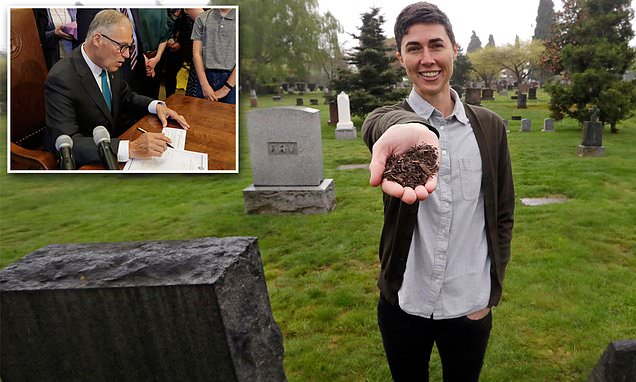
Washington could become the first state to legalize human composting
She worked with researchers at Western Carolina University and the Washington State University to turn her vision, which she dubbed “recomposition,” into reality. The process involves placing unembalmed human remains wrapped in a shroud in a 5-foot-by-10-foot cylindrical vessel with a bed of organic material such as wood chips, alfalfa and straw. Air is then periodically pulled into the vessel, providing oxygen to accelerate microbial activity. Within approximately one month, the remains are reduced to a cubic yard of compost that can be used to grow new plants.
Led by researcher Lynne Carpenter-Boggs, associate professor of sustainable and organic agriculture at Washington State, the five-month program recomposed six donor bodies in a carefully controlled environment, aiming to allay concerns about spreading pathogens.