

Australia AUSTRALIA - 4YO AUGUST (GUS) Missing from rural family home in Outback, Yunta, South Australia, 27th Sept 2025

  • #3,361
I think a toddler could walk further than the area that's usually said to be the limit they're capable of.

I agree. Yet searchers have no choice but to create an initial zone to search at first. I don't envy them this difficult decision.

Well yeah, it’s just another thing that police can rule out or in.
So any progress is good.
IMO

I agree the mineshafts must be ruled-out. My comment didn't come across quite how I meant it. I keep thinking of a different case where a little boy was found outside an original search zone; he had curled up to sleep near a tractor on someone's property.

So that case is probably biasing me, but I imagine that's what Gus did, maybe fell asleep near a bush somewhere, so he's hidden from view. But who knows, and a mineshaft is also possible.
 
  • #3,362

<modsnip: Quoted post was removed>

Just highlighting this important point ^^^

In reading about old gold mines in the area, there were initially about 5,000 people who descended on the Yunta/Waukaringa/Teetulpa/Manna Hill area in the gold rush of the 1880s. I am guessing that there may be hundreds of mines and wells in that vast expanse of outback.

imo
 
Last edited by a moderator:
  • #3,363
I was trying to explain why I said that perhaps the police picked up the depressions/holes using their mapping technology.

If the landowners/the naked eye cannot see old mines and wells (as stated in the article), perhaps the police technology that they have been using over the past few weeks picked them up.
How thorough was the search for Gus if six mineshafts went unseen by search teams?

If they missed the mineshafts, how can we be certain that the search teams did not miss Gus?
 
  • #3,364
How thorough was the search for Gus if six mineshafts went unseen by search teams?

These mineshafts are outside the previous search zones.


The uncovered and unfenced shafts are located between 5.5km and 12km from the Oak Park homestead in areas not searched on foot by police.

 
  • #3,365
Their special mapping instruments might have only just discovered these sites.

If the residents of the property had been aware (over generations) they likely would not have left them uncovered/unfenced/unposted. Not only the human danger, but they also didn't need to be losing sheep down any open mineshafts.

The 'gold rush' in that area was many, many years ago (1880s, and a little in the early 1900s, I believe).

imo
So these would have been pretty recent mining operations at the time the family bought the property.
 
  • #3,366
So these would have been pretty recent mining operations at the time the family bought the property.

The local (who I quoted earlier from a new article) has unknown mines on his property, and that property has been in his family for generations also. Maybe they never come across them. Maybe their history gets lost over the generations.

And it is hard to put into words how vast the outback is.

imo
 
  • #3,367
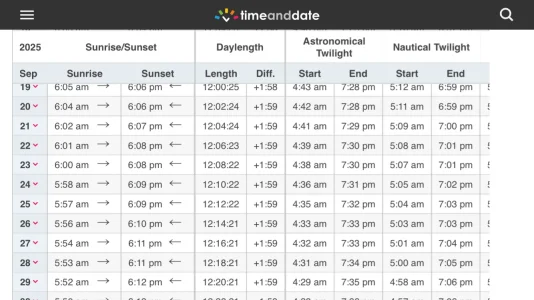
Where are you getting 3 hours from?

He was supposedly seen at 5pm. Sunset was 6:11pm.

He would have had to walk 12 minute kilometres, without water or rest, straight in one direction with no deviation. I don't think this is physically possible.
Just roughly estimating civil twilight goes for about 20 mins to half an hour after sunset (depending on the season) and nautical twilight for another 30 minutes or so after that. There's astronomical twilight too but that probably isn't relevant in terms of the human eye having enough light to be able to see outlines of the land ahead . Jmo

 
  • #3,368
Just roughly estimating civil twilight goes for about 20 mins to half an hour after sunset (depending on the season) and nautical twilight for another 30 minutes or so after that. There's astronomical twilight too but that probably isn't relevant in terms of the human eye having enough light to be able to see outlines of the land ahead . Jmo


Thanks for that. The 20 minutes is feasible, giving him enough light to see in front of himself until 6:30pm.

We don't know that he left at 5pm though . He likely played for a while in the sand, then got bored.

The thing is, a 4 year old is extremely unlikely to walk in one precise direction. At times he was likely going sideways relative to his original direction. He may have even backtracked unknowingly. For him to cover 5.5km (shortest option possible to reach a mine) as the crow flies, how many kilometres would he realistically cover? Factoring in the odd trip, stumble, probably starting to cry, needing a wee etc. Getting harder to see, and yet he somehow maintained his bearings to continue to head away from the one source of light (homestead) once the sun disappeared?

None of these trips or stumbles managed to kick up a bit of ground or snap a branch or cause his hat to fall off? No cuts on his knee to leave a trace of blood? The longer he walked in fading light, the more likely he would leave signs for the trackers to find.

If there was one straight track for 5.5km, I could see it would be maybe possible. An average 4 year old would probably need to cover in excess of 8km of ground to go 5.5km from his starting point in that terrain. Possibly significantly more.
 
  • #3,369
Thanks for that. The 20 minutes is feasible, giving him enough light to see in front of himself until 6:30pm.

We don't know that he left at 5pm though . He likely played for a while in the sand, then got bored.

The thing is, a 4 year old is extremely unlikely to walk in one precise direction. At times he was likely going sideways relative to his original direction. He may have even backtracked unknowingly. For him to cover 5.5km (shortest option possible to reach a mine) as the crow flies, how many kilometres would he realistically cover? Factoring in the odd trip, stumble, probably starting to cry, needing a wee etc. Getting harder to see, and yet he somehow maintained his bearings to continue to head away from the one source of light (homestead) once the sun disappeared?

None of these trips or stumbles managed to kick up a bit of ground or snap a branch or cause his hat to fall off? No cuts on his knee to leave a trace of blood? The longer he walked in fading light, the more likely he would leave signs for the trackers to find.

If there was one straight track for 5.5km, I could see it would be maybe possible. An average 4 year old would probably need to cover in excess of 8km of ground to go 5.5km from his starting point in that terrain. Possibly significantly more.
Sunset times Yunta September 2025
 

Attachments

  • IMG_2540.webp
    IMG_2540.webp
    73.5 KB · Views: 25
  • #3,370
Someone could probably tell us what the moon and cloud
cover were like that night.
 
  • #3,371
I was trying to explain why I said that perhaps the police picked up the depressions/holes using their mapping technology.

If the landowners/the naked eye cannot see old mines and wells (as stated in the article), perhaps the police technology that they have been using over the past few weeks picked them up.
Yeah, they were quite specific about those areas not having been previously searched on foot, so I'm guessing that these mines were picked up on by the more recent aerial imaging
 
  • #3,372
Honestly folks,
I would think that families with huge properties
have detailed maps of their lands with all landmarks clearly marked.

What is what and the locations.

And all safety hazards on properties are removed.
Or:
covered, fenced and clearly signed to avoid unexpected accidents - of the residents or seasonal workers.

Usually,
in case of accidents/missing person case
Police are given such maps with all objects clearly detailed:
septic tanks, grain siloses, ponds, outbuildings, sheds, barns, paddocks, underground structures, etc, etc.

(And, of course,
dangerous places like old mine shafts.)

And I mean EVERYTHING.
It is very important for inheritance matters.
Not to mention safety.

Well,
this is My Opinion

My grandparents who lived in the country had such a map,
very detailed, they knew their land as well as the backs of their hands.
And this is obvious to me.

JMO
 
Last edited:
  • #3,373
Just highlighting this important point ^^^

In reading about old gold mines in the area, there were initially about 5,000 people who descended on the Yunta/Waukaringa/Teetulpa/Manna Hill area in the gold rush of the 1880s. I am guessing that there may be hundreds of mines and wells in that vast expanse of outback.

imo
Sounds similar to the Ballarat area in Victoria where Samantha Murphys as never been found, but is believed to have been murdered. Many open old gold mines.
MOO is that Gus fell - somewhere. I so hope he is found in the next few days. The pain on the family would be unbearable.
 
  • #3,374
Honestly folks,
I would think that families with huge properties
have detailed maps of their lands with all landmarks clearly marked.

What is what and the locations.

And all safety hazards on properties are removed.
Or:
covered, fenced and clearly signed to avoid unexpected accidents - of the residents or seasonal workers.

Usually,
in case of accidents/missing person case
Police are given such maps with all objects clearly detailed:
septic tanks, grain siloses, ponds, outbuildings, sheds, barns, paddocks, underground structures, etc, etc.

(And, of course,
dangerous places like old mine shafts.)

And I mean EVERYTHING.
It is very important for inheritance matters.
Not to mention safety.

Well,
this is My Opinion

My grandparents who lived in the country had such a map,
very detailed, they knew their land as well as the backs of their hands.
And this is obvious to me.

JMO
Thanks for sharing your perspective and life experience. The fact that these mine shafts at Oak Park are uncovered is really mind blowing to me.
 
  • #3,375
IMO - It’s hard to fathom for those of us who aren’t familiar with these vast environments but I guess it’s possible old mines etc can go unknown for long periods of time. I found this interesting -

In the article just posted above by @Marg944 ....


"The station owner, who wished to remain anonymous, owns more than 30,000 acres of land that has been in his family for multiple generations, and is still stumbling across disused shafts and wells.

'Most aren't on any maps - I'm still finding new spots on my property,' he said.

The local shared a picture of one of the mines he had recently discovered, which reveals why they are so difficult to see.

'Most have different-coloured material around them from being dug out, but some are flush with the ground and have overgrowth all around them,' he added.

'Some are easy to see, some definitely not.' "
 
  • #3,376
There's astronomical twilight too but that probably isn't relevant in terms of the human eye having enough light to be able to see outlines of the land ahead . Jmo

Thanks for that. The 20 minutes is feasible, giving him enough light to see in front of himself until 6:30pm.

Out in the outback of South Australia the Milky Way is actually bright enough to cast shadows.

Providing it was a clear night, he'd have plenty of light to see where he was going after sunset.

IMO
 
  • #3,377
I would think that families with huge properties
have detailed maps of their lands with all landmarks clearly marked.

Surely it depends on the regulations in the country (or state) whether every property is required to have such a map? Imagine the expense to create one nowadays, for example on a property that has been in a family for generations and hasn't required a mortgage, so no bank or buyer ever required such a map? And might some properties be "grandfathered" out of such a requirement? I have NO idea about these things, but those are my thoughts.
 
  • #3,378
I think there's a lot of people on this thread with not much comprehension of how large this area of land is or what that means in practice. Even if the land had been in your family for generations - there is no way to know a patch of land that large with the depth and detail some people seem to be assuming they would, could or should. I don't agree that they would necessarily have detailed maps either.
 
  • #3,379
I was trying to explain why I said that perhaps the police picked up the depressions/holes using their mapping technology.

If the landowners/the naked eye cannot see old mines and wells (as stated in the article), perhaps the police technology that they have been using over the past few weeks picked them up.
It's worth remembering that old mine are not just holes in the ground, but also the spoil heaps around them comprising the material removed in the process of digging the shaft and any galleries running off them. Those heaps would presumably be visible for decades until they eventually are eroded flat into the landscape. There's also often other detritus such as glass, rusty cans and shards of broken crockery which reveals the earlier human presence.
 
  • #3,380
Out in the outback of South Australia the Milky Way is actually bright enough to cast shadows.
Wow. That sounds amazing.
Providing it was a clear night, he'd have plenty of light to see where he was going after sunset.

IMO
Also bear in mind that even without moon or starlight, the human eye adapts to seeing in the dark providing it is not dazzled by light. I believe full night vision takes around 45 minutes to develop so Gus's should have developed in the hour or so during which the light itself faded.
 

Guardians Monthly Goal

Members online

Online statistics

Members online
140
Guests online
802
Total visitors
942

Forum statistics

Threads
635,685
Messages
18,682,159
Members
243,352
Latest member
xkfunkx
Back
Top