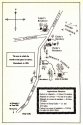
dougie, you seem to be suffering from the same sort of mental block that afflicted Inspector Frederick Charles Urquhart, whose reason for letting go of Thomas Day was along the lines of "we had no reason for holding him". One can only imagine the incredulous looks on the faces of the members of the Inquiry when Urquhart came out with that one ! I looked up the word "detect" (and thus "detective", which Urquhart claimed to be) in my Dictionary, and here's what it said - "Detect ; to uncover, expose, to accuse ; to discover, discern, to find out (esp. something elusive or secret)". It would seem that Urquhart had his own version of what a detective actually does, and in his (very brief) dealings with the prime suspect Day, it is apparent that as the suspect did not throw up his hands and confess to the crime, how could he be guilty ? It was a tragic and inexplicable neglect of duty for Urquhart not to even bother checking out Day's story and background, especially as the guy was only around for a couple of weeks. Take a look at the map below - the very fact that Day was in close proximity to the crime must make him, at least, a contender for being the murderer. He was also frequently seen either standing and smoking, or walking along the road. Add to this the description by his employer and workmate that he was very aloof, would hardly speak a word (remember the man standing near the sliprails was only heard to grunt or said nothing to other passers-by that night), usually slept with his clothes and boots on (Quoting from Constable Christie's Report - "...Mr. Clarke (Day's employer) informed the constable that during night-time, whenever he had occasion to go to Day's room he always found Day with his clothes and boots on, and lying in bed on top of the bedclothes and always easily awakened. The least knock at the room Day would hear it and come out, and he always kept the door and window open at night. Mr. Clarke considers Day was a bad character, and after the Gatton murders Clarke distrusted Day, and while working about the boilers at the slaughter yard Clarke had an impression that Day would throw him into the boilers......(Unquote), and was a very physically strong young man. If all that didn't make Urquhart want to thoroughly check Day out, then the only conclusion that I can arrive at is either Urquhart was completely stupid (which I doubt), or else orders had come from higher up to "leave Day alone". Remember too, that other police (the Constable R.G. Christie above for one) suspected that Day had done it, but were ordered by Urquhart to drop that line of enquiry. This is not innuendo, rumours and mere suspicion dougie, but cold hard facts, which our Inspector Urquhart chose to ignore completely. I will let the Royal Commissioners sum it up (in their report dated 29 November 1899)..."We are of the opinion that sufficiently exhaustive investigation and inquiry were not made in every instance as regards suspects."




 k he lived (temporarily) in the vicinity- he was strong,- he could have done it.That applied to many others,so why exactly should we suspect him more than anyone else?