"The judge now questions the defendant about various chat messages and calls that Kerstin G. wrote or made during the tour. For example, she dialed the number 149 at 5:20 p.m. "But because this number does not exist, she could have dialed 140 - the alpine emergency number. The numbers are next to each other," explains Norbert Hofer. The defendant replied: "I didn't notice anything about it.""
It was after sundown and she was behind him, likely going through the part of the route that you have to go kinda on all fours. Him "didnt noticing" what she was doing behind him means nothing.
"It comes to light that the couple had no food in their backpacks. The victim only had "gummy bears" with him, as the 37-year-old says."
He didnt have any food left but he was doing fine. Climbing impressively after 18-19 hours on the trail. Worth considering that he was eating on the way and no reason to consider that he was starving himself.
"The defendant had a first aid package including a rescue blanket with him. But not a bivouac bag. "I don't own one," he says, "I just don't have one." Kerstin G. had a rescue blanket and a bivouac bag with her. "She was well equipped," says her boyfriend, "I knew that." She also had heat pads with her."
He knew that she was well equipped. Then he denies that.
"Judge Norbert Hofer asks many detailed technical questions. Some spectators – who come from alpine sports – nod in agreement. Again and again the defendant says: "I can't explain some things quite so well anymore." Hofer also suggests various variants of how one could have proceeded - for example with the "rope commuter". And he asks the alpinist why it wasn't done that way."
Incorrect implication. There was only one point when he was able to "explain it well" - day after. Insisting that he experienced some unforeseen tragic emergency situation and couldnt try to reach for help in any other way than going to Adler's hut.
Then it came out that there is some surveillance available, that he had phone service, that they started crazy late, that he ignored the rescue services, that she was not ready for that climb and sooo much more.
Took him 5 months to cook up an official statement. Released only after cops made it publicly known what they have on him so far.
"The victim lost her glove during the "rope commuter". "I then gave her my spare glove," said the accused. When the police helicopter came, the couple noticed it. "I asked Kerstin if she had made an emergency call - she said no. She also emphasized that she was fine," said her boyfriend. The judge: "It would have seemed logical to me that in this situation I take out my cell phone, actively call 140, tell them that everything is fine, and I don't need any help. Why didn't you do that?" The accused: "Kerstin was fine, so I didn't look at my cell phone.""
Worth remembeting that convo allegedly happened with strong winds, on vertical wall, and with a helicopter hovering like 20 metres above them.
Then he allegedly couldnt hear what she was screaming. With just wind, no heli to make additional noise.
"Consequently, the defendant preceded part of the way alone, his girlfriend waited securely. The couple thus did not continue on the running rope. "Why did you make this decision? In view of the overall situation, this is not conclusive for me," said Norbert Hofer. The defendant agreed: "In retrospect, it didn't make sense.""
This is what he, according to HIM was doing between the heli and call to his buddy at 0:35. When everything was, according to him was going well.
(my suspicion is that they got some evidence that he left her)
""Kerstin shouted something up at me four to five times, but I didn't understand her," said the accused. Finally, he was "worried" and "made the emergency call" at 00.35 a.m."
At the time of the 00:35 emergency call: "What was Kerstin's condition? "It was bitterly cold, we wanted to have a tea, but it was all frozen," said the Salzburger. The judge states that the woman was "only crawling on her knees". "We were in an absolutely exceptional situation, we were both completely exhausted," said the Salzburger. Then he describes in detail how he secured himself."
They wanted to have a tee, she was climbing on her knees and he was worried but apparently not enough to ask her what she was screaming before.
This is from his statement in July (
source)
In his statement, the 36-year-old adds to the already known procedure that they had both been fit on the first visit of the police helicopter: "There was no emergency situation and therefore no help was needed".
Only some time later, "for the accused, it was completely surprising and objectively unpredictable" to a "deterioration of the conditions". Above all, his partner was suddenly visibly exhausted, which is why he thought of a rescue by helicopter at 0.30 a.m.
He discovered several missed calls and messages from an alpine police officer. He had not noticed this because the mobile phone "only vibrated slightly on incoming calls and messages." At 0.35 a.m., he called back the officer and told him that "especially his girlfriend - but starting even himself - were heavily exhausted" and therefore "prompted help" was.
There may have been a misunderstanding, the accused suspects. However, the police officer, according to "Kleine," testified in his interrogation that the accused had declared it was "all right."
"That's wrong," the 36-year-old said. He had referred to the previous helicopter overflight and believed that the alpine policeman knew about the seriousness of the current situation. The harrowing result: help didn't come.
"From the point of view of the defense, the alpine police should have already reacted at this time," Jelinek is quoted by the "crown."
At the top of the mountain, the couple tried to keep warm by slow further ascent. But at a snow ramp 30 to 40 meters under the summit cross was over: "The situation was hopeless: The woman was so physically exhausted that she could not continue the ascent at all."
Forward didn't go, backwards was completely impossible. Without a prospect of being able to help his partner on site, he then made the decision "in agreement with his girlfriend" to continue alone. The Salzburger hoped to meet other mountaineers at the refuge on the Adlersruhe. But in vain.
At 3.30 at night, long after he left alone, he called the alpine policeman again. He said he had to leave the 33-year-old behind and "also suggested that he send a helicopter again." Due to the weather conditions, however, the heli could not rise before dawn, the following attempt failed due to violent storm gusts. That's why six rescuers climbed up to the scene of the accident on foot.
Jelinek summarizes: "It is incomprehensible to the accused why the rescue chain was set in motion so late, especially since he had already reported on the predicament at 0.35 o'clock." The 36-year-old himself could not have foreseen the "sudden fatigue slump" of his partner, was surprised even by it.
Kronen Zeitung, also June:
“It was only some time later that conditions deteriorated – completely surprising and objectively unpredictable for the accused,” reads the statement. The woman in particular has shown strong signs of exhaustion. From 0.30 a.m., the 36-year-old is said to have thought of a rescue by helicopter. To do this, he called an alpine policeman known to him, who was sitting in the police helicopter and tried to contact him several times anyway. During the phone call, he also reportedly told the mountain police officer that both of them were extremely exhausted.
The accused suspects in his letter that a misunderstanding may have occurred. At 3:30 a.m., after the 36-year-old had left his partner alone to seek help unsuccessfully from the emergency shelter near Adlersruhe, he called the mountain police officer again and suggested a helicopter rescue.
_______________________
Kronen again:
But this situation should change in a dramatic way: The conditions deteriorated and the 33-year-old had “suddenly shown more signs of exhaustion,” according to her companion. This was “completely surprising and objectively unpredictable for him.” “However, a return was by no means possible at that time.”
After the condition of his girlfriend has deteriorated further, the 36-year-old decided to organize a helicopter rescue. The accused, according to his opinion, had taken out his mobile phone and noticed that he has several calls and messages from an alpine policeman. He did not notice this because the mobile phone “only vibrated slightly during incoming calls and messages.”
On Sunday, the 19th January, at 0.35 in the morning, the Salzburger called this alpine policeman and informed him that now “in particular his girlfriend – but starting himself – are now greatly exhausted, are only very slow progress and therefore help is needed in a timely manner.”
What happened next, the statements differ. The police officer testified in his interrogation that the accused had told him it was "all right." “That’s wrong,” the 36-year-old counters, saying that this was related to the timing of the helicopter overflight. He was convinced, according to the statement, that the Alpine policeman knew about the seriousness of the situation and that rescue was needed quickly. He told his girlfriend that according to police officers, no helicopter deployment is currently possible, and therefore one must keep moving in order to keep himself reasonably warm.
Both made it to a snow ramp, 30 to 40 meters of altitude from the summit cross: “The situation was hopeless: The woman was so physically exhausted that she could not continue the climb at all.”
Back to the trial:
""I agreed with her that I would get help. Because we knew that the whole night up here would not be enough. In this situation, I didn't think about Kerstin's bivouac bag anymore. I lay down next to her and she then screamed loudly: 'Go, now, go!' In doing so, she saved my life," recalls the alpinist."
""She was so exhausted that she was unable to move?" the judge asked. "Yes, that's correct," answers the accused. "Would Kerstin have been able to put on the bivouac bag?" the judge continued. "Yes, it would have been already. I don't know why she didn't tell me about it," said the Salzburger."
Setting the narrative straight, yet it doesnt make sense as everything in his story.
He agreed with her that he will get help... by going to Adlershutte.
But he was also totally convinced (according to him) that help is already on the way. He expressed his shock that it wasnt while trying to put a blame on SAR for not reacting fast enough. That couldnt fly anywhere cause he DID NOT even try to call SAR. He kept calling that officer known to him, and accused him of not reacting properly, then he cut it down to helpfuly explaining that he got misunderstood.
Now the phone call at 00.35 a.m. comes up again. "Why don't you tell the telephone partner that Kerstin can no longer move?" asks Judge Norbert Hofer. "I didn't know then that she couldn't go any further," is the answer.
"So why didn't you make up for it when you noticed the emergency? That would have been the most fundamental information, you need to know that as a mountaineer," the judge continued. The Salzburger's answer to this: "I assumed that the rescue chain was set in motion by the phone call." (Important to note, they were separated at this time, as mentioned above, she kept yelling at him but he couldn't hear here).
This is no messed up translation. This is his narrative.
She was shouting to him something, walking on her knees, he couldnt hear her...
But he didnt knew STILL that shes unable to move.
He allegedly said to the officer that shes exhausted and he is too - but oh wait, he didnt knew that shes exhausted at that point.
He thought that rescue is on the way. He also thought that only way to get help is to go to Adlers and call from there.
He alleges that the actual deterioration of the Kerstin's condition happened only after he made that call to his buddy, instead of calling emergency number. Yet he hasnt called emergency at all and hasnt called his buddy again to deliver new info.
He was with her then. But oh wait, also he wasnt.
He claims to leave her even prior to 0:35 call, but he also claims to stay with her for 1,5 hour ready to die with her there. And surveillance shows him climbing for most of that time.
Continuing from the last post, "Now the judge inquires about the procedure in which the Salzburg resident fixed Kerstin - and at the same time shows a photo of the victim at the scene of the accident. "How could she get into such a position if she could no longer move?" the judge asks. And then an important statement by Norbert Hofer: "I find it difficult to reconcile your variant with the pictures I have.""
"Judge Norbert Hofer has "an explanation" for how it could have been. "This explanation is more conclusive in my eyes," he says and waits to see what the defendant says about it." (Oh how I wish the reporter had written down the Judge's explanation!!)
Im afraid the judge suspects the most logical explanation - that he left her behind even before making that call.
I suspect that the only reason why he called anyone at all was that people notified mountain rescue about the calls and flew heli to rescue them after they couldnt reach them. If not for peoples concern and outstanding dedication from rescue services we would have only his heartbreaking story about having to leave her after she basically forced him to and him doing so cause he had no other choice.
"During his relegation (translate: descent), the Salzburg native was "really bad together". "I had to vomit twice and it took me much longer than usual," he reveals."
Well, worth noting that as he claims to leave Kerstin at 2:00 that gives him ONE HOUR AND TWENTY MINUTES (cause 3:20 he reached Adler's, there are receipts for it, at least surveillance have it, not sure if prosecutor checked it) to climb up the remaining way up to the summit and descend.
That would be, dear ladies and gents just incredible speed, faster than vast majority of climbers. Basically impossible in these conditions so he adds himself some time in the hut before he calls.
"The alpinist finally arrived at the Adlersruhe: "There was no way I could climb again. I had my cell phone in my pocket the whole time, I didn't notice any calls because I was in an absolutely exceptional situation.""
But he also claimed that the sole reason why he went to Adler was to MAKE A CALL. Or hopefully find some people asleep and send these random people to rescue Kerstin, at night, with hurricane wind and no rescue gear.
But he somehow wasnt thinking about his phone at the time. And a year was not long enough for him to get his story straight (cause too much evidence would expose him as a liar).
"The judge again refers to the protocol of the first interrogation – it says, for example, that the victim was "disoriented". "No, that's not true. Kerstin was not disoriented, she was responsive," says the accused. It is also mentioned that the GoPro camera of the Salzburg native "no longer appeared"."
Kerstin lost a glove and got several injuries. Apparently he at some point lost his go pro.
1. That must made him really furious.
2. Sure as hell that sounds like a climb when everything goes well.
"The judge has no more questions for the defendant – but prosecutor Johann Frischmann does. "Did Kerstin know anything about knots?" is one of the questions. "Yes, she did," answers the Salzburger, "but she couldn't have done the tour alone." The prosecutor consequently: "But you have completed such tours on your own. So I assume you're better at it?" The accused: "As I said, we were both equal.""
If they were equal, he would care about her as much as he cared about himself. Not the case.
She climbed for months, he climbed for years.
They werent equal in experience, in fitness, in gear (her shoes would make long climbing extremely painful, he had proper shoes and best gear, best skis, best everything, she was running on his leftovers), in endurance. They werent equal with anything and there is N O T H I N G in his actions that would show that he saw them as equal. His vision of equality is her dying there and him surviving.
""Classic winter mix tours - i.e. combined rock and ice - are missing from the list. Can you help me here?" the judge turns to the victim's mother. "I don't know any, no," she answers, "I suppose she wasn't experienced here." The mother states that she always looked at her daughter's routes in advance and gave her tips. "She also told me that she wanted to walk the Glockner - we first talked about it at the end of December 2024.""
""My daughter didn't go climbing directly in winter," says the mother, "she didn't complete any such training courses." The judge wants to know: "Have you ever talked to her about the difficulty of the Stüdlgrat on the Glockner?" The victim's mother denies it. The crampons that her daughter used "she received from her boyfriend (note: the accused)."" (The crampons that the judge described as inadequate earlier, but TP said she had used before with no troubles. HE gave them to her.)
Mom says that she ALWAYS looked at Kerstins routes in advance and gave her tips.
Yet she didnt about Studlgrat.
SO: there was
no mention of Studlgrat in December 2024.
And there was no usual for them discussion about the climb before 18th. Almost like Kerstin wasnt expecting to climb Studlgrat.
"Kerstin wrote a message to her mother in the late afternoon saying that she was "well down" again – although according to the protocol this was not the case at that time. "I thought that she and her boyfriend were out of the danger zone," says the mother and then adds: "She probably wanted to calm me down with this news.""
But was mom aware that they went on Studl or just Gross, or something in that area? Few peaks can be climbed starting from Matrei and dozens on dozens skiing, snowboarding and hiking routes there.
"And about her daughter he says: "She was very strong-willed. If she set her mind on something, she did everything she could to achieve it."
""Have you ever experienced a significant drop in your daughter's performance?" the judge wants to know. The father's answer: "No, that never happened." He had "not" had contact with Kerstin that day from late afternoon - not until the evening."
So not only mom didnt knew about Studl at all before, UNLIKE usual but also never before it happened that Kerstin set her mind on something that was beyond her abilities according to the dad. So two anomalies combined but instead of focusing on that we're red herringed with theoretical possibility that she may be still suffering from eating disorder despite of her doing to therapy for that and not being malnourished at the point of death.
(Thomas's father now on the stand) ""My son has been alpine skiing for a while. He was always active in sports," says the father about the accused, who was also a member of the mountain troops. "He didn't take any courses in the alpine area, he learned all that himself," he emphasizes, "he looks at the tours carefully in advance, always keeps an eye on the weather." He had "bought the equipment himself"."
So his father is an ex elite Bundesheer troop member, trained in high mountaneering Alpine warfare.
If Thomas always keeps an eye on the weather, looks at his tours carefully in advance and climbs with his dad whos at better shape at ~60 that most people will ever be climbinwise but then on th 18th he suddenly became ignorant. And isnt that interesting.
"The father had not known anything about the Glockner tour in advance, nor had his wife. "I was partly present at the interrogation of my son, which was a little strange," he says, "it was mainly about the phone call at 00:35 a.m. - whether this was an emergency call or not."
He had tried "several times" to reach his son by phone during the night - without success. He had had his first contact with him at 7:04 a.m. – he had been called by the accused."
I bet it was strange, cause it looks like he called to tell his buddy to tell that its all fine and no help was needed and only later changed his mind and started to insist that it WAS an emergency call.
It was also somewhere in Kronen, approved by Jelinek that Thomas claimed thats what he figured, after the call that its gonna be best to keep moving, then he claimed thats what he heard from the officer/buddy/heli pilot.
" again from the judge. "Have you ever discussed with your son how to act in an emergency situation, for example on the Stüdlgrat?" asks the judge. Only "superficial", is the answer."
So they were discussing it and apparently then Thomas did not shocked his dad with his endless idiocy. Also didnt happen during the climbs with him.
Maybe cause daddy was better than him at it. And maybe, just maybe, cause Thomas wasnt ignorant at all.
"Now Judge Norbert Hofer is more specific about the alleged disputes between the defendant and his ex-girlfriend. There was correspondence – in it, for example, the accusation that the alpinist had "left his ex-girlfriend in an emergency situation". The brother then emphasizes that he himself has never had such problems with the accused."
It's Thomas's brother - but moments before he stated that they werent climbing that much before.
"He has already spoken to his brother about the Glockner drama itself - for example about the bivouac bag. "But what specifically?" the judge wants to know. "In my opinion, he didn't know that Kerstin had a bivouac bag with her," says the brother. The judge: "But the defendant emphasized to us that he knew that very well." The interrogation of the brother has now ended."
Theyre trying to blindly defend him, cause apparently they dont see him for what he really is. And theyre not close enough to be able to really tell much. Not close enough to discuss what happened. Looks like just assumptions that he did what he possibly could.
"Now an alpinist is being questioned, who was also on the Großglockner on the same day. "It was very windy," he says, "in the morning it was still okay, actually pleasant. But then the wind became stronger and stronger – even extremely strong." He later made an emergency call. "Because I saw a headlamp and heard a voice. I thought that was strange. I'm not sure if it was an emergency or not – but I didn't want to sit idle," says the alpinist. There are no further questions for him."
Thats what I suspected, that these people descending had to see headlamps and that they may be who made first calls.
Another climber who was on the mountain who crossed paths with KG and TP "Also on the same day on the Glockner was another alpinist. "I finally broke off the tour because of the weather," he says. Exciting: He had previously met the defendant and his girlfriend. "We exchanged ideas, even climbed up a part together," says the man, "Kerstin left behind us." The defendant had felt - in other words, he went ahead. "We went at a normal pace. The defendant always looked at his girlfriend, asked her, for example, how she was doing," he recalls."
So either she was already not so enthusiastic about the climb, overwhelmed by the mountain OR at that point she felt fine but as soon as Thomas met someone in front of whom he could shine, he left her behind and focused on him. Cause thaaats what you do.
"And another witness testifies who was on the Glockner on the day in question. He is an experienced alpinist. He was not alone. "I assumed 40 km/h wind from the south," he says, "and I was convinced for a long time that we would reach the summit." The wind had only become "extremely gusty" over time. "Suddenly we had the first problems here," he recalls, "my mountain partner said around 1 p.m. that she was going to break off the tour." The group turned back around 1:45 p.m." (I believe this is visible in the mountain cams, the group going back down)
So thats the group descending on the evening. If they experienced extreme gusts of wind before they turned around Thomas couldnt miss them too.
I suspect they were going via Nordgrad, which is also hellish, I bet he had to be experienced alpinist to go and descend through that, but if it took them 4+ hours to descend they had to be pretty far up and definitely didnt started after 7:00 as Thomas & Kerstin.
""I was there when the victim was rescued," says the head of operations. The team descended from the summit and Kerstin was seen immediately. "It was not where it should have been according to the information. It wasn't a pretty sight, it was all frozen," he says. In the summer after, he had spoken to the defendant about the drama when the latter had visited him at the hut. "We did not talk about how exactly the defendant had secured Kerstin.""
If she was seen "immediately" after descending summit, then she couldnt be 50 m below the summit in elevation.
"According to the head of operations, the defendant seemed "very composed" on the Adlersruhe. "I asked him how Kerstin was doing up on the mountain. He told me about her injuries, for example," he describes, "in the summer he told me that he didn't know anything about his girlfriend's bivouac bag."
So Thomas was chatting with witnesses already aware that hes likely going on trial, and was feeding them lies. Such a shocking outcome.
That's from Adler's landlord and also head of Kals mountain rescue.
He says that after the alleged accident Thomas was very composed and talking about Kerstin's INJURIES.
Then in the summer - did they met coincidentally? Hard to expect that considering the distance from Salzburg to Kals. So apparently these pics from Gross that he posted in 2025 werent oldies. Looks like he went there again and chatted with the guy in Aldershutte.
Somebody was saying thats impossible and he (Thomas) would "never" go back on Gross while investigated cause that would be admission of guilt. Dont remember who and where it was but I agree with that partially.
"What did the incident commander see when he arrived at the scene of the accident? "I don't think Kerstin slipped," he emphasizes. Now there are further questions from the prosecutor. "I can't remember whether there was talk of a sudden drop in performance. We had no such information," emphasizes the head of operations. Regarding the wind, he says: "It does affect your ability to make decisions. You are in an extreme situation.""
If, for such an experienced guy it didnt looked like she slipped. Then how she ended up hanging?
Was that hanging and exposed to wind positon with no gloves and with boots unzipped how Thomas "secured her" there?
So head of the rescue mission didnt get the story about her getting suddenly exhausted.
Sure as hell it sounds like strong wind is affecting Thomas's ability to make decisions all the time, not only when it actually is windy and not only when hes in the mountains, cause majority of these tales and conflicting stories he came up days and months after it happened.
"When asked whether the defendant was familiar with the alpine emergency signs, he also answered "yes". And: "He said that he and his companion were not in an emergency when the police helicopter circled the two at around 10:45 p.m." According to the accused, all the problems then began "after the breakfast place"."
Do you see that? For the God's sake, the number of times this guy is exposing his lies is mindblowing.
That AGAIN is not mistranslation.
This part is from an officer who questioned Thomas on 19th. And apparently Thomas told him that:
a) they werent in trouble when heli was there before 23:00
b) their problems began after the "breakfast spot".
But the Breakfast spot IS FRUHS. Its less than half way up! It's where they allegedly were at 13:30!
Its when that group of experienced alpinists going up via Nordgrad decided to turn back cause wind gusts got too wild.
"Some points cause "astonishment" for Judge Norbert Hofer. For example, nothing was documented about the "rope blockade" in the course of the investigations for a long time." (Rope blockade? Is this what TP did to try to protect KG??)
Seilblockade. It's this thing:
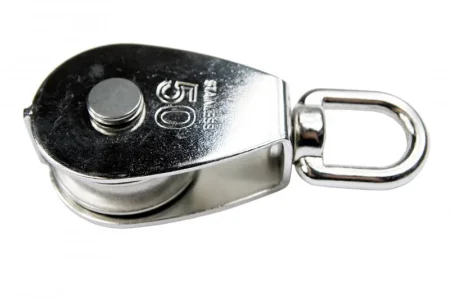
So apparently something went on with the rope. And she was found hanging. Aint that interesting.
I dont think that it was related to what TP did to protect KG, I suspect the opposite.