GIVE US THIS DAY OUR DAILY THREAD FRIDAY MARCH 13 (UH OH) 2026
So, where did the fear of Friday the 13th come from?
Let's explore. Actually, I'll let AI, aka Chat GPT, tell us.
Ahh yes…
Friday the 13th — the one day every elevator suddenly loses the 13th floor and half the world avoids ladders, mirrors, and black cats.

The fear actually has a name:
triskaidekaphobia (fear of the number 13) and
paraskevidekatriaphobia (fear of Friday the 13th specifically). And the origin is a mix of history, religion, and a little medieval gossip.
Let’s break it down.
1. The Number 13 Was Already Considered Unlucky
Long before the “Friday” part got added,
the number 13 itself had a bad reputation.
Two big stories fueled this:
The Last Supper (Christian tradition)
At the final meal before the crucifixion of Jesus, there were
13 people at the table.
The
13th guest was Judas, the disciple who betrayed Jesus.
Because of this, for centuries people believed
having 13 people at a table meant one would die within the year. (Victorians took this
very seriously.)
Norse mythology
In one legend,
12 gods were having a banquet in Valhalla when
Loki showed up as the 13th guest.
Chaos followed and the beloved god
Balder was killed.
So by the Middle Ages,
13 = trouble.
3. When Friday + 13 Became a “Thing”
4
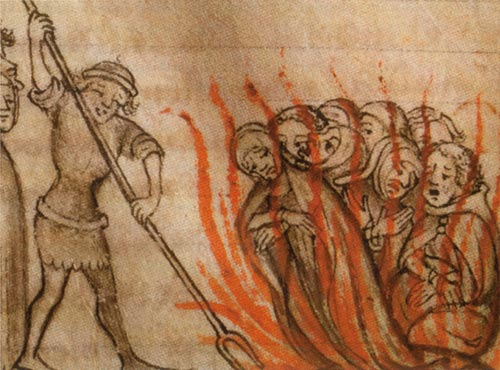
One theory people love involves the
Knights Templar.
On
Friday, October 13, 1307, King
Philip IV of France ordered the
mass arrest of the Knights Templar, accusing them of heresy. Many were tortured or executed.
Because it happened on
Friday the 13th, people later linked the date to terrible luck.
Historians say this probably
didn't create the superstition, but it definitely
helped cement the creepy reputation.
4. The Modern Fear Is Actually Pretty Recent
The specific fear of
Friday the 13th didn’t really explode until the
late 1800s and early 1900s.
A big boost came from a
1907 novel called:
“Friday the Thirteenth” by Thomas Lawson
The book told a story about using superstition to crash the stock market. After that, newspapers and pop culture started talking about the date as cursed.
Then of course…
 The 1980 horror movie “Friday the 13th”
 turned it into a full-blown cultural legend.
Weird Modern Facts About Friday the 13
Some fun ones you can use on your livestream:
- Many hotels skip room 13
- Many buildings skip the 13th floor
- In the U.S., airlines sometimes skip row 13
- Researchers estimate millions of people change plans on Friday the 13th
- The fear can be so strong doctors gave it that monster word: paraskevidekatriaphobia
 Fun twist:
Statistically, studies have found
Friday the 13th is no more dangerous than any other day. In fact some studies suggest
fewer accidents happen because people are extra cautious.
So ironically…
The safest day might actually be the “scariest” one.
Let's have some good luck. Othram Studios on YouTube only needs 23 more subscribers to get to 500. It doesn't cost anything and Othram has been so good to us so please click on the video and subscribe to Othram's new YouTube channel. Thanks.









 !!!!
!!!!