

• #21
  • #22
Was the mandible still attached ? What was foreign about the dentition?
She is now a Dna Doe Project case and already in active genealogical research. According to the DDP, she was hispanic/latino

I guess this changes things considerably.

"recent DNA testing has revealed that she was Hispanic. It’s estimated that she died 1-10 years before her skull was found in 2009."
 
  • #23
It seems the most likely she lived outside of the US.
 
  • #24
  • #25
Why? There are many Hispanics living in the US, about 19,5% of the population in 2023 were Hispanic.
"Her unique dentition may suggest possible childhood in a different demographic than the U.S."
I'd love to know what that actually means though.... my guess is she was born in South America and immigrated to the US, but the type of dentition would say.
 
  • #26
Maine hispanic population was fairly small in 2009, and even smaller in the years prior.


Jody Harris
April 23, 2009
Categories: Maine’s Economy
Tags: Economy

Nearly 16,000 Hispanics live in Maine. From 2000 to 2007, Maine’s Hispanic population grew by 67% compared to 3.3% growth for the total population. This report documents the contributions of Maine’s growing Latino population focusing on first and second generation Latinos. Through a combination of quantitative and qualitative research, we follow the demographic trends, economic contributions and varied experiences associated with the state’s growing Hispanic population
 
  • #27
1000079484.jpg


No Hispanic women listed as missing in Maine in NamUs
 
  • #28
"Her unique dentition may suggest possible childhood in a different demographic than the U.S."
I'd love to know what that actually means though.... my guess is she was born in South America and immigrated to the US, but the type of dentition would say.
"Dentition" means her teeth and their characteristics. Dental development in childhood is heavily influenced by diet and access to dental care. Different countries have different:
- Fluoride levels in water (the US has widespread fluoridation, many countries don't)
- Dental treatment styles - fillings, crowns, and other work look different depending on where they were done, since countries use different materials and techniques
- Dietary patterns affecting tooth wear and decay patterns
So a forensic odontologist (dental expert) can sometimes estimate where someone grew up based on these clues.
"…or indicates chronic teeth grinding or clenching" This is an alternative explanation for the same unusual dental features. Bruxism (grinding/clenching) can produce wear patterns that mimic what foreign dental development looks like.
 
  • #29
Could she float there from somewhere else? For example New Hampshire or Canada?
 
  • #30
  • #31
Could she float there from somewhere else? For example New Hampshire or Canada?
Maybe even from NYC which has a sizeable Hispanic population.
 
  • #32
I thinks her body entered the water in the Caribbean or Gulf of Mexico (skull separated near Florida, drifted north via the Gulf Stream and into the Gulf of Maine) as this is the most consistent explanation for all the forensic evidence, based on my little analysis:
Where she entered the water in the US?

- she was found on July 25, 2009 at Biddeford, Maine
- Hispanic female, age 13 to 21
- probable ocean exposure: 12–18 months (she entered the water approximately January 2008 to July 2008)
- estimated death: 1–10 years before 2009 (she died between 1999 and 2008

So, the skull likely entered the ocean somewhere between early 2008 to mid-2008, and it drifted for up to 18 months before washing ashore on July 25, 2009.

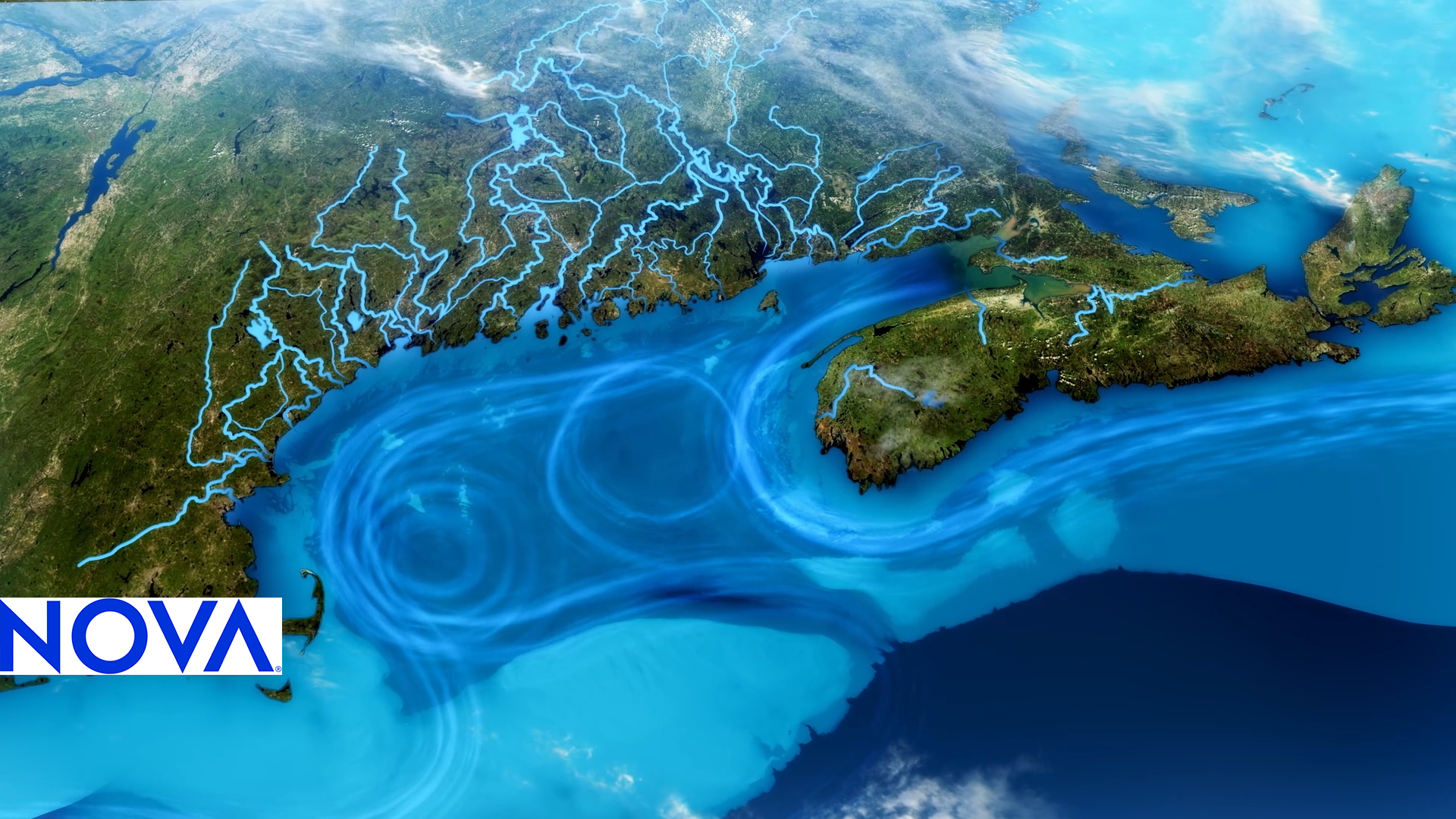
I found that the Gulf of Maine Coastal Current flows southwestward, with speeds near 16 cm/s in the eastern section and slowing to roughly 9 cm/s in the western section off the Maine coast. So that is:

- 9 cm/s (western Maine, slower zone) ≈ ~7.8 km/day ≈ ~4.7 miles/day
Over 12 months at that speed: ~1,700 miles of potential travel
Over 18 months: up to ~2,500 miles (theoretical maximum)

But travel times for drifters retained within the coastal current along the entire western side of the Gulf of Maine are typically less than 55 days. This means the entire western Maine coastline from the Canadian border down to Cape Cod can be traversed in under two months. For an 18-month drift, the skull would have had to travel far, meander, or be temporarily retained somewhere.

Years 2008 and 2009 were characterized largely by upwelling-favorable winds. Upwelling-favorable winds in the Gulf of Maine tend to drive water offshore and reinforce the southwestward flow meaning the dominant current would have been pushing objects from the northeast toward Biddeford more efficiently than average in those years.

Given 12 to18 months of ocean drift arriving at Biddeford by July 2009, working backwards:

If the skull entered the water in early to mid 2008 and drifted slowly (with retention, meandering, and seasonal variation), the most probable origin corridor runs northeast along the Maine coast and potentially further:

Origin Zone
Distance from Biddeford
Time to Drift (approx.)
Likelihood
Greater Portland / Casco Bay, ME~20 milesA few weeksHigh but too close for 12–18-month drift unless retained
Mid-coast Maine (Rockland, Camden, Boothbay)~60–90 miles2–4 weeks directHigh with seasonal meandering could explain 12–18 months
Penobscot Bay, ME~100 miles~3–5 weeks directHigh a known "branching" and retention zone
Downeast Maine (Acadia, Machias, Eastport)~150–175 miles~5–8 weeks directPlausible with meandering
Bay of Fundy / New Brunswick, Canada~200–250 miles Up to 55 days directPlausible water from the Bay of Fundy Gyre turns southwestward into the eastern Gulf of Maine, feeding directly into the coastal current
Nova Scotia, Canada~300+ miles~55 days at the upper endPossible but requires sustained coastal current retention

But direct 18-month drift in the Gulf of Maine coastal current doesn't add up to just "up the coast" it implies either:
  1. Offshore excursion and re-entrainment - the mean coastal current path can deviate fairly frequently due to wind forcing and small-scale structures, with drifters often re-entrained after temporary offshore excursions. The skull could have circled partially, spent time in a gyre or retention zone, and eventually washed ashore.
  2. Temporary seabed resting - in cold water, bacterial decomposition slows dramatically, and bodies have been retrieved as recognizable skeletons after five years. The skull may have rested on the seafloor for months before becoming buoyant enough to drift again.
  3. A more distant origin - if it entered the ocean in late 2007 or very early 2008, it could have originated from as far as New Brunswick, Nova Scotia, or even offshore Atlantic waters via a vessel.
The Hispanic Factor forensically significant for geography. The Hispanic population in northern New England (Maine, New Hampshire, Vermont) was quite small in the 2000s - concentrated mainly in Portland, Lewiston/Auburn, and Bangor, Maine. The dental evidence suggesting a childhood outside the United States makes it more likely she was foreign-born.
This opens two broader geographic scenarios:
Scenario A - Land-based origin in New England: She lived in the region, died there, and entered the ocean from the Maine or New Hampshire coast.
Scenario B - Maritime origin: She entered the ocean further out, potentially from a vessel. Migrant maritime routes, fishing vessels, or cargo ships operating in or near the Gulf of Maine could place a Hispanic young woman entering the water at a wide range of locations.

The most oceanographically defensible origin zone, given a 12 to 18 month drift arriving in July 2009, is somewhere northeast along the Maine coast, most likely between Penobscot Bay and Downeast Maine (~100–175 miles northeast of Biddeford), possibly extending into southern New Brunswick or Nova Scotia. The 18-month upper bound, combined with the 2008 upwelling-favorable conditions, keeps the entire western Gulf of Maine coastline in play.


A maritime or offshore origin (a vessel) cannot be ruled out and would actually help explain why a young Hispanic woman with foreign dental characteristics would be in this remote part of the ocean.

What if she entered the water in the Caribbeans or Mexico?
This actually aligns with the forensic evidence:
  • Hispanic ethnicity + dental development outside the US strongly suggests she was born and raised in Latin America
  • The Caribbean and Mexico are the most common points of origin for undocumented migrants attempting to reach the US via sea routes in the 2000s
  • She could have died aboard a vessel, been lost overboard during a maritime crossing, or entered the water anywhere along a migration route
Step 1: Body Enters Warm Tropical Water (Caribbean/Mexico)
In warm water, bloating sets in fast and bodies may float to the surface within 3 to 4 days due to gas buildup. Tropical Caribbean/Gulf of Mexico water is warm year-round, meaning decomposition would begin aggressively and quickly.
In the ocean, large carnivores such as sharks, as well as smaller fish, crabs, shrimp, and invertebrates prey on soft tissue and if given the opportunity can completely deflesh exposed parts of the body. In warm tropical waters, this scavenging is relentless and fast.
Step 2: Head Separates Near the Florida Peninsula
How quickly would a head detach? Saltwater remains in warm conditions were found to have reached advanced decomposition between one week and one month, with the range attributed to differences in scavenger predation, abrasion, water temperature and water movement.
So in warm Caribbean/Gulf water, within roughly 2–6 weeks:

  • Soft tissue connecting the head to the neck (muscles, ligaments, skin) would be consumed or rotted away
  • The skull would naturally separate and become an independent floating object
  • A skull has air-filled sinuses and cavities making it positively buoyant, it floats relatively well on its own
The Florida Straits act as a natural funnel, the Loop Current from the Gulf of Mexico and the Caribbean Current both converge here into the Florida Current, which becomes the Gulf Stream. This means a body entering the water almost anywhere in the Caribbean or Gulf of Mexico would be funneled through this narrow passage.
Step 3: The Skull Enters the Gulf Stream Near Florida
Once separated near the Florida peninsula, the skull now a lightweight, buoyant object enters the Gulf Stream proper. This is where the 12–18 month timeline starts to make perfect sense.
The skull is now a much smaller, lighter object than a whole body. This matters because:

  • It is more affected by wind than a submerged body
  • It can be pushed inshore more easily than a body
  • It can get trapped in eddies and coastal gyres more readily
Saltwater tends to preserve remains longer due to its salinity and mild acidity, which inhibit bacterial growth meaning once the skull is fully skeletonized, the bone itself is well preserved and durable enough to survive a long ocean journey.
The complete journey could look like:
ORIGIN (Caribbean/Mexico/Gulf of Mexico)

↓ [weeks 1–4]
Body decomposes rapidly in warm tropical water
Head separates near Florida Straits

Skull enters Gulf Stream off Florida
↓ [months 1–3]
Carried northeast by Gulf Stream at speed
Reaches Cape Hatteras area

Escapes Gulf Stream via eddy or storm
Enters Mid-Atlantic/New England coastal shelf
↓ [months 3–12+]
Enters Gulf of Maine system
Caught in southwestward coastal current

ARRIVES: Biddeford, Maine - July 25, 2009
Total elapsed time: 12–18 months
 
  • #33
Interesting @European ancestor could you post your sources of this research? If you cannot, please flag in line with the recently updated moderation rules for WS A New Approach to Moderation at Websleuths (the very first post in that thread is relevant to know what needs to be flagged/blurred).
 
  • #34
Interesting @European ancestor could you post your sources of this research? If you cannot, please flag in line with the recently updated moderation rules for WS A New Approach to Moderation at Websleuths (the very first post in that thread is relevant to know what needs to be flagged/blurred).
Sure!
 

Guardians Monthly Goal

Members online

Online statistics

Members online
148
Guests online
2,425
Total visitors
2,573

Forum statistics

Threads
645,216
Messages
18,836,080
Members
245,586
Latest member
Ren_Not_Ren
Top