


He may have been basing his assumption on another model camera, who knows. Like maybe he tested his own front door camera with wifi down, or power cut and thought, aha. Maybe he was surprised to see a little light on it..…but there’s zero evidence he did anything prior to disable it. It appears to be battery operated and worked over WiFi.
If he had the forethought to disable it he had to do they run on battery as well. And even if the WiFi wasn’t working, that would t cause the doorbell to power down. In fact the Nest records up to an hour of video locally.



You are using an out of date browser. It may not display this or other websites correctly.
You should upgrade or use an alternative browser.
You should upgrade or use an alternative browser.
AZ Nancy Guthrie, 84, (mother of TODAY Show host Savannah Guthrie) missing - last seen in the Catalina foothills area on Jan 31, 2026
- Thread starter TexLil
- Start date
- Featured


- Joined
- Feb 2, 2017
- Messages
- 13,473
- Reaction score
- 91,166
Internet cut, cut cable leading to house.
J MO
Kindly, what is the source for this information?


Yes, and the Daily Mail gave similar 'mixed messages' about the glove. Investigators are going to try and find out whose dna is on the roadside glove I believe.Was on Google news and saw WRONG info in a headline for PBS article. The headline has same wrong idea some posters on here had about the gloves found in the field and sent for DNA analysis.
The headline said the DNA matched the suspect at the front door—THAT IS WRONG INFO. The GLOVES look like the gloves the person was wearing at the front door.
The story does not make the same wrong connection.
I sent an email to PBS comments to correct==
Just validation that even reputable news media can make mistakes to get attention—whether it was deliberate (I hope not) or not—it is still wrong!

DNA from glove found near Guthrie home appears to match masked suspect
The glove, discovered in a field beside a road, was sent for DNA testing. The FBI said in a statement that it received preliminary results Saturday and was awaiting official confirmation.www.pbs.org


- Joined
- May 24, 2009
- Messages
- 13,545
- Reaction score
- 61,290
Modnote: Bad wording in the article. The glove VISUALLY matches the glove in video. No proof that DNA matches at this time.
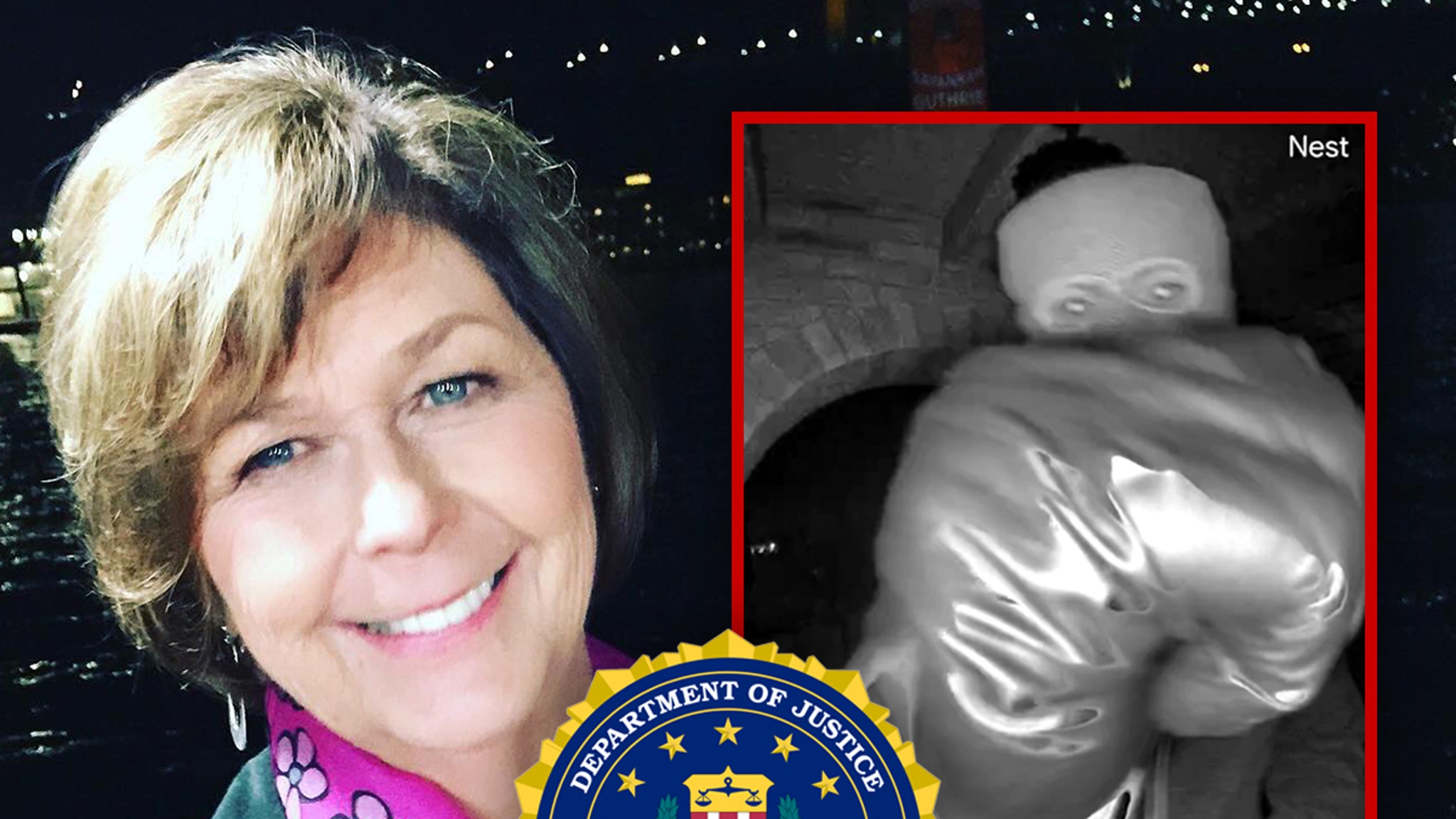
 www.tmz.com
FBI Says DNA on Glove Matches Subject Seen in Nancy Guthrie Security Video
The investigation into Nancy Guthrie's case just took a major forensic turn ... TMZ has confirmed.
www.tmz.com
Last edited by a moderator:

- Joined
- Feb 24, 2013
- Messages
- 106
- Reaction score
- 617
Maybe he was from out of town looking for a dark house (nobody home) and didn't realize every house is dark in that area since the government controls how much light you can have on at your house.So your theory is that this guy was hitting more than one house that night and carrying his loot with him from house to house? So he was on foot?

I’ve been thinking about Nancy’s pacemaker since Feb 7th when I first found out that she had one. Given that I have a recent one myself, I’ve been curious to learn more about them. I’ve found some manufactured models that work directly with a cell phone. Others have a medical monitor that acts as an intermediary which both patient and medical team can connect to. If they know, LE has not told us what brand NG has.
Also, being curious about a pacemaker’s operation now that LE is FINALLY using technology to see if they get a ping,
This may be TMI for some but IMO, from what I’ve read and found out through the maker of mine….is what could help to determine if NG is still alive….if they get a response from the pacemaker.
When a person dies, a pacemaker does not automatically stop. It is a programmed electrical device that cannot detect biological death and will continue its function until intervened or the battery fails.
Here is what happens during and after death:
During the Dying Process
The Device Keeps Firing: A pacemaker will continue to send electrical impulses to the heart at its programmed rate.
The Heart Stops Responding: While the pacemaker sends signals, a dying heart eventually loses the ability to contract due to a lack of oxygen and electrolyte imbalances. This means the device cannot keep a person alive or prevent a natural death.
Management After Death
Deactivation: If a person dies in a clinical setting (like a hospital or hospice), medical staff may use a specialized magnet or programming wand to deactivate the device.
Data Retrieval: In cases of sudden or unexplained death, doctors may "interrogate" the device. It acts like a flight recorder, providing a log of the heart's activity and the exact time it stopped.
Does the pacemaker stay on?
Standard Pacemakers: These typically continue to "fire" silently until the battery dies (which can take years) or they are manually deactivated.
Also, being curious about a pacemaker’s operation now that LE is FINALLY using technology to see if they get a ping,
This may be TMI for some but IMO, from what I’ve read and found out through the maker of mine….is what could help to determine if NG is still alive….if they get a response from the pacemaker.
When a person dies, a pacemaker does not automatically stop. It is a programmed electrical device that cannot detect biological death and will continue its function until intervened or the battery fails.
Here is what happens during and after death:
During the Dying Process
The Device Keeps Firing: A pacemaker will continue to send electrical impulses to the heart at its programmed rate.
The Heart Stops Responding: While the pacemaker sends signals, a dying heart eventually loses the ability to contract due to a lack of oxygen and electrolyte imbalances. This means the device cannot keep a person alive or prevent a natural death.
Management After Death
Deactivation: If a person dies in a clinical setting (like a hospital or hospice), medical staff may use a specialized magnet or programming wand to deactivate the device.
Data Retrieval: In cases of sudden or unexplained death, doctors may "interrogate" the device. It acts like a flight recorder, providing a log of the heart's activity and the exact time it stopped.
Does the pacemaker stay on?
Standard Pacemakers: These typically continue to "fire" silently until the battery dies (which can take years) or they are manually deactivated.

How does one get into CODIS - it anyone that has been convicted of any crime?So right now the DNA is being identified as an unknown male AND hasn't been run through CODIS yet?
Anyone have any decent links to this? TYIA
- Joined
- Jan 4, 2023
- Messages
- 432
- Reaction score
- 3,256
Agree. And, although we can't see LE's work, we can be confident that they are piecing things together.To be fair a good number of murders, kidnappers evade detection as details of case a pieced together. Brian Laundry, Scott Peterson, Casey Anthony, etc. I dont think any of them were criminal masterminds, but it just goes to show us it takes time and there is a process.
- Joined
- Jan 4, 2023
- Messages
- 432
- Reaction score
- 3,256
Thank you for posting this. Very helpful info. NG's pacemaker may help LE locate her. JMOI’ve been thinking about Nancy’s pacemaker since Feb 7th when I first found out that she had one. Given that I have a recent one myself, I’ve been curious to learn more about them. I’ve found some manufactured models that work directly with a cell phone. Others have a medical monitor that acts as an intermediary which both patient and medical team can connect to. If they know, LE has not told us what brand NG has.
Also, being curious about a pacemaker’s operation now that LE is FINALLY using technology to see if they get a ping,
This may be TMI for some but IMO, from what I’ve read and found out through the maker of mine….is what could help to determine if NG is still alive….if they get a response from the pacemaker.
When a person dies, a pacemaker does not automatically stop. It is a programmed electrical device that cannot detect biological death and will continue its function until intervened or the battery fails.
Here is what happens during and after death:
During the Dying Process
The Device Keeps Firing: A pacemaker will continue to send electrical impulses to the heart at its programmed rate.
The Heart Stops Responding: While the pacemaker sends signals, a dying heart eventually loses the ability to contract due to a lack of oxygen and electrolyte imbalances. This means the device cannot keep a person alive or prevent a natural death.
Management After Death
Deactivation: If a person dies in a clinical setting (like a hospital or hospice), medical staff may use a specialized magnet or programming wand to deactivate the device.
Data Retrieval: In cases of sudden or unexplained death, doctors may "interrogate" the device. It acts like a flight recorder, providing a log of the heart's activity and the exact time it stopped.
Does the pacemaker stay on?
Standard Pacemakers: These typically continue to "fire" silently until the battery dies (which can take years) or they are manually deactivated.


- Joined
- Dec 13, 2020
- Messages
- 1,536
- Reaction score
- 13,579
Fascinating, thank you! So the new pacemaker tracking effort by LE may be viable even if NG is deceased... and in the desert...I’ve been thinking about Nancy’s pacemaker since Feb 7th when I first found out that she had one. Given that I have a recent one myself, I’ve been curious to learn more about them. I’ve found some manufactured models that work directly with a cell phone. Others have a medical monitor that acts as an intermediary which both patient and medical team can connect to. If they know, LE has not told us what brand NG has.
Also, being curious about a pacemaker’s operation now that LE is FINALLY using technology to see if they get a ping,
This may be TMI for some but IMO, from what I’ve read and found out through the maker of mine….is what could help to determine if NG is still alive….if they get a response from the pacemaker.
When a person dies, a pacemaker does not automatically stop. It is a programmed electrical device that cannot detect biological death and will continue its function until intervened or the battery fails.
Here is what happens during and after death:
During the Dying Process
The Device Keeps Firing: A pacemaker will continue to send electrical impulses to the heart at its programmed rate.
The Heart Stops Responding: While the pacemaker sends signals, a dying heart eventually loses the ability to contract due to a lack of oxygen and electrolyte imbalances. This means the device cannot keep a person alive or prevent a natural death.
Management After Death
Deactivation: If a person dies in a clinical setting (like a hospital or hospice), medical staff may use a specialized magnet or programming wand to deactivate the device.
Data Retrieval: In cases of sudden or unexplained death, doctors may "interrogate" the device. It acts like a flight recorder, providing a log of the heart's activity and the exact time it stopped.
Does the pacemaker stay on?
Standard Pacemakers: These typically continue to "fire" silently until the battery dies (which can take years) or they are manually deactivated.

stmichael
Well-Known Member
- Joined
- Jan 2, 2026
- Messages
- 401
- Reaction score
- 4,044
That is included. It consists of multiple databases. But includes 19.2 million offender profiles and 6.1 million arrestee profiles. But when all is said and done it roughly accounts for 7-8 percent of the US population.How does one get into CODIS - it anyone that has been convicted of any crime?
The CODIS software contains multiple databases depending on the type of information being searched against. Examples of these databases include missing persons, convicted offenders, and forensic samples collected from crime scenes.
- Joined
- Jan 4, 2014
- Messages
- 371
- Reaction score
- 3,658
He’s heavily masked. We see one clip of him walking near the front door, crouching somewhat and looking away from the camera. That’s the only part that makes sense.What feels off to you about the hand positions and the rest of his behavior?
We see his masked face close up and in good detail. He knows it – he has looked right into the lens. Around the same time, he’s using his possibly double-gloved hand cupped around the camera lens without blocking it. Why? Thinking of using that to block the view of NG being removed? Or is there someone else who isn’t fully covered up and can’t be recorded?
And then, the lantana. As a means of blocking his own face, it makes no sense and anyway, it’s too late – he’s on camera.
If he has already broken in from another entrance, a cloth or towel from the house would do the job. His jacket or backpack would, too. (We see him without the backpack at one point.)
The whole clip would probably tell the story but these fragments make a mystery.
I’ve read the theory about using the stalk of the plant in lieu of a key to remove the camera – maybe, with a strong enough stalk.
After all that kerfuffle, the camera is removed. So maybe the flowers were there to block a few seconds of footage – not of him, though. Wish we had audio!
Last edited:

TheDinks
Well-Known Member
- Joined
- Feb 7, 2026
- Messages
- 227
- Reaction score
- 1,731
FBI Says DNA on Glove Matches Subject Seen in Nancy Guthrie Security Video
The investigation into Nancy Guthrie's case just took a major forensic turn ... TMZ has confirmed.
Just for clarity - it's the GLOVE that appears to match GLOVE shown in Nest cam footage... not DNA match - headline wording misleading.

- Joined
- Dec 16, 2024
- Messages
- 366
- Reaction score
- 2,225
Great ideas!@SaraSmile, i'm thinking the same. this isn't as complicated as we've been making it out to be in 1500 pages of posts.
someone (could be a guest unknown to us from AG's house) dropped off NG at her house. whether it was my mother, friend, inlaw, anyone, i'd have walked an elderly person inside. how do we know that the driver didn't accompany her into the house? i don't care what the super-smart-house-garage-door-technology picked up. anyone could've walked NG in through the garage (if it were me? dropping off an 84 year old woman into a dark house? i'd make darn sure she was safely inside)...said person would've closed the garage door and exited through the side door, garage, sliders, wherever.
as far as we know there were no garage cameras...and if there were, LE/FBI aren't sharing that information.
this rabbit doesn't care about the front step blood splatter. that could be a fox running across slate with a dead squirrel in its' mouth. just because LE says it's NG's doesn't mean anything. they lie for good reasons sometimes...
what hasn't been considered (by me, until now), is...what IF (our favorite term on this thread) whoever dropped off NG entered the house and committed a crime. again, it could've been any dinner guest/mahjong player from AG's...we have no clue. once the crime was committed, said person went back to his/her home and basically panicked. phoned a friend and said 'we have to stage a burglary/kidnapping to get her out of there', went back at 2-ish, made sure 'lantana man' was caught on camera...and poof...the 'perfect crime'.

Sessiebo
Data Scientist
- Joined
- Sep 18, 2025
- Messages
- 164
- Reaction score
- 1,217
Very interesting information, thank youI’ve been thinking about Nancy’s pacemaker since Feb 7th when I first found out that she had one. Given that I have a recent one myself, I’ve been curious to learn more about them. I’ve found some manufactured models that work directly with a cell phone. Others have a medical monitor that acts as an intermediary which both patient and medical team can connect to. If they know, LE has not told us what brand NG has.
Also, being curious about a pacemaker’s operation now that LE is FINALLY using technology to see if they get a ping,
This may be TMI for some but IMO, from what I’ve read and found out through the maker of mine….is what could help to determine if NG is still alive….if they get a response from the pacemaker.
When a person dies, a pacemaker does not automatically stop. It is a programmed electrical device that cannot detect biological death and will continue its function until intervened or the battery fails.
Here is what happens during and after death:
During the Dying Process
The Device Keeps Firing: A pacemaker will continue to send electrical impulses to the heart at its programmed rate.
The Heart Stops Responding: While the pacemaker sends signals, a dying heart eventually loses the ability to contract due to a lack of oxygen and electrolyte imbalances. This means the device cannot keep a person alive or prevent a natural death.
Management After Death
Deactivation: If a person dies in a clinical setting (like a hospital or hospice), medical staff may use a specialized magnet or programming wand to deactivate the device.
Data Retrieval: In cases of sudden or unexplained death, doctors may "interrogate" the device. It acts like a flight recorder, providing a log of the heart's activity and the exact time it stopped.
Does the pacemaker stay on?
Standard Pacemakers: These typically continue to "fire" silently until the battery dies (which can take years) or they are manually deactivated.

SG seems to love her mom very much so i can only imagine she made sure Nancy has a top of the line quality pacemaker "installed".
So i assume it's not a standard one she has but one with more features? Or how does this work?

Idk - JMO
Let’s hope that is the case! It could tell them if she was deceased during the intrusion or much later…and hopefully provide more on the COD.Fascinating, thank you! So the new pacemaker tracking effort by LE may be viable even if NG is deceased... and in the desert...
- Joined
- Dec 16, 2024
- Messages
- 366
- Reaction score
- 2,225
Jan 11th? You are right. I don’t think we heard more about this. Just asking for videos of that day/ night.102K views · 1.2K reactions | Man caught on film trying to break into someone’s home 6 miles away from Nancy Guthrie’s home… is this the masked man that took her? #SavannahGuthrie #NancyGuthrie #truecrime #missing #thepascalshow | The Pascal Show
Any thoughts on this second video that this person is talking about. Second male suspect trying to break into a nearby home in the same neighborhood a week earlier?
JMO


- Joined
- Dec 16, 2024
- Messages
- 366
- Reaction score
- 2,225
That would be so excellent if it led to NG and a load of evidence!Let’s hope that is the case! It could tell them if she was deceased during the intrusion or much later…and hopefully provide more on the COD.

I can turn the light off within the app.Some cameras show a light when they have power—doesn’t depend on if they have subscription or not—ours does and we have no subscription
Similar threads

- Replies
- 76
- Views
- 14K


Guardians Monthly Goal

Goal Reached! We hit our target of 75 new Guardians!
New stretch goal: 100!
Our goal for the month is 75 new Guardians members to sign up. Have you been thinking about becoming a member?
Click here to find out how!


Staff online
-
GhostwheelPyrrhonist
Online statistics
- Members online
- 357
- Guests online
- 2,192
- Total visitors
- 2,549
Totals may include hidden visitors.
Forum statistics
Community Rules
-
Be CivilTreat all members with respect. No personal attacks, harassment, or inflammatory language.
-
Victim FriendlyAlways show respect for victims and their families. No victim blaming or insensitive speculation.
-
Fact-based SourcingProvide credible sources for claims. Distinguish between verified facts and personal theories.
-
Social Media UseDo not post direct links to personal social media profiles of private individuals.
-
Copyright and PaywallsDo not copy full articles. Summarize and link to the original source instead.
-
Privacy and Personal InformationDo not post personal information such as addresses, phone numbers, or workplaces.
-
Registered Sex-OffendersDo not name or speculate about RSOs unless officially named in connection to a case.
-
Stay On TopicKeep discussions relevant to the case or topic at hand. Avoid off-topic tangents.
-
Accounts, Moderation, and DisputesOne account per person. Contact moderators privately for disputes or concerns.
-
Solicitation and FundraisingNo solicitation, fundraising, or promotion of personal ventures without approval.