• #1,661
  • #1,662
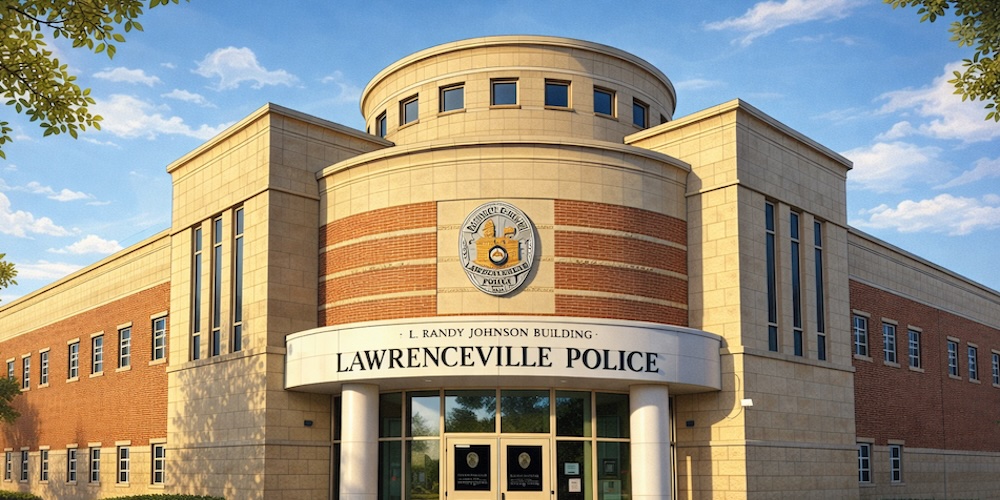
Forty years after a series of sexual assaults, the Lawrenceville Police Department and Georgia Bureau of Investigation partnered with Othram to identify and arrest 60-year-old Glenn Daniel Plybon as the perpetrator.

After 40 Years, a Georgia Serial Rapist is Identified
 
  • #1,663
Forty years after a series of sexual assaults, the Lawrenceville Police Department and Georgia Bureau of Investigation partnered with Othram to identify and arrest 60-year-old Glenn Daniel Plybon as the perpetrator.

After 40 Years, a Georgia Serial Rapist is Identified
 
  • #1,664
Georgia allows rape cases to be prosecuted with no time limit when strong DNA evidence identifies the suspect.


(d) A prosecution for the following offenses may be commenced at any time when deoxyribonucleic acid (DNA) evidence is used to establish the identity of the accused:
(1) Armed robbery, as defined in Code Section 16-8-41;
(2) Kidnapping, as defined in Code Section 16-5-40;
(3) Rape, as defined in Code Section 16-6-1;
(4) Aggravated child molestation, as defined in Code Section 16-6-4;
(5) Aggravated sodomy, as defined in Code Section 16-6-2; or
(6) Aggravated sexual battery, as defined in Code Section 16-6-22.2;
provided, however, that a sufficient portion of the physical evidence tested for DNA is preserved and available for testing by the accused and provided, further, that if the DNA evidence does not establish the identity of the accused, the limitation on prosecution shall be as provided in subsections (b) and (c) of this Code section

 
  • #1,665
Georgia allows rape cases to be prosecuted with no time limit when strong DNA evidence identifies the suspect.


(d) A prosecution for the following offenses may be commenced at any time when deoxyribonucleic acid (DNA) evidence is used to establish the identity of the accused:
(1) Armed robbery, as defined in Code Section 16-8-41;
(2) Kidnapping, as defined in Code Section 16-5-40;
(3) Rape, as defined in Code Section 16-6-1;
(4) Aggravated child molestation, as defined in Code Section 16-6-4;
(5) Aggravated sodomy, as defined in Code Section 16-6-2; or
(6) Aggravated sexual battery, as defined in Code Section 16-6-22.2;
provided, however, that a sufficient portion of the physical evidence tested for DNA is preserved and available for testing by the accused and provided, further, that if the DNA evidence does not establish the identity of the accused, the limitation on prosecution shall be as provided in subsections (b) and (c) of this Code section

This is wonderful.

Now LE need to clear the backlogs of rape kits and actually test the darn things. No more sitting on their hands until the statute of limitations ticks down.

MOO
 
  • #1,666
  • #1,667
Remains found in Lawrenceville in February 2025 were identified as Timothy Mitchell Williams using Othram technology, thanks to the rapid action of the Lawrenceville Police Department and Gwinnett County Medical Examiner’s Office. This technology is so much more valuable when used in realtime for active cases.

Gwinnett County John Doe (2025) is Identified
 
  • #1,668
It took more than 40 years to identify Walker County Jane Doe. This is the first episode of Trace Identity, exploring how identity is reconstructed from the smallest fragments of evidence and how disciplined reasoning and advanced forensic DNA testing transform uncertainty into identification.

 
  • #1,669
  • #1,670
  • #1,671
We just crossed 100,000 views with our first episode and Othram's channel has already been watched for more than 15,000 hours. Subscribe now and get ready for our second episode, coming in April!

Help us grow the channel: Othram Studios
 
  • #1,672
We just crossed 100,000 views with our first episode and Othram's channel has already been watched for more than 15,000 hours. Subscribe now and get ready for our second episode, coming in April!

Help us grow the channel: Othram Studios

UPDATE: Our first episode now accumulated more than 300,000 views. Very grateful to all of you that watched the episode and shared it with others!
 
  • #1,673
  • #1,674
Stuff like this is why I think Solvepedia is a flawed concept. A recent addition to Solvepedia was this case of a Jane Doe (UP111661) found in Seminole on October 7, 1998. The article claims she was identified as 19-year-old Melody Jones, but that's an entirely different case. Melody's remains were found in Seminole on October 24, 1998 (UP119314). There are literally two entirely different threads for each case.
You said one of the main reasons we need to use AI for this is that there are just too many UID cases, but it seems the sheer number of cases is actually causing the AI to confuse them and mix them as one. The AI falsely claiming that UP111661 was identified would actually hinder the investigation being done be real humans, no?
 
  • #1,675
Sometimes the only clue left behind is DNA trapped in embalmed remains or formalin-fixed tissue, some of the most challenging evidence in all of forensics.

 
  • #1,676
Solvepedia seems like a good idea. It's not surprising there's some errors at this point.
 
  • #1,677
Solvepedia seems like a good idea. It's not surprising there's some errors at this point.
Absolutely! Still early days, and it will improve rapidly over time. The long-term goal is to create a system that can help match missing and unidentified individuals at scale.

Looking forward to seeing what is possible as we refine the system! In the meantime, point out any issues you see. That is why we we have a feedback box on every page!
 
  • #1,678
Solvepedia seems like a good idea. It's not surprising there's some errors at this point.

What do you see as its purpose/what do you think makes it possibly useful? I would genuinely like to know; I was very surprised by the mostly positive reaction to it here. In my opinion, it seems entirely pointless. The things it does are already performed at a *much* higher standard by other resources online (and the argument against this is that the AI “learns” and will “improve” over time, but I don’t see it ever becoming capable of this so as to outpace those other existing online spaces).

The only current use case I see is that the AI can datacrawl for all possibly relevant webpages - that may contain information not seen elsewhere (and fragmented information IS a very big problem in how UID cases are publicized) - which could be related to a case and then link to them so that I can then filter through everything and see what’s worth looking at myself, but any individual who wants this can already do that themselves using either traditional methods or newer AI tools.
 
Last edited:
  • #1,679
What do you see as its purpose/what do you think makes it possibly useful? I would genuinely like to know; I was very surprised by the mostly positive reaction to it here. In my opinion, it seems entirely pointless. The things it does are already performed at a *much* higher standard by other resources online (and the argument against this is that the AI “learns” and will “improve” over time, but I don’t see it ever becoming capable of this so as to outpace those other existing online spaces).

The only current use case I see is that the AI can datacrawl for all possibly relevant webpages - that may contain information not seen elsewhere (and fragmented information IS a very big problem in how UID cases are publicized) - which could be related to a case and then link to them so that I can then filter through everything and see what’s worth looking at myself, but any individual who wants this can already do that themselves using either traditional methods or newer AI tools.

The goal isn’t to reproduce existing resources or build “better pages.” Those already exist and do a great job.

The problem is that the information is fragmented, inconsistent, and constantly changing. New cases are added, facts update, and cases are removed when solved. Even manually connecting something like missing and unidentified individuals would be a massive undertaking, but keeping it current at scale is impossible.

What we are exploring is whether it’s possible to build a system that can organize, link, and continuously refine that information across 10,000+ cases, so we all can see patterns, overlaps, and missed connections that surface.

Today, that kind of synthesis mostly lives in people’s heads or scattered across threads. That doesn’t scale.

Calling that kind of experimentation a waste of time is exactly how problems like this stay unsolved.
 

Guardians Monthly Goal

Staff online

Members online

Online statistics

Members online
143
Guests online
7,865
Total visitors
8,008

Forum statistics

Threads
645,557
Messages
18,842,571
Members
245,716
Latest member
ficticiousfairy
Top