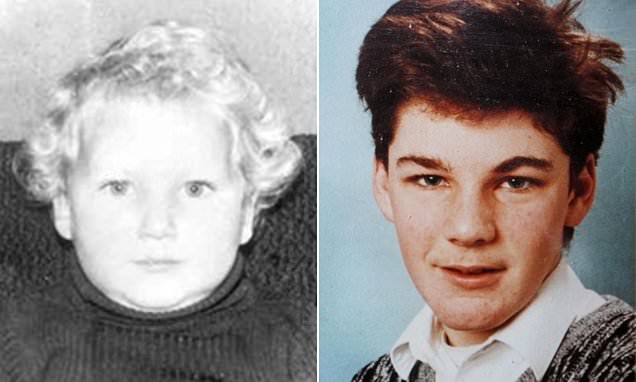
UK UK - Mary Flanagan, 16, Newham, East London, 31 Dec 1959

  • #61
it was suggested it was odd that the employer did not call round to enquire. The employer was Tate & Lyle, a huge operation with probably thousands of employees at the time. If it had been a small or medium size employer it may have been surprising, but not with an operation of that size
It would have been odd only if they were expecting her to attend work. It is usual for people to take annual leave around Christmas time and also many companies shut down for the period between the Christmas and New Year holidays. So it's quite possible that she was on leave for the period she was absent.

What is mysterious is what she was doing during the daytime when her family believed her to be at work.
 
  • #62
  • #63
My previous post mentions that New Year's Day is a public holiday. I have just listened to two podcasts about this case (https://www.patreon.com/collection/1540674?view=expanded) - it was explained there that when Mary went missing, New Year's Day was a normal working day and not a public holiday. New Year's Day became a public holiday in 1974 (When Did New Year’s Day Become A Holiday In England?) so her parent's recollection of visiting the refinery on New Year's Day is quite plausible.

Thanks for the podcast links, have listened to them now and it fills in a lot of the gaps.

The woman in Edinburgh sounds a very strong possibility. They didn't say any more about the distinguishing scar that was mentioned, only that the woman refused to be photographed, and then later disappeared.
 
  • #64
28 December 2025
1767816458793.webp

Mary Flanagan, December 31, 1959
''A New Year's Eve party had been young Mary Flanagan's destination when she vanished in Newham in 1959.

The teenager, 16, had made a point to kiss her two little sisters goodbye before she vanished without a trace.

She had worked at the Tate and Lyle factory, but when she disappeared her shocked parents discovered she had not been in for two weeks.

Mary had been besotted with a grown man called Tom, someone who police have never been able to track down.

Since she vanished over 100 unidentified bodies have been DNA tested by experts but none have been her match.

And police have also been hampered by the fact some case records were destroyed during a 2013 flood in Plaistow.

Some of the more persistent theories about her disappearance suggest she may have eloped with Tom.

Or many think it is possible she may have fallen pregnant and decided to run away with him to have the baby.

But her family have never given up hope she will one day come home and they will be reunited.''
 
  • #65
I base my following remarks partly on the contents of the two podcasts I mentioned earlier. In it information is disclosed from Mary's surviving family members (her siblings, who were all younger than her); it is worth emphasising that their recollections are a mixture of their own first-hand experiences and hearsay from their parents and other family members.

The first thing that I will address is Mary's absence from work for the fortnight preceding her disappearance. I suggested in an earlier post that she may have taken this as leave. It seems almost certain that no one from her employer (Tate and Lyle) which was a somewhat paternalistic employer, made enquiries about her absence which suggests to me that they were aware of her reasons for staying away from work. Had she just absented herself without explanation then she would be taking a huge risk of someone making enquiries at her home during working hours and revealing the deception to her family. If she wasn't on annual leave then she would have presumably phoned in, or even written a letter, (the postal service was much better then) to her employer to explain that her absence was due to something like illness.

To explain her disappearance it has been suggested that she eloped with Tom, her putative fiancé; this makes no sense. If they had eloped then Tom would have disappeared at the same time as Mary. We are told, however, that following her disappearance Tom helped her father look for her, so elopement with Tom in the normally accepted meaning of the word didn't happen. Of course, Tom may have known of her whereabouts and his actions may therefore have been simply misdirection.

Mary and the Flanagans were led to believe that Tom was staying in digs but the woman who supposedly was his landlady was in reality his mother. When the true relationship was discovered shortly before Mary's disappearance it was said that there was a serious row between Mary and her father about this.

So we have two apparently motiveless deceptions - Mary's pretence of attending work and Tom's domestic arrangements.

Here is a possible scenario: Mary had been planning to leave home because she didn't want to marry Tom (he was her father's friend before he was her fiancé) and she may have been coerced into her engagement by her parents. She had secretly got another job early in December and was going there every day rather than to Tate and Lyle. Perhaps the row about Tom had nothing to do with his mother but came about because Mary felt at that stage she could tell them about her attitude to marrying Tom.

It is not clear what she took with her when she left home for the last time: if she had not been working at Tate and Lyle for a fortnight then she would have missed two paydays (I think it highly likely that she was paid weekly in cash) but my guess is that she had adequate funds from her new employer to pay for digs. Perhaps she spent New Year's Eve afternoon shopping for clothes etc prior to moving in and went back to work, with her new employer, on New Year's Day.

 
Last edited:
  • #66
I base my following remarks partly on the contents of the two podcasts I mentioned earlier. In it information is disclosed from Mary's surviving family members (her siblings, who were all younger than her); it is worth emphasising that their recollections are a mixture of their own first-hand experiences and hearsay from their parents and other family members.

The first thing that I will address is Mary's absence from work for the fortnight preceding her disappearance. I suggested in an earlier post that she may have taken this as leave. It seems almost certain that no one from her employer (Tate and Lyle) which was a somewhat paternalistic employer, made enquiries about her absence which suggests to me that they were aware of her reasons for staying away from work. Had she just absented herself without explanation then she would be taking a huge risk of someone making enquiries at her home during working hours and revealing the deception to her family. If she wasn't on annual leave then she would have presumably phoned in, or even written a letter, (the postal service was much better then) to her employer to explain that her absence was due to something like illness.

To explain her disappearance it has been suggested that she eloped with Tom, her putative fiancé; this makes no sense. If they had eloped then Tom would have disappeared at the same time as Mary. We are told, however, that following her disappearance Tom helped her father look for her, so elopement with Tom in the normally accepted meaning of the word didn't happen. Of course, Tom may have known of her whereabouts and his actions may therefore have been simply misdirection.

Mary and the Flanagans were led to believe that Tom was staying in digs but the woman who supposedly was his landlady was in reality his mother. When the true relationship was discovered shortly before Mary's disappearance it was said that there was a serious row between Mary and her father about this.

So we have two apparently motiveless deceptions - Mary's pretence of attending work and Tom's domestic arrangements.

Here is a possible scenario: Mary had been planning to leave home because she didn't want to marry Tom (he was her father's friend before he was her fiancé) and she may have been coerced into her engagement by her parents. She had secretly got another job early in December and was going there every day rather than to Tate and Lyle. Perhaps the row about Tom had nothing to do with his mother but came about because Mary felt at that stage she could tell them about her attitude to marrying Tom.

It is not clear what she took with her when she left home for the last time: if she had not been working at Tate and Lyle for a fortnight then she would have missed two paydays (I think it highly likely that she was paid weekly in cash) but my guess is that she had adequate funds from her new employer to pay for digs. Perhaps she spent New Year's Eve afternoon shopping for clothes etc prior to moving in and went back to work, with her new employer, on New Year's Day.

There are some limits to the possibility of a new employer. Her social security number was not used after she went missing. This means that either she took cash in hand work with no checks or obtained a new number as mainstream employers would need the number. The latter may have been possible (in the 80s numbers were sent out to teenagers and it would have been simple to say it did not arrive and get another) but the use of the existing number with Tate & Lyle would have complicated such an action. This leaves the obvious possibility that she moved abroad (as passports were easy to get). The possibility of taking a new job, at least in London, is also reduced as the local press coverage at the time would have risked or even made probable that she would be identified.
 
  • #67
There are some limits to the possibility of a new employer. Her social security number was not used after she went missing. This means that either she took cash in hand work with no checks or obtained a new number as mainstream employers would need the number. The latter may have been possible (in the 80s numbers were sent out to teenagers and it would have been simple to say it did not arrive and get another) but the use of the existing number with Tate & Lyle would have complicated such an action. This leaves the obvious possibility that she moved abroad (as passports were easy to get). The possibility of taking a new job, at least in London, is also reduced as the local press coverage at the time would have risked or even made probable that she would be identified.
She was only 16 when she disappeared and even then, many 16 year-olds would not have a NI number when they left school and started work. It would be perfectly possible for her to tell her new employer that it was her first job and obtain a new NI number using a false name.
 

Guardians Monthly Goal

Staff online

Members online

Online statistics

Members online
218
Guests online
2,777
Total visitors
2,995

Forum statistics

Threads
637,247
Messages
18,711,352
Members
244,079
Latest member
Lycorn
Back
Top