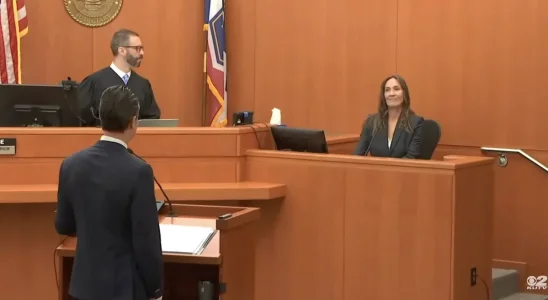
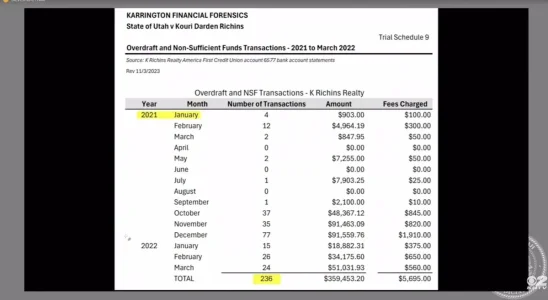
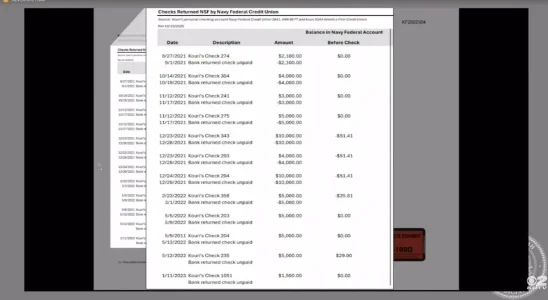
4:47 p.m. Judge dismisses jury until tomorrow at 8:30 a.m. Reminds them not to research the case. Nothing further from the attorneys. Join me tonight on “Courtroom Insider” at 7 p.m. for a recap of what happened today. You can find it on the East Idaho News YouTube channel.
4:44 p.m. Ramos asks Kotrodimos if he knows if anybody else had access to Kouri’s phone. He does not know. Ramos asks if Kotrodimos made any efforts to validate if the information he had was up to Apple standards. He did not. Kotrodimos has analyzed data in at least 100 phones. Ramos has nothing further. Chervenak has one question. She asks about Kouri being the only person using the blue iPhone. Kotrodimos says there was a text from the blue phone to Grossman and it said she had activated one of her mom’s phones and she would be using it going forward to talk with Grossman. Witness is excused from the stand.
4:39 p.m. Chervenak says Apple puts a lot of money into their activity data because users want it to be accurate and reliable. Kotrodimos says that’s correct. Kotrodimos asks if he’s activity data from Apple in other cases has been accurate. He says it has. Ramos has follow-up questions about the deleted files and if the file path tells who deleted the files. It does not. But someone deleted it – the phone wouldn’t automatically delete it.
4:38 p.m. Chervenak wants to follow up on two items. She asks about the three image files from March 4 at 8:29 a.m., “we don’t know all the information about those because they were deleted.” Correct, he says. “If they hadn’t been deleted, we’d know more.” “We might,” he responds.
4:35 p.m. Kotrodimos asked if he did anything to check Kouri’s settings. He did not. Ramos has nothing further.
4:32 p.m. Ramos asks if Kotrodimos was ever able to see if Carmen went to the small home in Midway. Kotrodimos says he believes he was asked to look at that, but the data is not that specific. It’s not GPS location, it’s cell phone tower location. Ramos asks if Kotrodimos went into Kouri’s biometric data in her phone – her weight, height, stride. Ramos asks if he did it with Eric’s phone. He didn’t.
4:27 p.m. Ramos asks Kotrodimos if he is aware of narcotics and how most people dealing with drugs may want to delete their texts. Kotrodimos says that’s correct. Ramos asks about the calls to the IRS. It’s a month before tax season and Ramos says, “Context wise, it’s not unusual, right?” Kotrodimos says that’s correct.
4:22 p.m. Ramos asking Kotrodimos if he got the same model of phone Kouri had to test it or if he checked the body camera footage to run a test to compare. He says he could have, but did not as the data was on the actual phone.
4:20 p.m. Ramos asks what Kotrodimos did to validate the information that was presented to him from Cellebrite regarding the distance traveled of the phones. Kotrodimos says he did nothing to validate it – the information was there.
4:17 p.m. Kotrodimos says, in context, it was not typical for Eric to lie down and take a nap in the middle of the day based on his behavior from other days. Ramos says there is a bit of speculation in his answer and Kotrodimos says that is true.
4:14 p.m. Ramos asks about the 87-minute gap on Eric Richins’ watch on Valentine’s Day 2022. Kotrodimos says in his comparison, he looked at 20 random days and the 87-minute gap stood out versus other days.
4:11 p.m. Ramos asks Kotrodimos if he’s aware other people were in Kouri’s house. He was aware. Ramos asks if he can say who actually opened the gifs up. Kotrodimos can not say who opened the files.
4:08 p.m. Ramos asks if it’s possible a person sent Kouri the gifs the night before and Kouri opened them up the next day and the phone created the thumbnail in her phone. Kotrodimos says that’s possible. Ramos mentions that a lot of the web searches don’t have dates. Ramos asks Kotrodimos if he performed Google searches or other research into the searches found on Kouri’s phone to help provide context. He says he did not.
4:01 p.m. Ramos explains how every 30 days or so, the iOS system performs a “vacuum” and deletes stuff on iPhones that it thinks are no longer needed. Ramos asks if other things can be done to try and locate whether the three gifs could be track. Ramos suggests you could contact the person on the other end of the message. Kotrodimos says he could have done that.
3:55 p.m. Ramos asks if the three gifs are tied together. Kotrodimos does not know. Ramos asks Kotrodimos to explain epoch time when it comes to cell phones. Kotrodimos says he’s not familiar enough with it to testify on the stand. Ramos says epoch time is the number of seconds that have elapsed since Jan. 1, 1970. That’s how phones have registered the information. Kotrodimos says it’s a programming reason.
3:53 p.m. Ramos asks where the gifs were in the phone. They were in an SMS database. Ramos asks about cache. Kotrodimos says they are folders where the system stores data. Ramos asks if there are certain things in our phones that we can’t access. That’s true.
3:47 p.m. Back from break. Ramos says he’s going to begin by diving into the PNG files. Ramos asks about the time and date of one of the files. He pulls out his cell phone and says he’s going to text his son three gifs and another item. “If you were to get my phone and put it in your system, extract it and analyze it, would all of those be the same time date and time down to the second?” Kotrodimos says they could.
3:37 p.m. Chervenak has no further questions. We are taking a 5-minute recess. Alex Ramos will then ask questions on behalf of the defense.
3:34 p.m. Prosecutor continues to go through web searches Kouri did on her phone. They include news stories and online articles about recovering data from deleted phones, prisons for the rich, police seeing messages on your phone, 5 things to know about Utah’s new prison and searches involving how long it takes to get life insurance money.
3:25 p.m. Chervenak asks Kotrodimos about web searches done on Kouri’s phone. The searches include: “can you delete everything on an icloud account,” “can deleted text messages be retrieved,” “utah prison,” “women utah prison,” “How to completely wipe an ipohne clear remotely,” “can copes force you to do a lie detector test,” “can probable cause be testimony,” “what are you allowed inside utah jails,” “will life insurance pay if death certificate is pending,” “luxury prisons for the rich in america,” “where is my location on iphone,” “kouri richins kamas net worth,” “what is FBI analysis of electronics,” and many more.
3:18 p.m. The images are memes accessed from her phone at 8:29 a.m. on March 4.
3:14 p.m. Kotrodimos recovered three PNG thumbnail images from Kouri’s phone. These images were “ghost” or “orphaned” images. The original images have been deleted, but the “ghost” or print of the images remained on the phone. These are remnant images from the phone. Defense objects to having the photos admitted. Judge overrules the objection and the images are admitted.
3:07 p.m. We now see a graph showing Kouri’s phone activity on March 3, 2022, between 8:30 p.m. and midnight. The phone is locked and unlocked several times. Then, at 3:06 a.m., the phone is unlocked for 28 seconds. At 3:07 a.m., the speaker is activated. At 3:08 a.m., the device travels 243 feet. At 3:10 a.m., the phone is unlocked for 1 minute and 40 seconds. At 3:15 a.m., the phone is unlocked for 37 seconds. At 3:19 a.m., the phone is unlocked for 28 seconds. Then again for 3 seconds. At 3:21 a.m., the phone travels 135 feet. At 3:22 a.m., the receiver is activated.
3:02 p.m. Carmen’s device never visited the Draper area other than the three dates when she met up with Robert at Maverik, according to Kotrodimos. We now see a timeline showing Eric’s phone activity on March 3, 2022, between 8:30 p.m. and midnight. Eric is texting work associates, he has a call with someone and at 9:45 p.m., and he searches how far from Scottsdale to Nogales. At 10:13 p.m., Eric receives a text message from a contact named Raul. There is no indication that the message was ever opened or read by Eric.
3 p.m. We now see cell tower mapping from March 9 between Robert Crozier and Carmen Lauber. It begins at 10:15 a.m. and ends around 11:28 p.m. Their devices meet up in the Draper area.
2:57 p.m. On March 9, 2022, we see a cell tower map showing text conversations between Kouri and Carmen’s devices. Communication begins at 6:28 a.m. and continues all day. Carmen travels down Provo Canyon to the area at or near the Maverik Draper. Robert Crozier travels from the Davis County area to Draper.
2:55 p.m. We now see call records from March 2, 2022. At 10:22 a.m., there is an outgoing 3-minute call from Kouri to the IRS. At 10:27 a.m., there is a 101-minute phone call.
2:50 p.m. We now see cell phone tower mapping showing text communication between Kouri and Carmen on Feb. 26, 2022. Kouri and Carmen texted 71 times between 2:25 and 10:33 p.m. that day. Robert and Carmen communicated 65 times that day.
2:48 p.m. We now see a graph of Eric Richins’ cell phone movement on Feb. 14, 2022. There is an 87-minute gap in activity between 12:05 and 1:32 p.m. No movement data was recorded on his phone during this period of time. Kotrodimos analyzed other days on Eric’s phone, and it was not typical for Eric to have an 87-minute gap in activity during the middle of the day.
2:44 p.m. Court is back in session. The judge explains to the jury that they can consider the text message exchange we are however they see fit. We see the messages between Kouri and Eric on Valentine’s Day afternoon. They go back and forth. Kouri is not home, but Eric is. They message back and forth. Eric says he wishes she was there. This chain of messages end with Kouri saying there is food on the seat of the truck.
2:20 p.m. Judge says we are going to take a restroom break. He dismisses the jury. Judge now going through an exhibit with defense and prosecution. He says parties need to be precise when witness testifies about them. We are in recess until 2:40 p.m.
2:17 p.m. Kotrodimos now explains a text message sent from Eric to Kouri on Feb. 14, 2022 at 11:33 a.m. He says he doesn’t feel well and is going to lay down.
2:15 p.m. We see several of the messages between Kouri and Grossman on Valentine’s Day. Some of them say, “I love you” and “Wanna be my Valentines” and “My heart is smiling! When those three words come from you, it’s very unique. Different than any time I’ve heard them before.”
2:12 p.m. On Feb. 14, 2022, at 8:53 p.m., Kouri called the Mirror Lake Diner. There was also communication between Kouri and Josh Grossman that day.
2:07 p.m. Carmen and Kouri are in communication all afternoon into the evening. Kotrodimos has another exhibit detailing the amount of communication between Robert Crozier and Carmen on Feb. 11, 2022.
2:02 p.m. Kotrodimos walks through Carmen’s cell phone activity movement through Heber, Provo Canyon, down to Draper. She and Kouri are communicating with each other. Meanwhile, Robert Crozier’s cell phone is leaving Davis County and heading toward Utah County. This is one of the days that Carmen testified she picked up pills for Kouri. Crozier’s activity goes up significantly as the afternoon progresses.
1:58 p.m. Kouri called the IRS three times on Feb. 11, 2022. On the same day, Kouri and Carmen communicated with each other. An exhibit is shown displaying cell phone tower mapping of texts between Kouri and Carmen on Feb. 11.
1:56 p.m. All of the text messages have been deleted on the phones. They just have records showing the text messages were made, but the actual content is gone. Chervenak admits call detail records for Kouri. Eric Richins’ name is on the record because he was the account holder.
1:53 p.m. Sidebar over. Judge allows the exhibit in and we briefly see it on screen. Chervenak asks about communication between Carmen and Kouri. They were communicating from January 2022 through March 15, 2022. There were 800 text messages between the two of them during that time. That’s 10-11 text messages per day. Between March 16, 2022, and the end of the year, Kotrodimos says there were about 600-650 text messages between Kouri and Carmen. That’s about three text messages per day. About a 70% decrease.
1:48 p.m. Defense objects to the exhibit showing the vacation reservation. Judge asks attorneys for a sidebar.
1:44 p.m. Kotrodimos says Kouri and Grossman texted “daily, with a few exceptions” beginning in September 2020. On one of Kouri’s phones, the majority of the communication was only with Grossman. Kotrodimos got a lot of information on that communication from Grossman’s phone, not Kouri’s. Kotrodimos located a vacation reservation found inside Kouri’s device.
1:42 p.m. Chervenak shows the witness three text messages between Kouri and Eric at three different times: Dec. 2020, June 2021 and January 2022. She also asks him to review text threads from different time periods.
1:39 p.m. Kouri had a silver iPhone and a blue iPhone at the same time. On the blue iPhone, there were no mass deletions like the previous phones. Kotrodimos also viewed an extraction for Carmen Lauber’s phone. Kotrodimos says hundreds of texts and dozens of calls had been deleted. Kotrodimos also viewed an extraction of Josh Grossman’s phone. Grossman was Kouri’s boyfriend.
1:38 p.m. Kouri began using a new silver device starting on April 14, 2022. She ported over her old number to the new phone. There were some deletions noted, but not in the same manner as the previous phone, Kotrodimos says. “There were not big chunks of hundreds of texts deleted.”
1:36 p.m. On Kouri’s phone, there was evidence of deletions between Jan. 1 through mid-March 2022, Kotrodimos says. “Hundreds of text messages” were missing from the phone along with call logs and web history information.
1:33 p.m. Chervenak admits an exhibit showing activity on Kouri’s three phones. Kouri had two numbers on one phone. One of her numbers was a voiceover IP number that used internet data, so that information typically would not show up on cell phone call records.
1:30 p.m. Kotrodimos found text messages between Eric and Kouri regarding THC gummy use. There were three conversations. One in November 2021, two in January 2022. Chervenak has text message exchanges Eric and Kouri about the gummies shown to Kotrodimos. Outside of THC, he found no communication between Eric and Kouri about buying drugs or any talk of illicit drugs.
1:26 p.m. Kotrodimos began working on this case in May 2023. He became familiar with what the people in the case looked like because he saw a lot of photos on their phones. Chervenak asks about Eric Richins’ phone. He reviewed the report from Eric’s phone and did not observe any mass deletions.
1:23 p.m. Kotrodimos says once a file is “vacuumed out” from a system file, you likely won’t be able to find the file. Even if a text message is deleted from a phone, it won’t change anything on the receiving end of the person getting the text. Different cell phone companies maintain their records for various lengths of time. Verizon keeps records for 18-24 months, but only keeps location data for about a year. AT&T and T-Mobile keep that information for a longer period of time, Kotrodimos says. A user cannot access their information – they are business records maintained by the carriers.
1:20 p.m. The information cannot be manipulated or changed during the cell phone extraction. It’s possible a phone is extracted more than once. Once the extraction is done, a report will generate showing text messages, photos, calls, etc. It can also show if an item has been previously deleted from the device as an active file. The software is able to find the item in a database. It’s not possible on all items the user deletes.
1:19 p.m. Kotrodimos explains how he is able to get the information from Cellebrite. Cellebrite is the most commonly used program. It’s been used in other investigations, including the Chad and Lori Daybell murder cases.
1:16 p.m. When analyzing phone data in this case, Kotrodimos says he examined the phones and the call detail records. The call detail records are stored by the cell phone carrier. The record contains a time stamp, who the communication was between, the duration of the phone call and the cell phone tower information.
1:14 p.m. Prosecutor Lindsay Chervenak asks about his professional background. She asks about digital forensics and his experience. His speciality is mostly phones and some computers. He is Cellebrite certified and is trained in location analysis with cell phone data.
1:12 p.m. Next witness is Chris Kotrodimos. He’s the owner of M20 Solutions. He consults with prosecutors for his job. He has an extensive history in law enforcement. He evaluated phone records in this case.
1:09 p.m. Next witness is Detective Jeff O’Driscoll. He works for the Summit County Sheriff’s Office. He collected Carmen Lauber’s phone and helped get it processed. His testimony is over for now.
1:04 p.m. Mrazik says the statement was improper, but it was quick and “relatively innocuous” concerning the volume of testimony the jury will hear over five weeks. Mrazik says in a homicide trial, it would not come as a surprise to jurors that the defendant would have been in jail at one point. Mrazik denies the request for a mistrial.
1:01 p.m. Nester now arguing about Chelsea Gipson’s testimony from the other day where Gipson said “jail calls.” Nester says the jury now knows her client has been in jail and there were multiple calls. Judga Mrazik told jurors to discard that statement at the time. Nester says Gipson’s statements bring prejudice and has filed a motion for a mistrial.
12:59 p.m. Brad Bloodworth says the note from the juror likely doesn’t provide enough information to the judge for him to make a decision. Based on the information in the note, Bloodworth doesn’t feel the need for the juror to be dismissed. Judge not going to rule on the issue now. He says he may just need to ask the juror some questions. There are alternate jurors in case the juror is excused.
12:57 p.m. Wendy Lewis, defense attorney, has concerns about a note that came from a juror. The juror had a business transaction with a witness. She says if the defense had known this during jury selection, the juror would not have made the pool. Lewis asks for juror to be dismissed.
12:53 p.m. Defense attorney Kathryn Nester raising questions about the extraction of data from the cell phone. Nester says the phone itself, without the extraction, can’t be read. The extraction has the information about what was on the phone. Judge says there are multiple extractions.
12:50 p.m. Defense and prosecution discussing evidence related to cell phone data. A witness will testify about the information on the data.
12:49 p.m. We are back from lunch. This is Nate Eaton. Thanks to Kaitlyn Hart for posting the updates this morning while I went to a play at my son’s school.
12:07 p.m. Mrazik says he was given a note from a juror stating that the juror met with Molly Crosswhite professionally and that she had completed one transaction for a home where they work. Break until 12:40 p.m. MST.
12:02 p.m. The jury has been released for lunch until 12:40 p.m.. The attorneys are arguing because the defense says they were not given notice that specific phone records would be used at trial. Mrazik says the issue will be taken up again after lunch.
12:02 p.m. Wright says she remained close with Kouri and her family after Eric’s death. Nestor asks if her husband accompanied Kouri to court hearings, and she confirms that. The court has released Wright, but she may be recalled.
12 p.m. Nestor asks if it’s because Eric and Wright’s husband had a falling out. She says yes but it was temporary. She agrees that the falling out was because her husband provided information to law enforcement about a hunting violation that Eric may have committed. Wright is then asked about her job, and she says she does the accounts and booking for her husband’s company, that used to be owned by Eric Richins, C & E Stone Masonry Home.
11:57 a.m. Wright says she doesn’t remember when she became aware of Eric’s supposed affair. Nestor asks for a “ballpark” estimate. Wright says she thinks she heard of it twice, and doesn’t remember when she learned about it. Nestor asks if she knew about it during the Costa rica conversation with Kouri, and she says she doesn’t believe so. Wright says they stopped going on vacation with the Richins because of the COVID-19 pandemic, and because of family life. Nestor asks if it’s because Eric and Wright’s husband had a falling out.
11:53 a.m. The defense is cross-examining. Nestor asks if there was a reason for the discussion in Costa Rica. Wright says she can’t remember. Nestor asked if it was because Kouri believed Eric was having an affair with his coworker. Wright says she did not speak to Kouri about that in Costa Rica. Kouri made a face toward Wright that looked like she was surprised by that answer.
11:48 a.m. Wright is back on the stand, and the jury is back in the courtroom. Wright says their husbands were not with them, and Kouri told her that things were “difficult at home.” Kouri said she felt “trapped” and told her about a prenuptial agreement. Wright says Kouri said it would be difficult to leave Eric, because she would not end up in a good financial position, and the kids might prefer staying with him because he would have more money. Wright says Kouri feared how she would be represented by him in the community. “I felt for her. It was a hard conversation. I knew that things had been hard since their youngest child was born.”
11:41 a.m. Judge Mrazik disagrees, and says the discussion is relevant because it shows that Kouri had awareness of what she believed were the financial consequences of if she was to divorce her husband. He says it also shows that she was aware that her children could want to live with their dad instead of with her. Court is taking a ten minute break.
11:38 a.m. Wright has been asked to wait in the lobby while the state and defense discuss her testimony. Nestor says the testimony should not be allowed to happen in front of the jury, because it was three years before Eric’s death. She tells the judge it should not be allowed, because there is no allegation in the discussion that she was planning to murder her husband three years in advance, and calls it “prejudicial.”
11:35 a.m. Wright says Kouri told her about issues in her marriage and how she felt “trapped.” Kouri told her about a pre-nuptial agreement and explained that she was trapped financially because Eric would benefit from the pre-nup, while she would not. She stated she was worried that the kids would go with Eric if she ended their marriage. Wright says she admires that Kouri got a master’s degree, is motivated and hard-working, and wanted to be financially independent.
11:32 a.m. Chervanek shows Wright returned checks from the masonry’s banking account. Wright says in February 2019, she and her husband took a vacation with Kouri and Eric. On the vacation, Wright says Kouri spoke with her about life and kids. The defense has objected, and are taking a sidebar. The jury has been asked to leave the room.
11:29 a.m. Lewis is done with her cross-examination, and the witness has been released. Chervenak calls Allison Wright to the stand. Wright works at a masonry company. She says she knew Eric Richins from junior high, as he was a friend of her sisters. They also went to high school together. Her husband was his business partner. She says she also knows Kouri, and met her when she was dating Eric.
11:25 a.m. Crosswhite says she was not given the key at the closing, but that it was left at the house in a hidden spot near the front door for contractors. She says she is not sure if the contractors left the house locked. Crosswhite says she never talked with Kouri directly, and only talked to her real estate agent.
11:22 a.m. Bloodworth is done with his questions, Lewis is now cross-examining, and shows Crosswhite the purchase agreement, that shows the date she agreed to purchase was January 14, 2022. Crosswhite says she closed on the home on January 26, and did a walk through of the home before closing. She says the home was staged while they were trying to sell it. Before the final walkthrough, all of the furniture had been removed. She says she doesn’t remember exactly what was still there, but that she wanted the home to be fully vacated, but there was “debris and old cars” on the property.
11:18 a.m. Crosswhite says she never moved into the house, but rented it out. Her renters moved in on March 30, 2022. Their lease began March 1. The house was not occupied between January 26, and March 1. She says the locks on the doors were the same the whole time. Before Crosswhite bought the home, she says Kouri did a renovation on it.
11:16 a.m. The recording ends. Bloodworth calls his next witness, Molly Crosswhite, a woman who bought a home from Kouri on January 26, 2022.
11:13 a.m. Crozier says Lauber was “always in a hurry” during their exchanges. The officer reminds Crozier that they are “not there to jam him up or anything” and that they just want to corroborate information through him. Crozier asks if “both them b****** gave (law enforcement) my name?” And laughs.
11:11 a.m. Crozier says she was with an older guy, in his sixties, and he thinks they were in a white truck the first time they met. Crozier says she also bought drugs from him a second time, but says he didn’t remember how much she bought. He says he only spoke with her twice. He says he knows Nicole through a man named Cam.
11:08 a.m. Crozier says he didn’t know anyone had died because of the drugs. He tells the sergeant that he talked to Lauber a few times, and that she probably paid him around $500 or $600. Crozier says he lost the phone he communicated with Lauber on. He says Lauber asked for blues for a friend that wanted them.
11:05 a.m. Davis says officers have already spoken to Lauber and Nicole, and downloaded their phone records. Crozier says he knows who Nicole is. Davis says Nicole messaged Lauber on Feb. 25, a year before this recording, and told her she could buy “blues” from Crozier.
11:02 a.m. Sergeant Todd Davis tells Crozier, who was in custody at the time of this recording, that they want to talk to him about a transaction he made a year before at a Maverik gas station in Draper with a woman named Carmen Lauber. Davis says Crozier sold her “blues” and someone died because of it.
10:58 am. Court is back in session. The state is admitting a recording of an interview by law enforcement with Robert Crozier. They are playing the recording. Mrazik instructs the jury not to take any other participant in the recording’s side of the conversation, other than Crozier, for the truth when deliberating.
10:38 a.m. Bloodworth asks if they can have five minutes before showing the jury a 13 minute recording of Crozier being interviewed by law enforcement in May of 2023. Says he “drank a lot of coffee.” The judge agrees, and says Crozier can be recalled for further testimony, even though he was already released from his subpoena. Court is now taking a ten-minute break.
10:36 a.m. Defense says they didn’t get to question Crozier about a video of him speaking with law enforcement. Judge Mrazik says they can have a discussion about admitting the video of Crazier’s side of the discussion. Mrazik says he will instruct jurors to only consider law enforcement half of the video conversation, to provide context about why Crozier is responding.
10:32 a.m. The jury is taking a restroom break, but attorneys are arguing about the May 4, 2020 interview. Defense is objecting to the video, saying it’s hearsay between law enforcement officers, and, a drug dealer.
10:31 a.m. Burmester is asking follow up questions. Christensen says it was an online video call meeting, but he doesn’t remember who all was there. This happened the day before Kouri called Dr. Christensen. Christensen says there were no traces of any other illicit drugs other than fentanyl in Eric’s blood. He says there is no way to definitively know if Eric was a long time fentanyl user. The witness has been released.
10:28 a.m. Ramos says something unusual occurred in the investigation; he received communication from multiple law enforcement officers, and was invited to a meeting to discuss the case, where the DEA and prosecutors were involved. Christensen says this happens, but is not common. Ramos is done with his questioning.
10:25 a.m. Attorneys are back in their seats. Christensen says he is not aware of hair follicle tests being done in an autopsy for drug testing, because they are tasked with what’s at hand, not what has happened in the past. Ramos asks if he had sent out a hair follicle test, if he would’ve used the results in his determination of the manner of death. He says yes, it would be part of it.
10:22 a.m. Christensen says he did not contact law enforcement about Eric’s blood results, because he didn’t see anything concerning. Ramos reminds Christensen that Kouri told him that she was not aware that Eric had been using fentanyl in the phone call recording heard earlier. Attorneys are now taking a sidebar.
10:21 a.m. Ramos asks Christensen about things he wishes he would’ve done. He says literature suggests you could learn more if you test urine, which is not something medical examiner’s offices usually do. They often test blood. He says you an also test eye fluid, and the liver to understand what happened. Ramos asks about hair follicles. Christensen says with drug use, it’s used to evaluate the use over time.
10:15 a.m. Ramos asks Christensen about the port mortem comments. He says he doesn’t remember the specific numbers about Eric’s overdose. Christensen says there is no set level or number for when illicit drugs become fatal, it is different for everyone, but there is a “fixed fatal threshold.”
10:11 a.m. Christensen is describing what a counterfeit pill is. He says it is when people press their own pills that look similar to legitimate prescriptions. He says oxycodone pills that are almost completely made of fentanyl are very common.
10:07 a.m. Ramos asks Christensen about the allergen-like reactions that someone could have from fentanyl. He asks if someone is allergic to an opioid, if that allergy can disappear? Christensen says it can fluctuate, and the responses can go away. He says Eric’s body did not have hives. Ramos asks about “the pills” that would have fentanyl traces, and the defense objects.
10:04 a.m. Christensen says he does not have any concern about the cause of the death of Eric. Burmester is done with his questioning. Christensen is now being cross examined by Alex Ramos. Christensen says he received a call from law enforcement the day before he had a phone call with Kouri.
10:02 a.m. Burmester asks about pseudo-allergic reactions to opioids. Christensen says it does exist, similar to a peanut allergy. Opiates don’t elicit an allergic response, but some people have an “allergic-like” reaction. Some people can get hies, and similar allergy responses.
9:58 a.m. Christensen says nobody was eating fentanyl until counterfeit “street” pills appeared. Burmester asks Christensen if there were any injection sites on Eric, he says no. Christensen says some people become tolerant of opioids and take very large amounts, and not have the same effect as someone who doesn’t take it all the time. He says there was nothing to suggest Eric was a chronic user, due to the information they had at the time.
9:55 a.m. The recording is finished. Christensen says over the last 20 years, fentanyl deaths have increased significantly. He says almost all fentanyl deaths were due to prescription fentanyl being used incorrectly.
9:52 a.m. Kouri says she had no indication that Eric was using alcohol, and laughs. “It’s something for me to try and figure out, I guess.”
9:52 a.m. Kouri asks about Seroquel, an anti-psychotic medication that was found in Eric’s blood. Christensen says there was a lot found in his blood, but it doesn’t “mean very much.”
9:47 a.m. Kouri is asking Christensen questions about the substances found in Eric’s body after his death. Christensen tells Kouri that Eric’s overdose was probably taken orally or injected. He says people can die from even half the amount of fentanyl that was in his blood.
9:44 a.m. After Dr. Ulmer’s retirement, Christensen says he received a call from Kouri, but missed it. He later called her back. He says he listened to a recording of the call and read its transcript today. The state has asked to bring up the recording and transcript for the jury. It’s nine minutes long. We are hearing the recording between Dr. Christensen and Kouri.
9:42 a.m. Christensen says there is suggestive evidence that Eric ingested fentanyl orally, but there is no way to definitely know that. He says in a case where a person is believed to have smoked fentanyl and overdosed, you may see evidence of burns on their fingers or drug paraphernalia like tin foil nearby.
9:37 a.m. Christensen says essentially any opioid can make you drowsy, but fentanyl is much more potent than morphine, about 100 times more so. He says intravenous drug use can cause someone to die very quickly, but there is usually some level of metabolizing the drugs in the body before the person dies.
9:33 a.m. Christensen is now discussing the different ways people can ingest fentanyl. Injecting a liquid form, swallowing, etc. He says once it gets into the blood, it’s distributed throughout the body, and alters the way you think, can make you groggy or less than normally responsive. It’s lethal effects are effects on your breathing, and can cause death.
9:30 a.m. Christensen says he is an expert in forensic pathology. He is asked about how to determine the cause and the manner of a death. Richins seems to be taking lots of notes. Christensen says that he decided Eric Richins death was undetermined, but clarifies he was not the person to sign the death certificate, Dr. Ulmer was. He says at the time, they did not know if Eric overdosed on his own, or if someone had given him the drugs.
9:27 a.m The state has called Erik Christensen to the stand. He was the chief medical examiner for the State of Utah since July 2016, until his recent retirement. He supervised Dr. Ulmer.
9:22 a.m. Court is back in session. EastIdahoNews.com reporter Kaitlyn Hart here. I’ll be taking over the updates for Nate this morning, but he will be back a little later today.
8:43 a.m. Court is in recess for an undetermined period of time while these issues get worked out.
8:39 a.m. Defense and prosecution debating over a video transcript. It’s a 13-minute video. Judge asking prosecution to provide the video with a running transcript to the defense. Dr. Christensen and the video were two of the first things the prosecution wanted to present this morning.
8:36 a.m. Defense attorney Wendy Lewis objects to another witness the prosecution plans to call today – Lt. Davis. She says they added Davis to the witness list late last week and did not give enough notice. Prosecutor Brad Bloodworth says they are calling David to authenticate a video.
8:31 a.m. It’s day 6 of the Kouri Richins trial. So far the prosecution has called 21 witnesses. Defense attorney Alex Ramos is voicing concern that his team has not had an issue to consult with Dr. Christensen, a witness the prosecution plans to call. Defense says they have tried to reach him, but they never heard back from him. Judge Richard Mrazik says they can change order of witnesses today to allow defense time to chat with Christensen.
Kouri Richins, a Utah mother of three boys, is accused of fatally poisoning her husband, Eric Richins, in 2022. She is on trial in Summit County, Utah, on charges of aggravated murder, attempted aggravated murder, insurance fraud and forgery. Today is the sixth day of the trial. It is scheduled...

www.eastidahonews.com