• #601
The prosecution appealed because they saw the verdict as too lenient.

But the fact that TP felt there was no basis for the verdict really says it all about his character and ability to reflect on what happened.
 
  • #602
  • #603
Do Austrian judges normally take into consideration social media reactions to the defendant for mitigation in sentencing? Because that seems whack.
 
  • #604
I wonder how the higher court will rule?
And will a higher court simply review the transcripts and files, or will a whole new trial be held? As in, does the prosecution have a chance to do a better job, or does the higher court review the lower court's decision?
 
  • #605
Media release from Innsbruck Court. A beast to translate. I translated the parts I thought were important to see. file:///C:/Users/blueh/Downloads/Medieninfo_Urteil%20HV%20Gro%C3%9Fglockner_Schuldspruch.pdf

“ 2) For a penalty range of up to 3 years, a prison sentence of a total of 9 months was imposed. Part of this prison sentence amounting to 4 months was converted into a fine in accordance with § 43a para. 2 of the Criminal Code, the remaining part of the prison sentence of 5 months was suspended on a probation period of 3 years, the unconditional fine therefore amounts to 240 daily rates of €40 each, totaling €9,600."

3) In the conviction, it was assumed that • there was a factual leadership relationship with corresponding assumption of responsibility; • the tour was inadequately planned; • the tour was not aborted in time; • an emergency call was not made despite multiple opportunities; • only partially suitable equipment was provided by the defendant. the actual difficulty of the route in mixed rock-ice terrain was concealed or downplayed, and • the companion was led to believe that the summit and the Erzherzog-Johann Hut were reachable and that continuing was the only option. Kerstin G**, however, was unable to adequately assess the situation and respond due to insufficient experience

4) It was not accepted that: • the tour started 2 hours late, as the defendant could have expected a higher average speed at that time; • the accusation of carrying too little equipment, since the defendant did not carry any emergency equipment for himself, but could have used Kerstin G**'s equipment. • the use of the wrong belaying method (belaying from stand to stand instead of on the running rope), since the latter is taught in mountain guide training, but this belaying method is quite complex and could not reasonably be expected of the defendant considering the differentiated standard of care; • the allegation that the emergency call was placed not at 12:35 a.m. but only at 3:30 a.m. (he should have placed it much earlier anyway), as the court assumed that the defendant believed his description during the phone call at 12:35 a.m. would be sufficiently understood as an emergency call.

5) In mitigation of sentencing, the court took into account the defendant's previously unblemished record and the loss of his life partner; in addition, the public discussion on social media that was prejudicial to the defendant was considered.”


“• the tour started 2 hours late, as the defendant could have expected a higher average speed at that time;” - the first question that begs to be asked, is why the heck did the defendant not turn back when he saw a lower average speed? A lower average speed means either the weather is cra@@y or the partner can’t meet the demands or both?

“ the accusation of carrying too little equipment, since the defendant did not carry any emergency equipment for himself, but could have used Kerstin G**'s equipment.” - but he didn’t use Kerstin’s equipment even for Kerstin! He didn’t even cover her. This is so damning.

“the use of the wrong belaying method (belaying from stand to stand instead of on the running rope), since the latter is taught in mountain guide training, but this belaying method is quite complex and could not reasonably be expected of the defendant considering the differentiated standard of care”. This is what I was asking: is he, essentially, dense and can’t use what he was taught? Then he has no business dragging anyone in the mountains with him.

And what does “differentiated standard of care?” means? I read it as Kerstin was not his level of expertise in mountain training? Or does it mean that “in such a bad, windy weather it was hard to use a running rope?” Then again, why the heck did Thomas go up the mountain in such a weather?

“the allegation that the emergency call was placed not at 12:35 a.m. but only at 3:30 a.m. as the court assumed that the defendant believed his description during the phone call at 12:35 a.m. would be sufficiently understood as an emergency call.” - He waved away the helicopter at 10:20 pm! At 12:35 it would be probably impossible to land the helicopter. Any windows of time during which Kerstin could be saved, were lost. Even in the morning the saviors had to lower her body down the mountain, for the helicopter to land.

“In mitigation of sentencing, the court took into account the defendant's previously unblemished record and the loss of his life partner; in addition, the public discussion on social media that was prejudicial to the defendant was considered.”

Isn’t it a strange way to look at it: “poor me, I lost a life partner”? What about a woman who lost her life?
 
  • #606
Do Austrian judges normally take into consideration social media reactions to the defendant for mitigation in sentencing? Because that seems whack.
Plus, there are tons of YouTubers supporting him, starting with a bleating mountaineer in a hat and ending with the guy who states that his own wife is so helpless that he has to do everything, work, take care of the household and kids (I expected the dude to admit that he bore the kids himself, too, but no such luck).
 
  • #607
As they should. Since "the accused" insists on innocence then the "guilty" verdict is far from that.
And I dont't know, I can't tell for sure but it contextually sounds like A LOT (more than I mentioned) important questions werent asked.
I totally dont get why this judge get so highely praised for the trial. Yup, so many things he executed well.

But how, HOW an experienced climber, member of rescue team can so officially say that not even "still going for that climb despite of being late but in all best hopes that they will still make it in time" (which would be irresponsible but not outrageous) HOW BUT PLANNING IT TO START FROM LUCKNHERHAUS PARKING LOT PAST 7:00 IN THE MORNING, IN JANUARY was not criminally neglectful and dangerous?
That's essentially a blessing for people to get themselves in mortal danger - and others, and rescuers, by starting their tours so late cause judge Norbert Hofer ruled that's fine as long as every member of the group can count in somebodys eyes as a "strong athlete".
There is a reason why Lucknerhutte, Studlhutte and Adlershutte are there. Not entirely closed shut even during Winter-Winter time (as Winter climbing season starts in March) and that is to ensure climber's safety. So they can take a shelter there before or after their climbs. Cause it is D A N G E R O U S to do it all in one day. Thats only for very experienced people who also have a luck with weather (despite of following weather predictions, cause despite of that its still required for a safe climb).
There is a reason why vast majority of experienced climbers start "middle of the night" even in summer. There is a reason why no mountain guide would go on a January climb that starts after 7:00 in the morning.
To ensure people's safety! Cause doing it other ways is NOT safe.

This is absolutely outrageous. By itself. It should never be said, especially in a trial where whole world is watching.
At least to me still pushing forward with the escapade despite of the awareness of oversleeping few hours would be much LESS reckless and neglectful, in the context of accused's experience and knowledge (that he undoubtfully had) than planning it to start after 7:00 in the morning.
And why that wild ride from Matrei hasnt got adressed at all? Making all that distance in claimed, less than 15 mins, through all these narrow roads was:
1) reckless speeding,
2) not such a great indicator that everything went as planned - as if all was planned so well then why driving so fast?

If the accused had receipts for several, or even one, single one climb that started so late in Winter yet still went smooth with summiting and descending with daylight - could be a different story.
That could be in his mind a reason to assume that its all gonna be fine. Understandable reason.
But he DID NOT have that. He had a history of his own climbs lasting till dark, dark evening (started at unknown hour to me) and at least one deeply traumatized girlfriend. Thats severe change of context and limits the assumptions that can be made in good, responsible will.
One climb, several climbs starting late, going fast, safe and smooth -> the accused could assume in good faith that this time its gonna be like that as well.
Multiple nightly descends, possibly even ascends, on THAT VERY MOUNTAIN and at least one horrible situation there -> nope, the accused could NOT assume in good faith that everything is gonna be fast, safe and smooth. No by itself, even less with context that "strong athlete" with "relevant alpine expierience" who "had relationship with him on equal footing" never climbed Gross, never climbed in Winter, never climbed that altitude and didnt have gear as good and adequate as he did.
 
  • #608
As they should. Since "the accused" insists on innocence then the "guilty" verdict is far from that.
And I dont't know, I can't tell for sure but it contextually sounds like A LOT (more than I mentioned) important questions werent asked.
I totally dont get why this judge get so highely praised for the trial. Yup, so many things he executed well.

But how, HOW an experienced climber, member of rescue team can so officially say that not even "still going for that climb despite of being late but in all best hopes that they will still make it in time" (which would be irresponsible but not outrageous) HOW BUT PLANNING IT TO START FROM LUCKNHERHAUS PARKING LOT PAST 7:00 IN THE MORNING, IN JANUARY was not criminally neglectful and dangerous?
That's essentially a blessing for people to get themselves in mortal danger - and others, and rescuers, by starting their tours so late cause judge Norbert Hofer ruled that's fine as long as every member of the group can count in somebodys eyes as a "strong athlete".
There is a reason why Lucknerhutte, Studlhutte and Adlershutte are there. Not entirely closed shut even during Winter-Winter time (as Winter climbing season starts in March) and that is to ensure climber's safety. So they can take a shelter there before or after their climbs. Cause it is D A N G E R O U S to do it all in one day. Thats only for very experienced people who also have a luck with weather (despite of following weather predictions, cause despite of that its still required for a safe climb).
There is a reason why vast majority of experienced climbers start "middle of the night" even in summer. There is a reason why no mountain guide would go on a January climb that starts after 7:00 in the morning.
To ensure people's safety! Cause doing it other ways is NOT safe.

This is absolutely outrageous. By itself. It should never be said, especially in a trial where whole world is watching.
At least to me still pushing forward with the escapade despite of the awareness of oversleeping few hours would be much LESS reckless and neglectful, in the context of accused's experience and knowledge (that he undoubtfully had) than planning it to start after 7:00 in the morning.
And why that wild ride from Matrei hasnt got adressed at all? Making all that distance in claimed, less than 15 mins, through all these narrow roads was:
1) reckless speeding,
2) not such a great indicator that everything went as planned - as if all was planned so well then why driving so fast?

If the accused had receipts for several, or even one, single one climb that started so late in Winter yet still went smooth with summiting and descending with daylight - could be a different story.
That could be in his mind a reason to assume that its all gonna be fine. Understandable reason.
But he DID NOT have that. He had a history of his own climbs lasting till dark, dark evening (started at unknown hour to me) and at least one deeply traumatized girlfriend. Thats severe change of context and limits the assumptions that can be made in good, responsible will.
One climb, several climbs starting late, going fast, safe and smooth -> the accused could assume in good faith that this time its gonna be like that as well.
Multiple nightly descends, possibly even ascends, on THAT VERY MOUNTAIN and at least one horrible situation there -> nope, the accused could NOT assume in good faith that everything is gonna be fast, safe and smooth. No by itself, even less with context that "strong athlete" with "relevant alpine expierience" who "had relationship with him on equal footing" never climbed Gross, never climbed in Winter, never climbed that altitude and didnt have gear as good and adequate as he did.

Well, this judge did a good job.

We say "Alpine divorce" or "mountain divorce", and yet how often are people indeed found guilty?

Two people are hiking or climbing in the mountains, and only one returns. There are no witnesses. We hear of a rockfall, an avalanche, someone accidentally falling off the cliff, or freezing.

We also know "what goes in the mountains, stays in the mountains". Sometimes we read, "twenty years later, the body of such-and-such was found".

Go guess, an accident or an intentional act of the climbing partner? It never gets to court.

There is another side to it: some innocent teammate/s, indeed, end up living the rest of their lives under unfair spell of suspicion.

All of it falls under "mountaineering controversy, no witnesses".

This trial is one of the few rare ones that ended in "guilty" verdict. So we can commend the judge.

The story starts the usual way: an athletic couple departs for an allegedly consensual mountain trip, and only one returns. The survivor says all the right words, “I miss you so much. It hurts so incredibly much. Forever in my heart. Without you, time is meaningless." But note: there is zero survivor's guilt, which is shocking in itself. One of the grieving phases and emotions is totally absent. To me, it was very strange to hear, from the getgo: it was an equal partnership, we were both in peak physical form, one of us simply didn't make it. "Non mea culpa est". (Dude, don't you know that even if technically it is not one's fault, normal people always feel guilty?)

What was also different? First, this is not a horribly high mountain, the rescuers got the body, took photos and made the reports. They are cautious people, they don't accuse, but they know what people are not taught to do in the mountains. The judge was the rescuer, too. I assume that for many of them something felt odd.

And then: the witnesses below and the webcams on the other mountain. The webcams that registered everything seemingly making no sense. Two lights stuck, one getting dimmer and the other, bright and strong, moving down the mountain from the other side.

This is not the social media that's so damning nor even the previous girlfriend, although her testifying about the pervasiveness of Thomas's behavior was very important.

The photos from the webcams prompted the community to start asking, "what is he doing there? They are stuck, call the emergency." And finally, the damning, "i think it was on purpose".

It is all on cameras, Thomas. It won't disappear. It's what people see.
 
  • #609
“• the tour started 2 hours late, as the defendant could have expected a higher average speed at that time;” - the first question that begs to be asked, is why the heck did the defendant not turn back when he saw a lower average speed? A lower average speed means either the weather is cra@@y or the partner can’t meet the demands or both?
These "2 hours" are already the absolute minimum. It's AT LEAST two hours too late, with safe reality being that people start from Lucknerhaus at 3:00 in the morning or from Studlutte at 5:00.

That didnt happen as far as I noticed. The thing is that their speed from Lucknerhaus to Fruhs was very good and not concering by itself.
Getting at Fruhs at 13:30 was totally expected to happen with 7:00 start.
But with 13:30 at Fruhs there is just not enough time for remaining ascend and descend before sundown. In the Summer sure, but with frozen route it's loony assumption. Unless the totally probable assumption for him was that theyre gonna be next to breaking speed records with that climb. On her first Winter climb. It's loony. Would be loony even if she was climbing Olympic champ (if with no Winter&altitude experience).

So there are more questions to be asked before their insane slowdown. Like: what exactly made you to believe that youre gonna have such an impressive speed?
How accurate is climbing Dachstein comparison that judge made is best portrayed by the fact that Kerstin was able to climb it smoothly in March (so Winter still) despite of NO prior climbing (just mountaneering) experience. Because that route on Dachstein with the ladders isnt really a climbing route. Comparison as good as swimming 20km in the pool vs. swimming through Canal La Manche.
“ the accusation of carrying too little equipment, since the defendant did not carry any emergency equipment for himself, but could have used Kerstin G**'s equipment.” - but he didn’t use Kerstin’s equipment even for Kerstin! He didn’t even cover her. This is so damning.
He did have blanket and she sustained multiple injuries - how he hasnt thought about the emergency pack in his backpack before?
Does that imply that first aid kit in his backpack was just a dead weight for him? How much more deadweight he had in that backpack, especially that he used it as a reason for slowdown.
And what does “differentiated standard of care?” means? I read it as Kerstin was not his level of expertise in mountain training? Or does it mean that “in such a bad, windy weather it was hard to use a running rope?” Then again, why the heck did Thomas go up the mountain in such a weather?
Sounds like it means that cause she wasnt as experienced as he was, he was allowed to use stunningly risky rope move that predictably led to her slip, fall and hip injury. Her issue not his. No reason to expect from him that as a boyfriend he would make sure she has proper training and experience, but also cause she was his girlfriend a good reason why to be even more forgiving towards him.
“the allegation that the emergency call was placed not at 12:35 a.m. but only at 3:30 a.m. as the court assumed that the defendant believed his description during the phone call at 12:35 a.m. would be sufficiently understood as an emergency call.” - He waved away the helicopter at 10:20 pm! At 12:35 it would be probably impossible to land the helicopter. Any windows of time during which Kerstin could be saved, were lost. Even in the morning the saviors had to lower her body down the mountain, for the helicopter to land.
Why its still varying between 3:30 and 3:40?
And why she wasnt picking up her phone?
If according to him, she was still coherent till 2:00. What they were, according to him, doing during these 1,5 hours he allegedly spend with her? Where are these questions?
Why his story shrinked into her only allegedly saying three words? It was more in earlier statements, including his official statement from June.
“In mitigation of sentencing, the court took into account the defendant's previously unblemished record and the loss of his life partner; in addition, the public discussion on social media that was prejudicial to the defendant was considered.”
And that was probably why judge said:
The man's ambition was to get to a shelter as quickly as possible. "Not to save yourself, I don't
insinuate that with the best will in the world." Rather, the defendant had tried to find people who
could help.
But that is ridiculous.
For the sake of clicks and ad revenue news and sm got flooded with the story of a guy who left his girlfriend behind to save himself.
Its nicely catching story but has little to do with what happened here.
Leaving companion behind after calling for rescue and trying to save yourself while in panic and freezing is pretty damn far from gross negligence - as far as what happened there.
He got publicly accused and judged unfairly for another universe story... in the meantime he gets a pass from what he really did and for all the lies and creativity in his ridiculous explanations.
 
  • #610
  • #611
Well, this judge did a good job.

We say "Alpine divorce" or "mountain divorce", and yet how often are people indeed found guilty?

Two people are hiking or climbing in the mountains, and only one returns. There are no witnesses. We hear of a rockfall, an avalanche, someone accidentally falling off the cliff, or freezing.
And how many times it happened than in a case of climbing death there was SO MUCH evidence, so much surveillance, and rescue team desperately and repeatedly trying to reach the climbers, not the other way round?
That pretty much NEVER happened before, yet it still flies like we didnt know what we know, cause oh, if they were on Nanga Parbat we wouldnt know so nevermind all the evidence.
We also know "what goes in the mountains, stays in the mountains". Sometimes we read, "twenty years later, the body of such-and-such was found".
I think I posted it here before. There is also a saying "what happens in Vegas stays in Vegas" - yet we got 15 seasons of CSI Las Vegas.
Go guess, an accident or an intentional act of the climbing partner? It never gets to court.

There is another side to it: some innocent teammate/s, indeed, end up living the rest of their lives under unfair spell of suspicion.
Guessing should never get anyone sentenced. If there is not enough evidence, there is not enough evidence.

That another side comes with everything. Zillions of innocent people are accused and judged by people for things they havent done and they live with consequences that deeply affect their well being and quality of life. Shouldnt be like that but it is. Its a reason to try make things right for as many wrongly accused or guilty yet unbothered, not to avoid ot cut short the attempts to get to the truth.
This trial is one of the few rare ones that ended in "guilty" verdict. So we can commend the judge.
It ended with "guilty" verdict cause of the amount of evidence, with still many of them ignored and oddly dismissed. Not cause this time, this judge... what other judges or even prosecutors were supposed to do if they had next to no evidence, just hunches, guesses or not-enough-to-prosecute?
He could do so much worse, sure. But not doing something terribly/outrageously bad in every detail is not a reason for praise.

After all I've found, all Ive read, heard and watched - if that judge says that starting a hike to climb Gross via Studlgrat in January after 7:00 in the morning is anything but reckless and irresponsible then I dont trust him and his judgement. Considering that climb was with a person who had zero Winter climbing experience and never climbed that altitude or Grossglockner before - I will advise him to split rescue bill with people who are gonna get in trouble climbing after getting that reassurance from him that 7:00 AM with no Winter climbing experience is fine.

I just got relevant climbing experience. By reading about it.
If Im gonna take climbing course for beginners, starting in April, then gonna drag myself up 14 mountains in the Summer, from 4 to 10 feet tall, and run 8km, then I guess I gonna be ready to climb Studlgrat in January 2027.
 
  • #612
And how many times it happened than in a case of climbing death there was SO MUCH evidence, so much surveillance, and rescue team desperately and repeatedly trying to reach the climbers, not the other way round?
That pretty much NEVER happened before, yet it still flies like we didnt know what we know, cause oh, if they were on Nanga Parbat we wouldnt know so nevermind all the evidence.

I think I posted it here before. There is also a saying "what happens in Vegas stays in Vegas" - yet we got 15 seasons of CSI Las Vegas.

Guessing should never get anyone sentenced. If there is not enough evidence, there is not enough evidence.

That another side comes with everything. Zillions of innocent people are accused and judged by people for things they havent done and they live with consequences that deeply affect their well being and quality of life. Shouldnt be like that but it is. Its a reason to try make things right for as many wrongly accused or guilty yet unbothered, not to avoid ot cut short the attempts to get to the truth.

It ended with "guilty" verdict cause of the amount of evidence, with still many of them ignored and oddly dismissed. Not cause this time, this judge... what other judges or even prosecutors were supposed to do if they had next to no evidence, just hunches, guesses or not-enough-to-prosecute?
He could do so much worse, sure. But not doing something terribly/outrageously bad in every detail is not a reason for praise.

After all I've found, all Ive read, heard and watched - if that judge says that starting a hike to climb Gross via Studlgrat in January after 7:00 in the morning is anything but reckless and irresponsible then I dont trust him and his judgement. Considering that climb was with a person who had zero Winter climbing experience and never climbed that altitude or Grossglockner before - I will advise him to split rescue bill with people who are gonna get in trouble climbing after getting that reassurance from him that 7:00 AM with no Winter climbing experience is fine.

I just got relevant climbing experience. By reading about it.
If Im gonna take climbing course for beginners, starting in April, then gonna drag myself up 14 mountains in the Summer, from 4 to 10 feet tall, and run 8km, then I guess I gonna be ready to climb Studlgrat in January 2027.

Just don’t take Thomas as a climbing partner, @beubeubeu. We care about you :)

From the article I post, if follows that the judge said that there were no requirements or laws as to when to start. See: “ But Hofer rejected the charges that Plamberger and Gurtner started their climb too late. The judge said alpine start times were guidelines, not legally binding mandates”

I think that this sums up the judge’s opinion: “ Thomas Plamberger was convicted of grossly negligent homicide because he was experienced enough to be considered the de-facto guide. He knew what he was doing, and he was in charge. Yet, the judge also believed that Plamberger clearly didn’t have the experience to take someone up the Grossglockner. He lacked sufficient skill to, for example, rig a pulley system to haul his girlfriend up the final pitch. Had he been able to get Gurtner up to the summit, he could have attempted to stabilize her and let her rest on relatively flat ground before attempting a descent.

Although Plamberger represented the stronger and more experienced of the two climbers, his experience was largely self-contained.

He knew how to move fast, but not how to lead.

And he lacked the skills to know what to do when things went wrong.

What he failed to recognize is that in a two-person rope team, it’s not the strongest link that matters, but the weakest.”

So it would seem that there may be questions, but not enough solid proof that Kerstin’s death was intentional.

Thomas comes across as an experienced solo climber but what is the judge, indeed, hinting at? “Lacking the leadership qualities”, not understanding that he should adjust to the capacities/pace of the weakest link, Kerstin. (Seems to be so obvious…) When the “weakest link” got exhausted, he did not know how to rig a pulley system to help her. He is fast, the judge says, for himself, but cannot lead.

So how does Thomas look, in the judge’s eyes? iMHO, as a somewhat inept person, who no one less experienced should climb with.

We didn’t see how Thomas presented. Perhaps the judge believed that there was no intent to kill Kerstin. No one can prevent Thomas to climb alone, but anyone relying on him as “a mountain guide” puts own life at danger, and this is what “guilty” means. This is how I see it.

Now, “self-contained ascents” is quite a term. To me it means that Thomas mostly climbed Grossglockner alone.

One wonders if other climbers shunned him, and if so, for what reason?

Maybe the mountaineering community knows what it is. Perhaps they already knew not to climb with Thomas.
 
  • #613
From the article I post, if follows that the judge said that there were no requirements or laws as to when to start. See: “ But Hofer rejected the charges that Plamberger and Gurtner started their climb too late. The judge said alpine start times were guidelines, not legally binding mandates”
There are and aren't.
Formally there aren't - as we're dealing with highely improbable situation here. From all the people, small minority climbs at all. From all those who climb small minority does challenging routes in Winter months. And from all those who do, that does not happen often that they're going up there with people who are:
a) inexperienced,
b) lack appropriate gear,
c) strongly emotionally attached to the experienced party.
And since you can't rule out the possibility that weather in January will be soft and smooth like it was April, or/and that climbers are super experienced champs who actually are made for it...
There will be dozens of times MORE people who could make it and will make it for every single Thomas.
So essentially an existence of law like that is not only not needed, it would be absolute pain for everyone to aim at creating law rules that could apply to such unlikely scenarios about EVERYTHING, not only climbing.
For cases like that (and God help me, I dont know why I remember it from school) there is something called ~conclusions.
Such conclusion may rely on implication that something is legally required, if "something" is necessary to achieve a result that IS defined by law. (for example there may not be a law/rule that requires a landlord to buy a carbon monoxide sensor and install it in a rented flat BUT if there is a law that he's obliged to ensure renter's safety and house/flat is not full on electric then... he's essentionally obliged to buy that sensor and put it in the house/flat).
Or such conclusion can come from rule that applies to similar scenario, defined by law - or if similar scenario doesnt exist, then you have to rely on more basic laws and extrapolate that.
Or from contradiction thats implied by another, existing law. When it doesnt say that you cant perform a surgery if youre not certified surgeon but it does say that only certified surgeons can perform surgeries.
In context of scenario like this, where its so shocking to so many people that are experts in their field of climbing Gross Im pretty sure that implied legal rule that you cant start Studlgrat climb in January starting from Lucknerhaus past 7:00 in the morning could be found.

Im also pretty sure that Jelinek would be able to dispute that pretty well, but not necessarily to the point of winning that argument. And I sense thats why they wont let themselves say anything but what implies that Thomas had all the reasons to believe that Kerstin is next to overqualified and beyond ready to do that climb.
Cause if she were, if she really were, there would be no chance for that. But she wasnt. And with some reason there was no clarification on why exactly Thomas was under impression that she's so incredibly fit.
WHY NOT? It could only work in his favor if there were enough hints to make that assumption.
Yet instead of clear list like:
she was doing this, this, this and that, in weeks prior we did this, this, this and that, that reequires an immense strength and endurance, she had no issues thats why it havent even crossed my mind that even staying overtime on Gross could be dangerous for her we got what?
An info that she was a strong allergy sufferer.
Yup, Winter is when allergics are less exposed to the dangers of allergic reactions, but that can still happen and should be a no-no for prolonged, exhausting presence in the area thats inaccessible for quick medical assistance in company of someone who doesnt bother to use their first aid kit or doesnt know how to call emergency number properly.

All still debatable. Especially if cut into tiny bits, as these tiny bits are not that incriminating on their own. Pretty much all the accusations that can be brought against him can also be easily, reasonably explained, understood and dismissed. IF you pick one, two or three of them. No matter which one.
Different story when you look at it as a whole.
I think that this sums up the judge’s opinion: “ Thomas Plamberger was convicted of grossly negligent homicide because he was experienced enough to be considered the de-facto guide. He knew what he was doing, and he was in charge. Yet, the judge also believed that Plamberger clearly didn’t have the experience to take someone up the Grossglockner. He lacked sufficient skill to, for example, rig a pulley system to haul his girlfriend up the final pitch. Had he been able to get Gurtner up to the summit, he could have attempted to stabilize her and let her rest on relatively flat ground before attempting a descent.
I would like to hear some more backing than Thomas's claim that he lacked skill to do something.
Was he lacking skills on his earlier climbs as well? Could do them while unfamiliar how to do things with ropes?
How is that so clear? What clarified that but his claim?
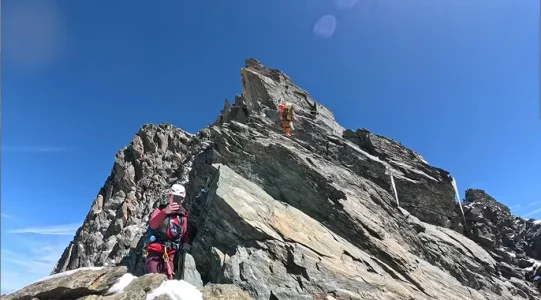
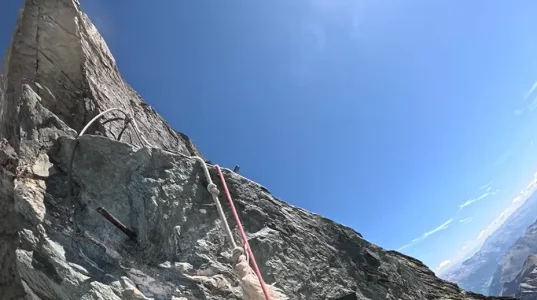
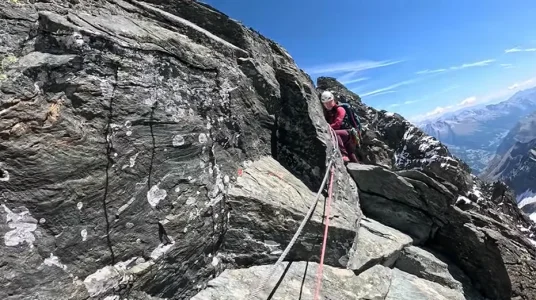
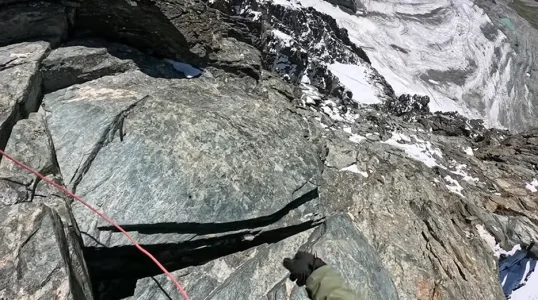
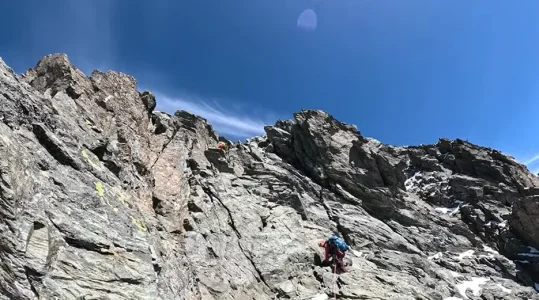
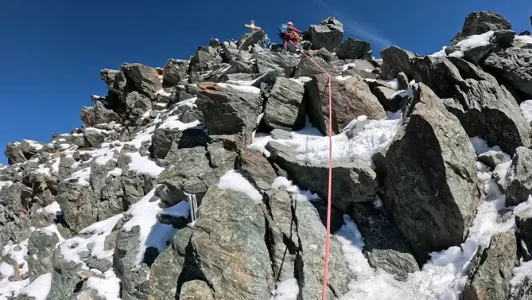
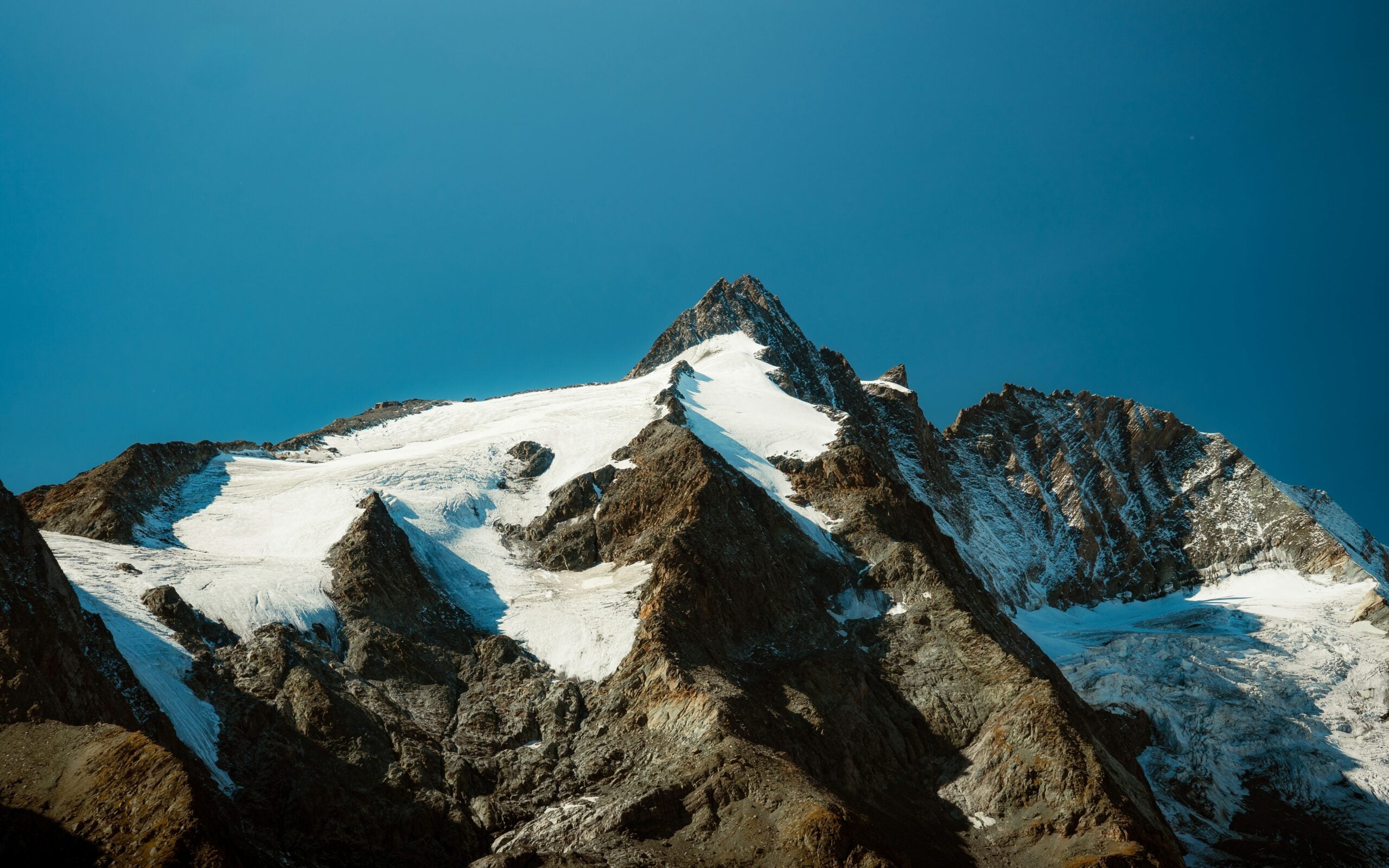
And what final pitch for the God's sake? WHERE SHE WAS FOUND? There is no "final pitch" up the snow rampe that's ~50 metres from the summit, from where cross is visible. And if she was not on the ramp, then HOW was she walking on her knees? Walking on knees on WHAT? Vertical walls? Stones where there is barely enough space to put a foot on? And on what exactly he was trying to lie next to her on?

This?
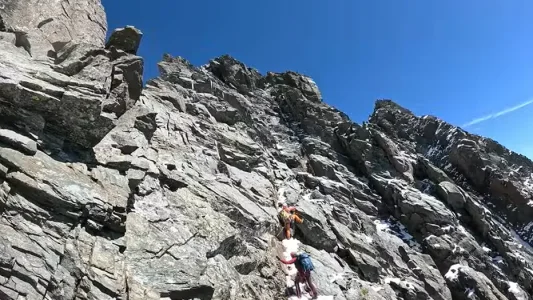
1772072536414.webp
This?
1772072562549.webp
This?
1772072642022.webp
This?
1772072874828.webp
& look down:
1772072933637.webp
Maybe this?
1772072952679.webp
Cause up that cross is already "visible":
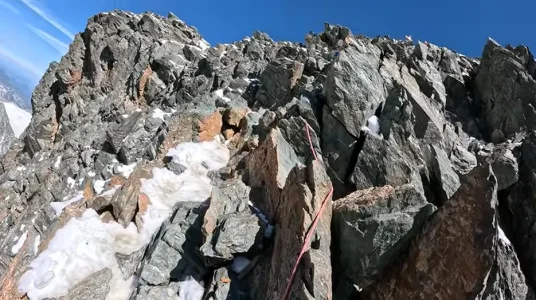
1772073018216.webp
Then visible even better:
1772073129470.webp
(pics from this video)

Thats summer so obviously there would be more snow on in January.
Before two pics back it's more than 50m in elevation from the summit. And there is nothing to walk on knees on. Past that there is really not enough space anywhere for two people to lie down next to each other. Was he allegedly trying to lie next to her while she was hanging?
Or, if more experienced with ropes he could be expected to pull her up to the summit? From 50 metres below in elevation? That would be McGyver task at night with hurricane wind. So she had to be higher up... walking on knees on what? And what was he allegedly trying to lie on next to her?
Thomas comes across as an experienced solo climber but what is the judge, indeed, hinting at? “Lacking the leadership qualities”, not understanding that he should adjust to the capacities/pace of the weakest link, Kerstin. (Seems to be so obvious…) When the “weakest link” got exhausted, he did not know how to rig a pulley system to help her. He is fast, the judge says, for himself, but cannot lead.
Yeah, let's forget that what should take them 3-4 hours took them OVER NINE HOURS - at which point helicopter was repeatedly hovering above them. Yet we're supposed to count that as "bit longer than usual" and count Thomas's failed perception only from a point additional 1,5 hours later and bet it on him not knowing how to use ropes in pulley systems.

Oh wait, not knowing means that he had few of those with him:
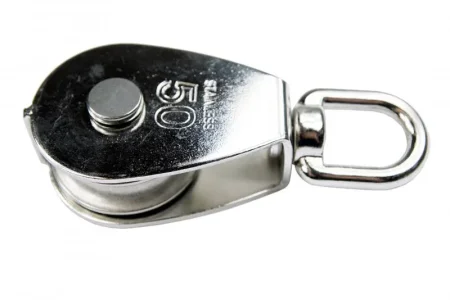
1772101809790.webp
Why? If he lacked the knowledge how to use them?
So how does Thomas look, in the judge’s eyes? iMHO, as a somewhat inept person, who no one less experienced should climb with.
To have all that applied with good faith he must appear like a person that requires a legal guardian and caretaker.
Now, “self-contained ascents” is quite a term. To me it means that Thomas mostly climbed Grossglockner alone.
May sound like it but its not the case. He seemed to have companions on vast majority of his climbs and mostly not one-time companions.

This is what he posted on his insta:
"February 6, 2024: "Yesterday we went through the 70° steep Mayerlrampe The first half with running rope and the upper part with belay construction浪 (unrestrained) Really cool climbing in super good ice流 (flow)
⛏️

Starting point lucknerhaus ° °"
Ain't that interesting?

March 26, 2024: "Yesterday we tried the "Sundays for Future" route on the #glödis northwest face. Unfortunately, it remained just an attempt, and we had to turn back 150 meters below the summit. The conditions weren't exactly good.
Sunday was on 24th.
This is the route (link).
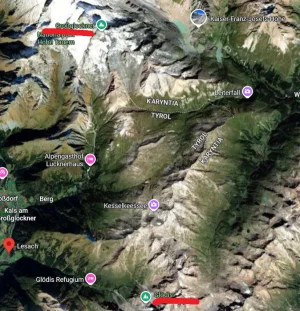
1772103003050.webp
To climb Glodis through that route you have to start in Lesach. That's about 1,5 hour long WALKING distance from Lucknerhaus where you start Grossglockner Studlgrat/Normal route ascends.
Plural, plural, plural. Almost always plural in his posts. WE. Not I. WE.
March 24th weather:

7:00 -10*C (Feldkopf weather archive), -17*C (Adlers weather archive) 10km/h S wind, 37km gusts
Noon -10*C, next to no visibility / Adlers -15*C, 7km/h, 33km/h gusts

And in case that by "yesterday" he meant Monday, 25th:
7:00 in the morning -18*C, 6km/h N wind, 57km gusts (Adlers) /-11*C Feldkopf
Noon -14*C, 1km/h, gusts 29km/h (Adlers), -8*C (Feldkopf)
18:00 -13*C, 36km/h, 48km/h gusts (Adlers), -5*C (Feldkopf)
So he probably hasn't meant Monday.

Feldkopf cam:
Feldkopf - Blick nach Westen zum Glödis und Hochschober - Foto-Webcam.eu


I still fail to see this incompetent, lone lost puppy in the snow.

*Kaiser Franz-Josefs-Hohe = Adlers(hutte)


 

Guardians Monthly Goal

Staff online

Members online

Online statistics

Members online
148
Guests online
2,658
Total visitors
2,806

Forum statistics

Threads
643,742
Messages
18,804,521
Members
245,228
Latest member
moebu
Top