

• #561
I remember reading somewhere that the fur hat she had, was thought to be possibly from Uzbekistan/Kazakhstan or any closeby area. [Police report] Also the golden crowns on her teeth are unusual and I think them are thought to be pointed towards Turkish/Eastern Mediterranean Origin. It was also pointed out, that the golden crowns were made extremely well.

I can understand very well, why she is so enchanting and mysterious.

I also spoke previously of the honey pot lures, and came across mention that they weren't necessarily always anyone standing out back in the day, but more common women and someone whom could walk among people rather unnoticed. Also the exploitation was possible, if the woman was young, naive or so. So it could be easy to lure someone to just simply deliver something to someone, or just pick something up from somewhere.

Also, we cannot forget the infamous case of Mata Hari, where someone managed to fool so many. More you learn about her, more she captivates, at least me.

Bit off the rails again, but felt like adding tid bits a slightly more from my sleuthing.
And her maternal haplogroup (H2) points to Southeastern European/Southwestern Asian ancestry but that might just indicate an ancestor was from that area, not that her mother was from that part of the globe. 😑 I should know as my dad’s Y-haplogroup is common among people from the Levant and Africa but he’s German Jewish with ancestors tracing back directly to Germany, Poland, Lithuania and Ukraine (although it might also indicate he’s a descendant of a stray “Old Europe” family that somehow escaped the attention of the Yamnaya people as that haplogroup is also linked to “Old Europe”). Don’t know about my mom’s mitochondrial haplogroup though (she does have a bit of Denisovan which might be surprising as she is of German and Swiss ancestry). Anyway “Elisabeth” seems to enjoy pulling me in different directions.
 
Last edited:
  • #562
According to wiki
She was likely born around 1930 in or near Nuremberg, Germany
Between childhood and her teenage years, she appears to have moved further west. By age 14, her chemical markers suggest she lived in the border regions of France, Germany, Belgium, or Luxembourg.
Handwriting analysis conducted by experts reinforced these findings, suggesting she was educated in a French-speaking country, likely France or Belgium.
When checking into hotels, she frequently claimed to be Belgian, using fake names and addresses from cities like Brussels, Leuven, and Ostend.
Examination of her teeth showed complex dental work that likely took place in Central or Southern Europe, though some indicators also point toward East Asia or South America.
Analysis revealed she belongs to haplogroup H24.
Genetic and chemical markers suggest she was likely born in or near Nuremberg, Germany, or potentially as far east as Krakow (Poland), Brno (Czech Republic), or Győr (Hungary).
 
  • #563
  • #564
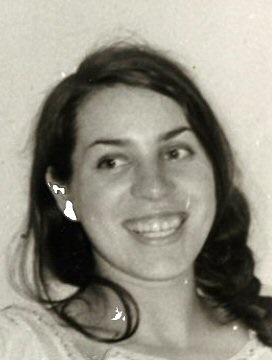
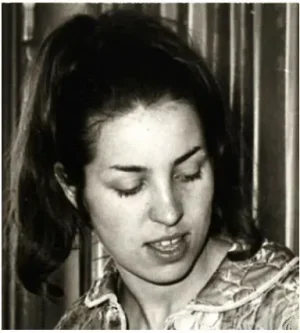
I keep on thinking the reconstruction, including teeth, Anny Heyligers resembles her the most from all European missing woman i saw.
IMG_1171.webp


- missing from the Netherlands
- since 1966
- 1m60
- brown hair
- gap between front teeth
- facial shape
What doesn’t match: they think she was possibly murdered. BUT: since the identity of out Doe has been unknown for so long, the answer will lie somewhere less obvious.


Attachments

  • IMG_3802.webp
    IMG_3802.webp
    15 KB · Views: 16
  • #565
- missing from the Netherlands
- since 1966
- 1m60
- brown hair
- gap between front teeth
- facial shape
What doesn’t match: they think she was possibly murdered. BUT: since the identity of out Doe has been unknown for so long, the answer will lie somewhere less obvious.

RSBM. In addition, Anny had blue-grey eyes, the Isdal Woman had brown eyes
 
  • #566
RSBM. In addition, Anny had blue-grey eyes, the Isdal Woman had brown eyes

RSBM. In addition, Anny had blue-grey eyes, the Isdal Woman had brown eyes
True! But eye color after death has been wrong often in the past, certainly in that period of time. I learned not to write off someone on eye color alone.
Eyes change after death, and drying out (the fire) makes them appear brown or even black. Moo. Not saying it’s her, chance is very small
 
  • #567
She was likely born around 1930 in or near Nuremberg, Germany
Between childhood and her teenage years, she appears to have moved further west. By age 14, her chemical markers suggest she lived in the border regions of France, Germany, Belgium, or Luxembourg.
If she had been born around 1930 in Nuremberg, she would have been around 15 when WW2 ended. About 90% of the city had been destroyed at the end of the war, it could mean that she might have lost many of her relatives, as well as identity papers. Did someone take her as a "war bride" to Belgium/France? That could explain why nobody claimed her after her death.

As for her clothes, and that the labels had been removed. I wonder if it was she who had done that, or if she had bought secondhand clothes, and a previous owner and/or shop owner had removed the labels before selling, perhaps the items had been stolen goods.
 
Last edited:
  • #568
According to wiki
Thank you for summing up what we have figured out about “Elisabeth’s” background. Looking over it you think we would have some clue to her actual name but we don’t. It feels like every step we take the more information escapes from us.
 
  • #569
If she had been born around 1930 in Nuremberg, she would have been around 15 when WW2 ended. About 90% of the city had been destroyed at the end of the war, it could mean that she might have lost many of her relatives, as well as identity papers. Did someone take her as a "war bride" to Belgium/France? That could explain why nobody claimed her after her death.

As for her clothes, and that the labels had been removed. I wonder if it was she who had done that, or if she had bought secondhand clothes, and a previous owner and/or shop owner had removed the labels before selling, perhaps the items had been stolen goods.
Now that you mentioned it I do recall a mention of a wedding band in her possession. She might be someone’s wife, possibly someone from Belgium or France (Alsace perhaps?). Could her husband been an only child and his family passed away before her and he before her?
 
  • #570
True! But eye color after death has been wrong often in the past, certainly in that period of time. I learned not to write off someone on eye color alone.
Eyes change after death, and drying out (the fire) makes them appear brown or even black. Moo. Not saying it’s her, chance is very small
Her eye colour was confirmed by autopsy and witness accounts as was her hair colour and stature. Source: Police report.
 
  • #571
The colour of the iris comes from melanin, and melanin does not disappear, bleach, or transform after death.
So a brown‑eyed person stays brown‑eyed. Light eyes (blue/green/grey) are the ones that can appear darker after death, not the other way around. This is why the Isdal Woman’s brown eyes are considered a reliable observation:
brown is the easiest eye colour to identify even in compromised conditions.
 
  • #572
Now that you mentioned it I do recall a mention of a wedding band in her possession. She might be someone’s wife, possibly someone from Belgium or France (Alsace perhaps?). Could her husband been an only child and his family passed away before her and he before her?
The ring with the other found jewellery was placed close to her in ceremonial manner, which police found odd. [Police Report]. It isn't clear whatsoever did she actually herself wear them.
 
  • #573
Well…damn…there goes my theory of having married into a Belgian/Alsatian family.
 
  • #574
Trying to make sense of the Isdal Woman means accepting that we’re working with fragments. So this isn’t a claim of truth, just one scenario that seems to line up with many of the known facts.

She moved through Switzerland, Germany, Belgium, Denmark, and Norway with multiple identities, no personal items, cut‑off clothing labels, and a notebook full of coded but practical travel notes. Her belongings were functional, her movements precise, and her life strangely rootless. That pattern doesn’t look like tourism or espionage. It looks like courier work: the kind that moved luxury goods, cash, or sensitive documents across Europe’s borders during the Cold War. In this version of events, her final trip to Bergen was a delivery that went wrong. Witnesses saw her meeting an unknown man and appearing tense. Her notes stop abruptly. She bought a new suitcase, as if preparing for a handoff. And then she ended up in Isdalen, alive when the fire started, arranged in a way that mimicked suicide but didn’t quite convince. A failed delivery, a betrayal, or a dispute with whoever she was working for could explain the crude staging and the silence that followed. Couriers were useful until they weren’t, and when something went wrong, no one stepped forward to claim them...
 
  • #575
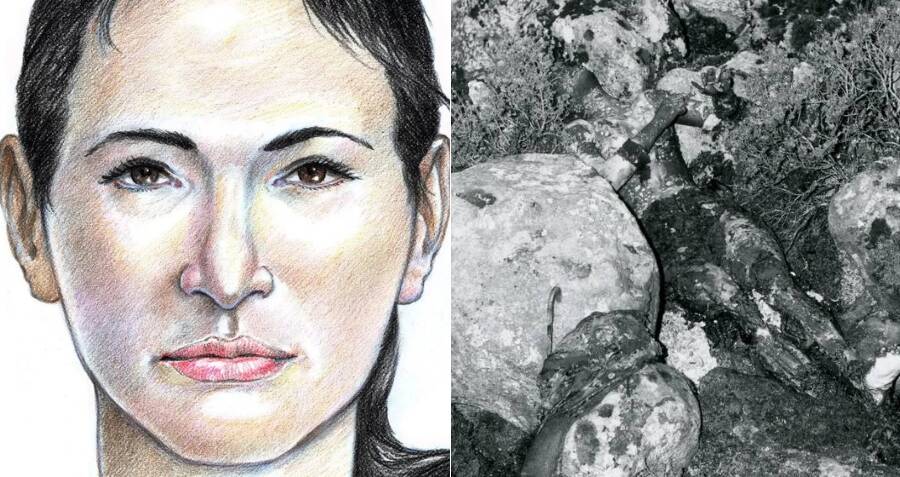
Burned Isdal Woman

Bergen State Archives: The body of the Isdal Woman, lying in the “boxer’s position” on the cliffside where she was found.

On Nov. 29, 1970 two young girls and their father were hiking through the Isdalen Valley, a few miles outside the city of Bergen, Norway, when they came upon a horrific sight: a woman’s body lying on its back, burned beyond recognition...

LINK:

 
  • #576
Burned Isdal Woman

Bergen State Archives: The body of the Isdal Woman, lying in the “boxer’s position” on the cliffside where she was found.

On Nov. 29, 1970 two young girls and their father were hiking through the Isdalen Valley, a few miles outside the city of Bergen, Norway, when they came upon a horrific sight: a woman’s body lying on its back, burned beyond recognition...

LINK:

That crime scene photo always gives me the chills.
 
  • #577
That crime scene photo always gives me the chills.
Agreed. There’s something about it that feels like a darkness touched that area. Something happened in those moments leading up to her passing but what it was I can’t say. All I know is this: my gut feeling has always screamed murder not suicide. Someone wanted “Elisabeth” gone for some reason and whatever that reason was it was paid with her life.
 
  • #578
Trying to make sense of the Isdal Woman means accepting that we’re working with fragments. So this isn’t a claim of truth, just one scenario that seems to line up with many of the known facts. <...>
Back then, Scandinavian taxes on luxury goods were extremely high, which made smugglers valuable for moving stock into those markets under cover. That context explains the multiple identities, cut‑off labels and coded notes found with the Isdalen woman; she may well have been involved in smuggling. If so, her role would likely have required collecting cash payments and returning them to an employer. My speculation is that something went wrong at the final handover: she either didn’t receive the money, or she was drugged during a meeting, sedatives slipped into a drink, and then silenced by the crims to eliminate a loose end. That would explain why police found no luxury items or cash in her hotel room: everything had been removed. She also appears to have had no close relatives, so no one immediately raised the alarm. I think investigators should pursue this line more thoroughly: examine the black market networks for smuggled luxury goods in the 1970s, identify who supplied and who collected payments, and trace any links to people operating in Norway at the time. Those inquiries could produce leads that the original inquiries missed. JMO
 
  • #579
If she had been born around 1930 in Nuremberg, she would have been around 15 when WW2 ended. About 90% of the city had been destroyed at the end of the war, it could mean that she might have lost many of her relatives, as well as identity papers. Did someone take her as a "war bride" to Belgium/France? That could explain why nobody claimed her after her death.
RSBM. That could explain why her dental work shows East German and other unusual techniques. She may have been an orphan who moved between different households, so her early life is hard to trace. I wish she had kept a diary and hidden it somewhere safe. It’s possible Allied authorities picked her up and placed her in some program or detention in Western Europe, and she stayed there under a new identity. Her writings suggest she studied in France or Belgium, which fits a pattern of moving across borders.
 
  • #580
Could a more precise picture of her be drawn as her DNA is known ?
Maybe someone could recognise her.
 

Guardians Monthly Goal

Members online

Online statistics

Members online
91
Guests online
1,692
Total visitors
1,783

Forum statistics

Threads
646,053
Messages
18,853,420
Members
245,887
Latest member
Miss Watson
Top