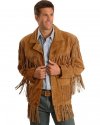
Addendum: the issue isn't who was wearing what. The issue is whether someone whose clothing is not specifically Western-style can be from the West. You've said twice they can't, or aren't likely to be. That's the part I take exception to.
Can you show me where I said they "cant"? When you read my posts, you will notice that I made the following comments in regards to western clothing, or expressed the following concepts:
- more likely
- most
-That does
not mean every one dressed fully western
- averages
- Though I would
not say that all westernern girls dress like cowboys or lumber jacks all the time
-That does not mean they dressed 24/7/365 like they were going to a rodeo
-Exceptions, however, do exist.
As for "not likely", I have held and still hold that the victims clothing makes it less likely (but by no means impossible) that she was from a cowboy culture area.
People doing work tended to favor "shitkickers" (aka work boots) and "wafflestompers" (aka boots with Vibram soles) because cowboy boots aren't practical for any work that requires traction. The soles are too slick.
Shitkickers were worn in Texas as well and though I would not consider them truly western, as they are worn everywhere for out door work, they are usually indicative of a rural life style. The victim was not wearing any female equivelents.
If that's the case, small town Texas differs quite a bit from small-town Montana.
And t-shirts were the garment of choice. You usually only saw the jewelry, belt buckles, etc. for things like going out dancing, parades and rodeos, etc.
And men were far more likely than women to wear western-cut clothing. Hadn't realized that until now.
I would say in Texas, men and women were equally likely to wear western clothing or accessories (certain large wallet styles for men). T-shirts were also very common in my area. They could be mixed, however, with tennis shoes, boots, shitkickers, western belt buckles, or western motiffed wallets, or western cut jeans with a dip ring worn into the seat pocket.
I would say that it would be unusual (but not unheard of) for a local woman in 1970s rural Texas not to be wearing any western style clothing or have no western motiff jewlery, accessories etc. Rather, on a daily basis, people would mix and match western style with standard styles.