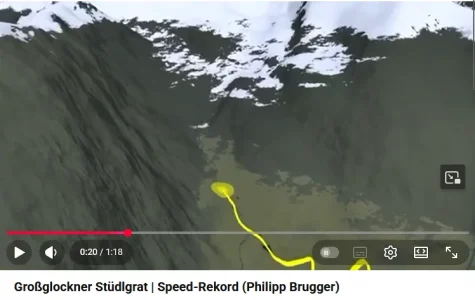
Austria - Thomas Plamberger leaves gf, Kerstin Gurtner to freeze to death on Austria's tallest mountain - charged with manslaughter - Jan.19/2025

  • #181
Does anyone know if there’s a certain point the climbers get past on the route where the only option is to summit? Can you always turn around and go back down if you start to feel unwell/know you can’t make it to the top and down again?


Here is everything: the questions I asked about the cellphones and identities (the observers called the police that saw their car with IDs), the helicopter (btw, it could be a regular police helicopter not a “rescue one”), and the explanation of the mountain guide.

There is “the point of no return” on each mountain and I think it very much depends on the sunset time, the weather and how high the helicopter can get.

See the “2 pm rule” on Everest.


For the route they chose on Grossglockner:

“The critical "point of no return" on the Grossglockner mountain's popular Stüdlgrat route is generally considered to be the Frühstücksplatz (approx. 3,550m).
Climbers are advised to reach this landmark from the Stüdlhütte (2,802m) within three hours. If this timeframe is not met, conditions (such as weather changes or approaching darkness) make it difficult to continue safely to the summit and descend, and turning back is strongly recommended.”
 
  • #182
We can’t assume unless we were the psychiatrists who saw him in person.
We can assume anything as long as it make sense to the person who makes an assumption.
We cant diagnose him obviously, but what would be a point of trying to do that?
From this article you linked to, it tells us KG showed faint signs of life at ~5:10am, but 5 hours later, once rescuers got to her, she was deceased from hypothermia.
Yeah, but if well rested (I assume) rescuers, who were starting from significant elevation needed five hours to climb to her, then it means that the couple's speed of climbing before wasnt that slow as the article claims.
I mean relatively...
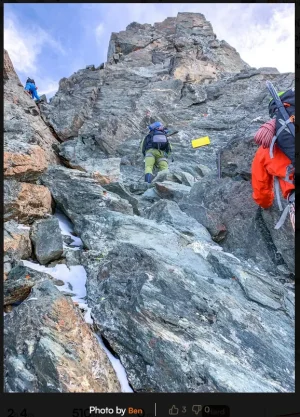
And the picture of rescuers from last article shows them going up the normal route - 3/4 of that route took them 5 hours? More than Thomas needed to climb last 50m in elevation and descend to the hut?

That whole timeline still doesnt make sense to me.
 
  • #183
“The critical "point of no return" on the Grossglockner mountain's popular Stüdlgrat route is generally considered to be the Frühstücksplatz (approx. 3,550m).
Climbers are advised to reach this landmark from the Stüdlhütte (2,802m)
within three hours. If this timeframe is not met, conditions (such as weather changes or approaching darkness) make it difficult to continue safely to the summit and descend, and turning back is strongly recommended.”
Could this really be accurate?
3550m vs 2802m = 748m
748:3=249,3m
So climbers are expected to go 250metres in elevation PER HOUR?
Thats consistent 4 metres up per minute. Really?
 
  • #184
Oh, I think I get it now.
As climbing.com euphemistically describes: there are two "slightly" different accounts.

According to NYP Thomas claimed that:
- at about 10:30 p.m. they were both well
- he first reached out to rescue crews at about 12:35 a.m. to try and arrange a helicopter rescue when his girlfriend “suddenly showed increasing signs of exhaustion.”
- the officer he managed to reach via phone told him a helicopter rescue was not possible so the couple opted to keep moving in order to stay warm

The statement was published on his lawyer’s website months before Plamberger was charged last week.
It's not that, or not all that people who tried to cover the case and deliver the news mixed up every possible detail.
It seems like they were/are fully relying on these "slightly" different accounts.

One account comes from cops, rescue team, surveillance and whitnesses who saw their headlamps on the mountain.

The other comes from Thomas, who claims that they were at Frühstücksplatz (3,550m) at 1:30 PM and they were both well till about 12:35 when Kerstin showed "sudden signs of exhaustion".
He does that in his official statement, made by his lawyer.
Grossglockner is 3798m
Frühstücksplatz is 3550m
Thats 248m difference and Kerstin was found 50m below the summit.
So 200m.
Sooo... he's saying that everything was fine. While they climbed. 200m in elevation for 11 hours.
And that as they did most of that distance in 9 hours everything was still fine, thats why they havent alerted heli at 10:30 PM and another one, before the midnight.

He's charged cause he got caught lying his rear end's off, and thats why its all so confusing.
 
  • #185
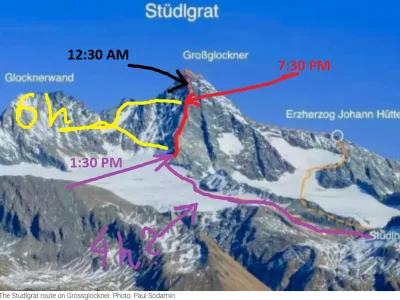
Doodles made in MS paint are mine, pic is from explorersweb article.

But seriously, I dont get that timeline either.
They made it to the Frühstücksplatz from the parking lot in 7 hours.

6:45 Parking in Kals
Parking in Kals - Stüdlhütte = 9km (5,6 mil)
Stüdlhütte-Frühstücksplatz = recommended time is supposed to be below 3h

I was wrong about the distance between parking lot and Stüdlhütte. Its only 9km, so definitely not a 3 hours long hike.
Then it is eerily slow speed. Cause surely that first part havent took them more than 1.5 hours. But let's assume 2.
But then what? Like... come on. There is a difference between slow pace and ridiculous info.
Previously I thought it was more like 3 hours long hike before the Hut, but its clearly not.
So it wasnt bit slowered by snow 4 hours but something closer to 5 hours.
And that 5 hours sounds completely unreasonable.

So after sooo many hours of hiking Thomas descended from the summit to Erzherzog Hut in three hours, yet well rested and barely starting he walked with equally well prepared and ultimately fit Kerstin that purple part of the route in 5 hours?
And he, as experienced with this mountain as he is he hasnt felt that anything is a miss at that point.
Then they climbed the red part in about 6 hours as then theyre caught on CCTV.
And at 12:30 Kerstin definitely hasnt moved further up.
He claims that they kept climbing and everything was peachy till right after the second heli left. So 4 hours.
10 hours on that windy wall and Thomas claims that everything was going well.

1765766433966.webp

No way, hes lying. These claims are making him look like like complete idiot.
I refuse to believe that idiots can climb like he does for as long as he does.

And his lawyer claimed that "the officer he managed to reach via phone (at 12:35 AM) told him a helicopter rescue was not possible so the couple opted to keep moving in order to stay warm".
But its on CCTV that she wasnt moving past that time. So how they could opt to keep moving? It was only him who was moving, and in that same claim he leaves her straight after... knowing that the heli wont come.
 
  • #186
We can assume anything as long as it make sense to the person who makes an assumption.
We cant diagnose him obviously, but what would be a point of trying to do that?

Yeah, but if well rested (I assume) rescuers, who were starting from significant elevation needed five hours to climb to her then it means that the couple's speed of climbing before wasnt that slow as the article claims.
I mean relatively...
And the picture of rescuers from last article shows them going up the normal route - 3/4 of that route took them 5 hours? More than Thomas needed to climb last 50m in elevation and descend to the hut?

That whole timeline still doesnt make sense to me.


About Thomas’s mental health. People can speculate of course, but only the police, the helicopter crew, the people down in the Alps and maybe, other people who saw the couple on their way, if any, can testify to Plamberger’s state, and even this will not be a diagnosis. MH professionals are never advised to diagnose clients without speaking to them in person. (See Dr. Gudden and Ludwig II of Bavaria - it ended up poorly for both).

I checked the sunrise on Grossglockner on January 19 2025. It was 7:48 AM. If the group “set off” immediately, meaning, after the call at 3:40, still, I assume, it takes some time to rise to 1/4. So let us assume they started climbing by foot at 4AM. And at 10:10 AM they reached her. Maybe the sunrise made a huge spatial orientation difference. They all testified to a terrible weather. However, when they reached her (dead), in the morning, the helicopter was able to lift up to 3200 m. The group (two alpine police officials and four alpine rescuers) still had to lower the body by 600 m themselves.

To me, the difference in how high the helicopter was able to fly at different time points, means two things: it is easier to navigate during the day and, possibly, the weather improving again at daytime.

Remember? On the previous day, January 18 2025, the fateful Gurthner/Plamberger ascent, the weather was very good when they started. It worsened later. He, the alpinist, doesn’t know the mountains? He didn’t foresee the weather changing…There are weather forecasts for every day.
It is unthinkable. Thomas lived in Salzburg, didn’t he see the Alps in different weather? And if the “window” to climb up Grossglockner is mid-June to mid-October, why did he decide to climb in January? The group of rescuers didn’t owe him anything. They risked their lives to help Kerstin. Same for the helicopter crew.
 
  • #187
He's charged cause he got caught lying his rear end's off, and thats why its all so confusing.
10 hours on that windy wall and Thomas claims that everything was going well.
RSBM
Great analyses and graphic.

While our math may not be exactly the same, our observations and conclusions are.
------------------‐-----------------------------------------

The 11 hours (1:30pm - 12:35am) to climb 200 verticle meters from the Breakfast Stop to where KG collapsed doesn't fit TP's narrative of them both doing well until 12:35am.

That is a climb rate of 18 vertical meters an hour (200 ÷ 11) or 1/3 meter per minute (18 ÷ 60).

For 11 hours they climbed on average 1 vertical foot per minute. That seems tortuously long, slow.

I suspect KG was exhausted and suffering much earlier than 12:35am.

And I suspect that rate on that mountain indicates something was terribly wrong and a call for rescue was needed before dark.

IMO.
ET: clarify and adjust format
 
Last edited:
  • #188
RSBM
Great analyses and graphic.

While our math may not be exactly the same, our observations and conclusions are.
------------------‐-----------------------------------------

The 11 hours (1:30pm - 12:35am) to climb 200 verticle meters from the Breakfast Stop to where KG collapsed doesn't fit TP's narrative of them both doing well until 12:35am.

That is a climb rate of 18 vertical meters an hour (200 ÷ 11) or 1/3 meter per minute (18 ÷ 60).

For 11 hours they climbed on average 1 vertical foot per minute. That seems tortuously long, slow.

I suspect KG was exhausted and suffering much earlier than 12:35am.

And I suspect that rate on that mountain indicates something was terribly wrong and a call for rescue was needed before dark.

IMO.
ET: clarify and adjust format

I think she was feeling very unwell at 8:50.

One also wonders if Thomas didn’t take into account the webcams and people watching them from below calling the police. One may also wonder if the police helicopter at 10:30 was unexpected for Thomas, and hence he did not answer. I don’t know when Kerstin died (hopefully PM can give an idea, although it may be difficult in this specific case with all temperature changes) but one wonders if at 10:30 she was very close to it. Having a phone, I can’t imagine someone not calling for help when things get worse for one on the cold mountain.
 
  • #189

I think this German article has been posted here but the last paragraph mentions Plamberger’s lawyer stating that before the ascent, Kirsten had “a flu-like infection”.

Who drags the person in the mountains with a flu, Covid, RSV or any infection??? Even if I had a regular running nose, I’d refuse because of the possibility or ears getting clogged. What was her temperature when they started?
 
  • #190
Last edited:
  • #191

I think this German article has been posted here but the last paragraph mentions Plamberger’s lawyer stating that before the ascent, Kirsten had “a flu-like infection”.
Oh, so I havent imagined that part about infection despite of not being able to find it when I needed.
Who drags the person in the mountains with a flu, Covid, RSV or any infection??? Even if I had a regular running nose, I’d refuse because of the possibility or ears getting clogged. What was her temperature when they started?
My understanding (cause its not same article, I havent seen this one) then (when I've read about it days ago) was that it was concluded LATER (implying the autopsy results) that she had an infection that neither she or Thomas knew or could know about that infection affecting her body.

So the theoretical answer to who would be someone who's unaware of it.
But then there is another question:
HOW ON EARTH THAT MATTERS?
Like what they would even try to achieve with pointing that out as a point of defense?
That she wouldnt stop climbing if she wasnt sick? That she wouldnt froze to death if she wasnt sick?
Like her making through that horrific ordeal without getting stuck would prove that Thomas judged situation and her abilities correctly and that it wasnt grossly negligent that he planned that trip, executed it, havent stopped their hike, havent called for help earlier and havent put her in bivvy sack.
So... like... either he got himself very bad lawyer or that guy doesnt have literally anything to go with in his defense and keeps grasping on straws trying to blame it on the fact that Kerstin kept going, on the weather, on the mysterious infection...
 
  • #192
DBM
 
  • #193
About Thomas’s mental health. People can speculate of course, but only the police, the helicopter crew, the people down in the Alps and maybe, other people who saw the couple on their way, if any, can testify to Plamberger’s state, and even this will not be a diagnosis. MH professionals are never advised to diagnose clients without speaking to them in person. (See Dr. Gudden and Ludwig II of Bavaria - it ended up poorly for both).
Talking to a patient once, or even several times is usually not enough to confidently and accurately diagnose BPD. So even those people's valuable observation couldn't be considered as more than maybe indicators to look at this angle by a professional.
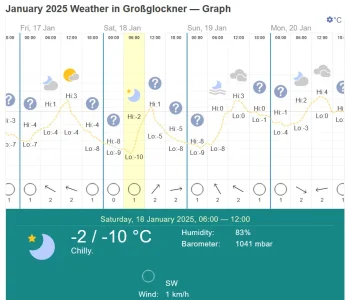
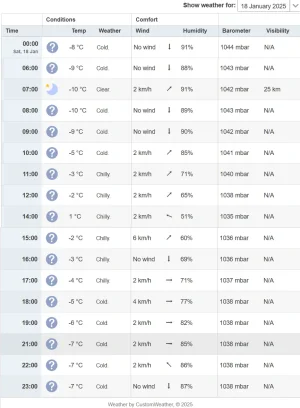
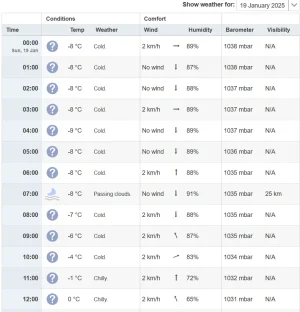
Remember? On the previous day, January 18 2025, the fateful Gurthner/Plamberger ascent, the weather was very good when they started. It worsened later. He, the alpinist, doesn’t know the mountains? He didn’t foresee the weather changing…There are weather forecasts for every day.
Was it very good?
I guess significantly better next to the mountain in the morning than around midnight next to the peak but that doesnt look like "very good weather" to me. It was significantly colder than in prior days when they started. Even at noon it was colder. Apart from that weather wasnt very different from earlier days.

1765791596748.webp


1765791301964.webp

1765791346056.webp

And if the “window” to climb up Grossglockner is mid-June to mid-October, why did he decide to climb in January?
Its worse than mid-June to mid-October.
Cause March-mid June and mid October-December are still the time when some experienced hikers go through that route. Its only January-February when basically no one goes through Studlgrat.
 
  • #194
Talking to a patient once, or even several times is usually not enough to confidently and accurately diagnose BPD. So even those people's valuable observation couldn't be considered as more than maybe indicators to look at this angle by a professional.

Was it very good?
I guess significantly better next to the mountain in the morning than around midnight next to the peak but that doesnt look like "very good weather" to me. It was significantly colder than in prior days when they started. Even at noon it was colder. Apart from that weather wasnt very different from earlier days.

View attachment 630750

View attachment 630748
View attachment 630749

Its worse than mid-June to mid-October.
Cause March-mid June and mid October-December are still the time when some experienced hikers go through that route. Its only January-February when basically no one goes through Studlgrat.

Interestingly, there were other climbers ascending on Jan 18. But the weather changed, and all of them decided to go down after the breakfast hut. Thomas and Kerstin were the only one who continued.
 
  • #195
RSBM
Great analyses and graphic.

While our math may not be exactly the same, our observations and conclusions are.
------------------‐-----------------------------------------
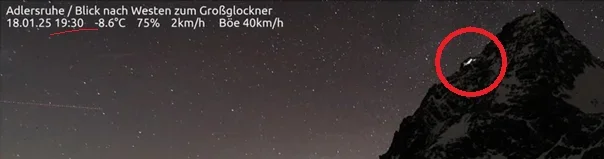
The part of the math we can all agree on is what we can see on surveillance.

1765792311781.webp


This is where they were at 7:30 PM.
And no matter what we're gonna do with this math it cant possibly lead to "everything seemed okay till whatever time afterwards. It just cant.
What could seem okay to anyone? The prospect of descending in worsening weather cause HE was so well familiar with that route? Nobody, literally nobody claims to have climbing experience AND also see how it may be a good idea to keep going without making excuses and theories what could force them to go or impair their/HIS judgement.
And while these excuses and theories make total sense in general and in theory or "people vs. wild powers of nature and no chance to alert anyone" they absolutely dont make sense as its taken to consideration that they had helicopters flying near them twice.
And he DOES NOT claim to miss the helis.
He DOES NOT claim to try to alert helis but be missed.
He claims that there was no foreseen need to try alert helis before midnight.

How hes getting so many defenders anyway?
Im genuinely wondering whats the reasoning there.
Is that nothing more than oh,
its
much more likely to have a climbing accident than to end up dead in direct consequence of somebody elses malicious intent?
Then who theyre making these arguments for?
I have pretty extreme views on that rate. I believe that it happens at least ten times more often than it is proved. Im not making a claim that its more likely to be murdered by another climber than to have an accident. Then who does?
If nobody, then what exactly that "argument" means - nothing and its just a basic statement, not really an argument? or that just cause something is, in the context of all numbers extremely rare its unlikely that it could happen ever?
But if so, and if they believe in numbers so much, how it coexists with an assumption that its much more likely that guy whos so confused and affected by the elements and exhaustion is able to descend that mountain during the night, in extreme winter conditions and safely get to the hut cause he was so incredibly lucky (or cause he remembered the route so well that it didnt matter he was unable to perform some basic judgement right before doing that?) than that he was still pretty sharp and strong and did that cause thats what hes capable of doing?

Am I failing with trying to explain my point?
The point being that its inherently inconsistent to have that two legged argument in which one leg relies strongly on "most probable scenario makes most sense" (so no ill will, unfortunate accident) and the other on "the least probable scenario makes most sense" (so it couldnt possibly be the skill, strength and capability, guy just got lucky).
Isnt it significantly MORE probable that succesfull climbs are done by people who know how to do it, are in shape to do it and can do it at the moment theyre doing it... than to see luck as most important factor?
 
  • #196
Interestingly, there were other climbers ascending on Jan 18. But the weather changed, and all of them decided to go down after the breakfast hut. Thomas and Kerstin were the only one who continued.
Which breakfast hut do you mean?
Erzherzog-Johann hut on the normal route?
Studlhutte on the Studlgrat route?
There is no "hut" anywhere near that yellow sign. It's just called "a breakfast spot".

IF they really parked at "parking in Kals" then it means there:
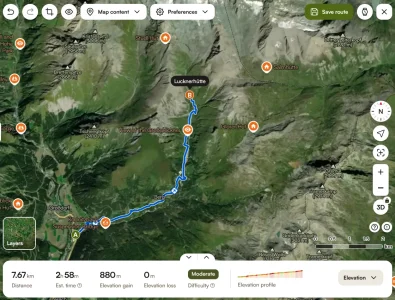
1765797430123.webp

Lucknerhutte has a parking lot, but that place is closed in winter and not sure if if its possible to park there or if not.
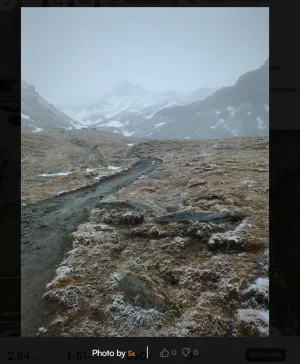
So I guess worth to consider that they might had to walk that 7,67 km or not.
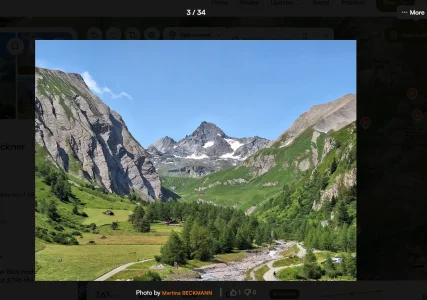
I dont know, but the road there looks like that:
1765797588934.webp

Im relying on this, excellent looking website: https://www.komoot.com

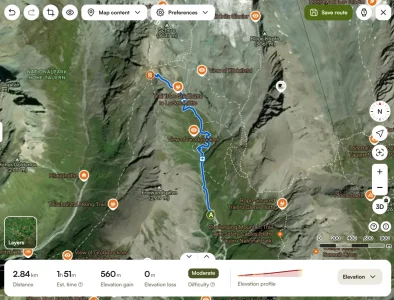
This is the Lucknerhutte, so "point B" on the map:
1765797706944.webp


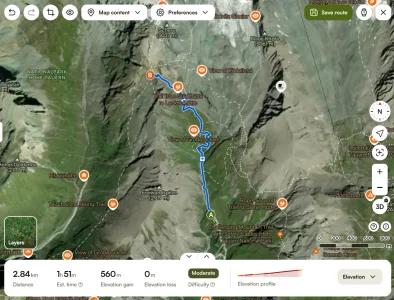
Second map: from Luckner to Studl:

1765797780087.webp


The route looks like this:

1765797833045.webp


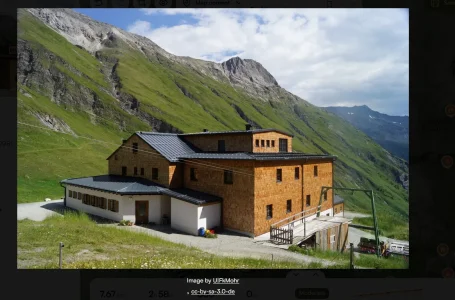
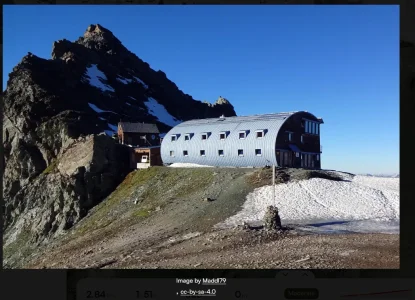
This is Studlhutte:

1765797905017.webp


This is how it looks (its closed in Winter):

1765797933397.webp


So... relying on the NOT WINTERTIME estimations to get there they had to walk either that:

1765797991043.webp


OR

1765798023453.webp

+
1765798001864.webp


And thats why my estimated calculations before varied so much.
Cause its either approx 2 hours of hiking or almost 5 hours of hiking to get to the Studlhutte.

So etiher start at 6:45 AM at Kals and have estimated time at Luckner 9:45 to get near Studl at 11:00 AM
OR
Start at Luckner parking lot at 6:45 AM and get near Studl sometime around 8:45 AM
 
  • #197
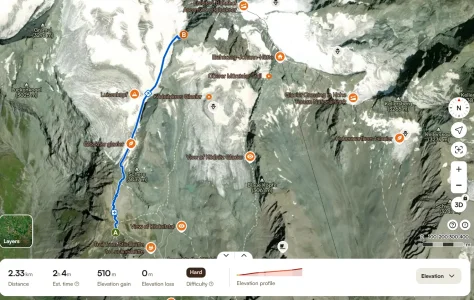
Third map - from Studlhutte to Frühstücksplatz (the breakfast spot)
1765801744367.webp


So etiher start at 6:45 AM at Kals and have estimated time at Luckner 9:45 to get near Studl at 11:00 AM and standing in front of that wall that has Frühstücksplatz sign on it sometime around 1:00 PM
OR
Start at Luckner parking lot at 6:45 AM, get near Studl sometime around 8:45 AM and at Frühstücksplatz around 10:45 AM

Route there looks like:
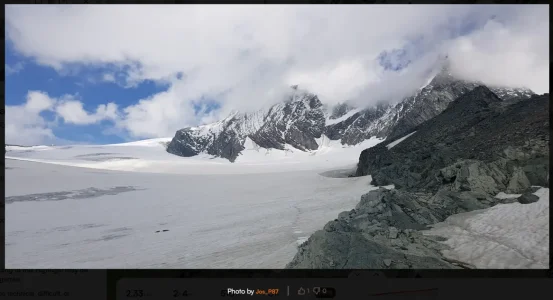
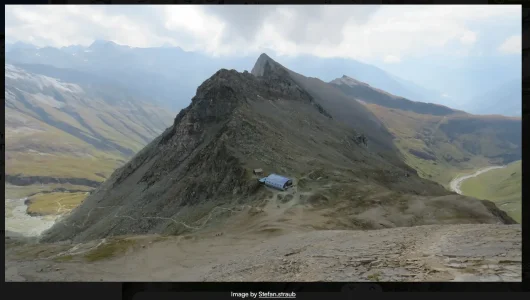
1765801785238.webp

1765801802403.webp


View FROM the Grossglockner:

1765801877944.webp


And thats where the yellow sign is:

1765801934891.webp


So if they started at Luckner - theyre almost three hours behind the "estimated" time at "moderate" pace.
But if their starting point was in Kals, then theyre perfectly "in time" with these estimations considering that they took a break and actually ate some breakfast.

Which one is it?
Which one makes more sense?
Three hours behind makes sense considering their incredibly slow progress through the hardest, purely climbing part.
Next to no time "behind" also makes sense, cause that "incredibly slow" sounds like exactly how long would it take to have some totally rough climb in freezing cold, on icy stone, drowning in snow and likely needing breaks often but not in a form of sitting and chilling but somehow moving even a bit, to not get even colder.

To have Thomas's and his lawyer's tales of "bad luck" apply it would HAVE to be reasonable to expect that they can make it. Not only to the summit before sundown at 5:00 PM, but at least all the climbing down part through normal route on the way to Erzherzog-Johann hut.

But obviously, neither of these makes even the slightest sense in context of pushing past Frühstücksplatz.
Cause there was and isnt, absolutely no way that anyone in half-right mind could expect to make it to the summit and down to Erzherzog-Johann hut before sundown.
Worsening weather at night was totally foreseen and expected, it was just the matter of when exactly its gonna turn totally horrible, but it WAS OBVIOUS that it IS gonna get VERY COLD and VERY WINDY.

If its correct that they were at Frühstücksplatz at 1:30 PM then they have only 3,5 hours. Huge stretch on the limits of human body.
Possibly Thomas and few mountain goats could pull off that escapade in time but he wasnt accompanied by a wild goat who spend all her life in da mountains so that estimation couldnt be made. Not in good faith. No way. 0% chances. Not one in a mil, not one in a bil. Zero.

Unless Idk, maybe if they started at Luckner at 6:45 AM and get near Studl sometime around 8:45 AM and were at Frühstücksplatz sometime around 11:00 AM.
But E V E N T H E N it would leave them with 6 hours before sundown.

So like the narrowest of the narrow. Smoothest possible climb up and smoothest possible descend. At more than moderate pace it would likely still be just fast enough to pass the stony part of descend, not even get to the Hut.

Its not how summit fever works. It gets people as they have done all these preparations to go, spend all that money, made all that effort and/or went through so much to get so close to the summit...
They just went through few hours of hard, challenging HIKING trail on the way up the mountain they both lived relatively close to, and where Thomas climbed repeatedly.
And what then? Yup, were goin? Keep carrying that splitboard that you wont have a chance to use cause its gonna be totally dark if we even make it there?
Weather archive says that wind increased sometime around 10:00 AM. He was expecting it to suddenly get much better later in the day and higher up the mountain? Sure. I buy that. And I also wanna buy a Golden Gate Bridge.
1765802061928.webp


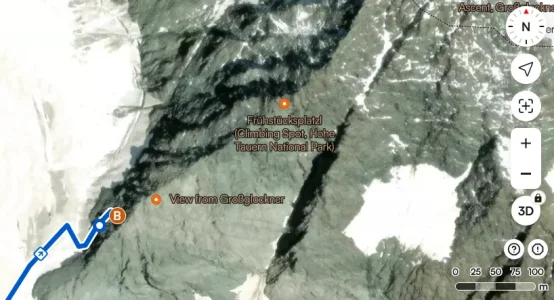
And that "point B" on the third map is when the stone climb starts.
"Breakfast spot" and yellow sign is higher up.
Thats why my parking at Kals scenario indicated that their speed was incredibly good.
3 hours to Luckner + 2 hours to Studl + 2 hours to the climbing part of the route + some time to climb to Frühstücksplatz...

7,67km with 800m elevation (Kals-Luckner) with est. 3h
+ 2,84km with 560m elevation (Luckner-Studl) with est. 2h
+ 2,33km with 510m elevation (Studl-the wall) with est. 2h
+ ~250m with 283m elevation (from 3.297m to 3.580m / the wall-the spot)

13,09km with 2153 elevation in ~6,5 hours aint no "slow speed" thats incredibly fast.

Removing the part 1 (Kals-Luckner) with est. 3h, 7,67 km and 800m elevation its STIILL no slow speed.
5,17km with 1070 elevation (Luckner-the wall) with est. 4 hours
+ ~250m with 283m elevation (from 3.297m to 3.580m / the wall-the spot)
in winter, in snow.
That implies some 1-1,5 hour delay in comparison to estimated three hours time on the way from Studl to Fruh thats mentioned on the yellow sign but still, in Winter... I still cant consider it as incredibly slow in context of making that distance.
Its dangerously, scarily slow in context of climbing up to the summit so it absolutely should NOT WORK in favors of Thomas's alleged theoretical, optimistic, good willed, summit feverish decisions repeatedly made as they got to the climbing part of the Grossglockner and as they were passing the yellow sign.

 
Last edited:
  • #198
Interestingly, there were other climbers ascending on Jan 18. But the weather changed, and all of them decided to go down after the breakfast hut. Thomas and Kerstin were the only one who continued.
Btw. Im under impression that these other climbers were ascending through normal route, not through Studl.
 
  • #199
Ive found even better video.

Guy starts at Luckner and RUNS up.

1765811005128.webp


At 0:20 is almost Studl:

1765811202028.webp


That must be surreal experience from other climbers climbing up with ropes and stuff, and there is some guy with no helmet or anything, straight RUNNING up that mountain:


Well, if he ran first 5km in bit less than an hour, then he ran through all the climbing part in 37 minutes. Whooa.
Also 8,34 km to the peak?
5,17km is Luckner-the wall.
That leaves 3,17km to go through climbing part through Studlgrat.

So... Kerstin and Thomas were going up with average speed of 300m per hour, 5m per minute and it still somehow felt good enough to NOT try to alert helicopters?

One more:


This is in JUNE.
From 4:48 descend via normal route is visible.

This one, also excellent presentation of how that route actually looks like and where the "breakfast spot" is:


At 7:38 guy says that theyre at approx. 3400m, took them 4h31min to get there.
Its November.
Frühstücksplatz (approx. 3,550m) is visible at 11:36
It took them 5h20mins to get there.

To Studlhutte they made it in 1h50mins after starting from Luckner's parking lot.
So... 3,5 hours Stud-Fruhs against recommended 3 hours and they kept going.

50m below the summit is somewhere near "the Rampe".

So... Kerstin died somewhere above the 31:40 in the video.

For the guys in the vid it was 6h51 min from Luckner to the summit so... approx. 1h31 min from Fruhs to the summit.
So whole hardcore climbing up part - 2 hours 20 minutes.

Who can even imagine spending 5 hours on that windy wall, constantly having to hold on something, having sundown situation going on and NOT think that its high emergency situation?
Then 6th hour, 7th hour, 8th hour, 9th hour, 10th hour, making it another five with relying only on headlamps and NOT trying to alert the heli? Not trying to call for rescue?
Two more hours in darkness, second heli, still NO reason to try to alert the heli? Full confidence in making all upcoming climb up and descend?
Half of an hour more and NOW, thats about the time to call for heli?!

Its really like there IS literally like 6 to 9 "missing" hours.
What the hell? Did they start the whole thing AFTER NOON? Bivacked at Fruh for 6 hours?

Or did they disagree on the topic of keeping going up vs. descending so much he went up and left her to try descend by herself - and did she tried to do that but couldnt possibly made it through some part of it alone/in the dark... so she had no choice but to go up as he also descended after feeling that he totally taught her a lesson? Havent descended but waited for her somewhere in the bivy, so he didnt get hypotermic and got well rested for the remaining part of the climb? Did both?
Is that why they had only one bivvy? Cause he used the other one? And they were both in HIS backpack?

Crazy scenario, but for me, not crazier than this strange timeline provided by Thomas. And at this point I think... the only thing that makes sense to me after I've watched even more climbing vids.

Im still as far from climber as I was yesterday, but I've worked in freezing cold, below 0*C temps, with no breaks, no warm spot to get in the mean time, just 8-10 hours of endless manual work. My hands and fingers were turning so numb no way I could be able to succesfully grab some stone and hold onto it without falling. And his story is that they were doing it in much worse conditions for more than 12 hours up to the second heli and nothing felt off and risky?
 
  • #200
Which breakfast hut do you mean?
Erzherzog-Johann hut on the normal route?
Studlhutte on the Studlgrat route?
There is no "hut" anywhere near that yellow sign. It's just called "a breakfast spot".

IF they really parked at "parking in Kals" then it means there:
View attachment 630758
Lucknerhutte has a parking lot, but that place is closed in winter and not sure if if its possible to park there or if not.
So I guess worth to consider that they might had to walk that 7,67 km or not.
I dont know, but the road there looks like that:
View attachment 630759
Im relying on this, excellent looking website: https://www.komoot.com

This is the Lucknerhutte, so "point B" on the map:
View attachment 630760

Second map: from Luckner to Studl:

View attachment 630761

The route looks like this:

View attachment 630763

This is Studlhutte:

View attachment 630764

This is how it looks (its closed in Winter):

View attachment 630765

So... relying on the NOT WINTERTIME estimations to get there they had to walk either that:

View attachment 630766

OR

View attachment 630768
+
View attachment 630767

And thats why my estimated calculations before varied so much.
Cause its either approx 2 hours of hiking or almost 5 hours of hiking to get to the Studlhutte.

So etiher start at 6:45 AM at Kals and have estimated time at Luckner 9:45 to get near Studl at 11:00 AM
OR
Start at Luckner parking lot at 6:45 AM and get near Studl sometime around 8:45 AM

I meant Studlgrat. I used to know German but it was long ago and…I am afraid of losing a letter in a German word or so. It is “breakfast place”.
 

Guardians Monthly Goal

Staff online

Members online

Online statistics

Members online
65
Guests online
2,420
Total visitors
2,485

Forum statistics

Threads
638,876
Messages
18,734,260
Members
244,544
Latest member
mmmock97
Back
Top