
Let’s also not forget that according to KD’s book IIRC, both HS and BS told friends that BS was going to give HS a lot of money with MS saying she was to get $300-$500 million from HS. IMO, HS’s claim indicates that the amount involved was to be about 10 times the cost of the new house. Now that, IMO, might be something someone might want to stop.I believe, he was not okay with that move, not at all, and he resented his wife for wanting to force him to do it at his advanced age of 75. I think, he hated her for it. MOO



You are using an out of date browser. It may not display this or other websites correctly.
You should upgrade or use an alternative browser.
You should upgrade or use an alternative browser.
CANADA Canada - Billionaire Couple Barry & Honey Sherman Murdered at Home, Toronto, 15 Dec 2017 #24
- Thread starter dotr
- Start date

- Joined
- Jun 10, 2023
- Messages
- 343
- Reaction score
- 2,332
This “gift” is so weird to me as a non-wealthy person. The Shermans were bizarre about money. Honey did not even have a bank account; she would ask Barry to bring home large amounts of cash. The “gift” was to be her own money and she was going to give more than half of it to her sister. As Barry’s wife, the money was already Honey’s, but obviously that wasn’t their arrangement within their relationship.Let’s also not forget that according to KD’s book IIRC, both HS and BS told friends that BS was going to give HS a lot of money with MS saying she was to get $300-$500 million from HS. IMO, HS’s claim indicates that the amount involved was to be about 10 times the cost of the new house. Now that, IMO, might be something someone might want to stop.
I can only speculate that this weird transfer was happening for tax reasons; the Shermans set up trusts to transfer money to family in tax-advantaged ways but this amount is always described as though it was to be cash. People speak of it in different ways than they speak of Mary’s real estate holdings that were in reality funded by Barry.


- Joined
- Jul 29, 2018
- Messages
- 12,243
- Reaction score
- 82,280
This “gift” is so weird to me as a non-wealthy person. The Shermans were bizarre about money. Honey did not even have a bank account; she would ask Barry to bring home large amounts of cash. The “gift” was to be her own money and she was going to give more than half of it to her sister. As Barry’s wife, the money was already Honey’s, but obviously that wasn’t their arrangement within their relationship.
I can only speculate that this weird transfer was happening for tax reasons; the Shermans set up trusts to transfer money to family in tax-advantaged ways but this amount is always described as though it was to be cash. People speak of it in different ways than they speak of Mary’s real estate holdings that were in reality funded by Barry.
Perhaps them promising, changing plans (at least verbally) and keeping the money as the way to control relationships is what played its negative role? I think it would have been more fair to give people their “inheritance” in life and tie the rest in a fund. There are many ways. But it seems that there was lack of a final plan. I wonder if they were the people to threaten to change the will or such?
- Joined
- Jul 29, 2018
- Messages
- 12,243
- Reaction score
- 82,280
In my view, the person behind this isn't just violent; he is cold and deeeeeply manipulative. This isn't the work of someone who "lost their temper"; it’s the work of a person who understands how to weaponize the legal and police systems against themselves. By staging the scene, he wasn't just hiding a crime; he was trying to write the ending of the story. It shows a level of calculation that is honestly chilling. He knew that a "murder-suicide" would make the police slow down and the lawyers start fighting, which buys him exactly what he needs: time and distance. This points to a cunning personality who likely felt humiliated by Barry in life. All in my opinion
Am I the only one who sees some wicked, morbid sense of humor in the killer? He did it for a reason, not for fun. But it also looks as if he read about Herb Baumeister, the serial ritualistic killer from Indiana, and since the pool was used, he also “ritualized” the positions of the bodies a little bit, to resemble the Shermans’ odd dolls? I think it was a mockery of their poor taste and pretentiousness (after all, they didn’t have taste, did they?) but something else, too.
I think that person should have acerbic humor in life.


- Joined
- Apr 16, 2021
- Messages
- 4,753
- Reaction score
- 35,854
Also, don't let forget, that allegedly Barry claimed, he would leave his wealth only to charity and not to his children in the event of his death. Though I don't know, when he told this: in 2017? Afaik, Honey agreed.Let’s also not forget that according to KD’s book IIRC, both HS and BS told friends that BS was going to give HS a lot of money with MS saying she was to get $300-$500 million from HS. IMO, HS’s claim indicates that the amount involved was to be about 10 times the cost of the new house. Now that, IMO, might be something someone might want to stop.
It makes the whole financial settlement even more suspicious and special.
- Joined
- Apr 16, 2021
- Messages
- 4,753
- Reaction score
- 35,854
Maybe, the killer (or the helper) did know exactly, how little appeal these cardboard trash figures found in the eyes of the Sherman children, and perhaps also in the eyes of friends/visitors. Honey might have been the only one, who accepted these figures as "art", but she also got them as a (free!) gift, if I remember well. They had been deco between mannequins; after they had served their purpose, they wandered to a friend of Honey, then to Honey and into the basement.Am I the only one who sees some wicked, morbid sense of humor in the killer? He did it for a reason, not for fun. But it also looks as if he read about Herb Baumeister, the serial ritualistic killer from Indiana, and since the pool was used, he also “ritualized” the positions of the bodies a little bit, to resemble the Shermans’ odd dolls? I think it was a mockery of their poor taste and pretentiousness (after all, they didn’t have taste, did they?) but something else, too.
I think that person should have acerbic humor in life.
May well be, there was some acerbic humor in the play. IF against someone, then I would ask: against whom especially?
Last edited:
- Joined
- Apr 16, 2021
- Messages
- 4,753
- Reaction score
- 35,854
bbmIn my view, the person behind this isn't just violent; he is cold and deeeeeply manipulative. This isn't the work of someone who "lost their temper"; it’s the work of a person who understands how to weaponize the legal and police systems against themselves. By staging the scene, he wasn't just hiding a crime; he was trying to write the ending of the story. It shows a level of calculation that is honestly chilling. He knew that a "murder-suicide" would make the police slow down and the lawyers start fighting, which buys him exactly what he needs: time and distance. This points to a cunning personality who likely felt humiliated by Barry in life. All in my opinion

I only know about what is going on with the Sherman murder cases through the media and this site. I have a theory like many other people, but it is not based on evidence or facts. The People I know who were/are connected to the Sherman family and/or Apotex are in the same position.Based on your comment it seems you may know more about the case than many of us. Who do you think is responsible for the murders if you’re comfortable addressing this?? Thanks!
Or someone else might want to accelerate?Let’s also not forget that according to KD’s book IIRC, both HS and BS told friends that BS was going to give HS a lot of money with MS saying she was to get $300-$500 million from HS. IMO, HS’s claim indicates that the amount involved was to be about 10 times the cost of the new house. Now that, IMO, might be something someone might want to stop.


- Joined
- Oct 21, 2009
- Messages
- 60,092
- Reaction score
- 282,062
Me too!Am I the only one who sees some wicked, morbid sense of humor in the killer? He did it for a reason, not for fun. But it also looks as if he read about Herb Baumeister, the serial ritualistic killer from Indiana, and since the pool was used, he also “ritualized” the positions of the bodies a little bit, to resemble the Shermans’ odd dolls? I think it was a mockery of their poor taste and pretentiousness (after all, they didn’t have taste, did they?) but something else, too.
I think that person should have acerbic humor in life.
Just noting because it gave me goosebumps... fwiw, imo.
In search of info. about the unrelated murders of gay men by US SK, Herb. B., came across a show that focused on the perceived creepy vibes at the indoor pool at his former mansion.
No connection to the Sherman murders, but it was chilling to see statues in the pool area, where he may have strangled his victims.
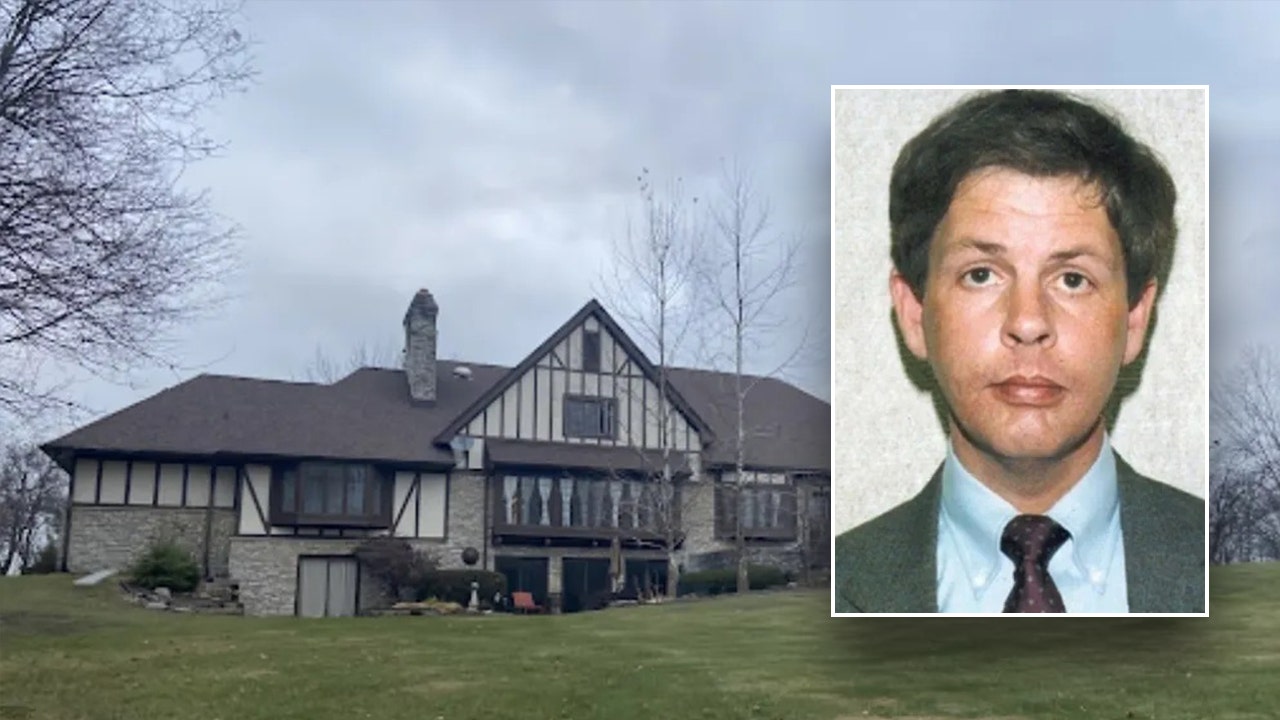
 www.foxnews.com

The docuseries details how Herb Baumeister may have killed his victims in his pool. (ABC...
In search of info. about the unrelated murders of gay men by US SK, Herb. B., came across a show that focused on the perceived creepy vibes at the indoor pool at his former mansion.
No connection to the Sherman murders, but it was chilling to see statues in the pool area, where he may have strangled his victims.
Fox Hollow serial killer's secret tapes could reveal murder horrors if ever found: documentary
Herb Baumeister, a thrift store owner, is believed to have killed at least 25 people from the 1980s to the 1990s and buried them throughout his $1 million, 18-acre property.
The docuseries details how Herb Baumeister may have killed his victims in his pool. (ABC...

- Joined
- Jun 10, 2023
- Messages
- 343
- Reaction score
- 2,332
Yeah, I sometimes wonder if Mary’s husband knew Barry had removed him as a trustee of his will.Or someone else might want to accelerate?
- Joined
- Oct 21, 2009
- Messages
- 60,092
- Reaction score
- 282,062
2021 Family refresher..

 www.thestar.com

''It was not just the four children who benefitted from Barry’s success. Friends, and children of friends, were provided with money for education and houses. The families of both Barry’s sister and Honey’s sister were also given financial help. For example, according to documents in a lawsuit filed by the son of Honey’s sister Mary Shechtman (he is seeking information on the Shechtman family trust and a court order removing Mary and her husband Allen Shechtman as trustees and replacing them with a corporate trust company), the Shechtman trust owns 17 houses. Insiders say those were purchased with Barry’s assistance over the years.''

Allen Shechtman is the husband of Mary Shechtman, Honey Sherman’s sister.
Picasa
Feb 18, 2021
Barry and Honey were killed in a “targeted” double murder late in the evening of Wednesday, Dec. 13, 2017. Toronto homicide detectives say the investigation is “active and ongoing.” Star investigative reporter Kevin Donovan on the Shermans and their family members.
Many lined up at the ‘Bank of Barry’ Sherman: Inside the $10 billion succession battle
Sherman daughter says her life is more tragic than a Shakespeare play; Son Jonathon says of his sudden wealth, at some point it is just ‘extra zeros.’
''It was not just the four children who benefitted from Barry’s success. Friends, and children of friends, were provided with money for education and houses. The families of both Barry’s sister and Honey’s sister were also given financial help. For example, according to documents in a lawsuit filed by the son of Honey’s sister Mary Shechtman (he is seeking information on the Shechtman family trust and a court order removing Mary and her husband Allen Shechtman as trustees and replacing them with a corporate trust company), the Shechtman trust owns 17 houses. Insiders say those were purchased with Barry’s assistance over the years.''
Allen Shechtman is the husband of Mary Shechtman, Honey Sherman’s sister.
Picasa
Barry and Honey were killed in a “targeted” double murder late in the evening of Wednesday, Dec. 13, 2017. Toronto homicide detectives say the investigation is “active and ongoing.” Star investigative reporter Kevin Donovan on the Shermans and their family members.

I believe, he was not okay with that move, not at all, and he resented his wife for wanting to force him to do it at his advanced age of 75. I think, he hated her for it. MOO
I guess you disregard the fact that Barry had always been his own person.
- When Honey bought him a luxury sports car he did not want, he returned it.
- Barry paid the Architects a retainer to design a new home.
- Barry attended the Architects' meetings for the new home.
- Barry signed the listing agreement for sale of the old home.
- Barry allowed the old home to have inspections by prospective buyers.
Last edited:
No, not at all.
While nothing could be ruled out, I don't think it was the heirs: the style of the murder just doesn't quite fit that plot. I would look for a desperate debtor, even though some business rivals cannot be ruled out either. But in this murder, there is so much personal hatred that it could be explained if a debtor, and not necessarily one owing a massive sum, was behind it.
Barry wasn't just a billionaire; he was a high-pressure lender who used capital as a leash. In the months leading up to the hit, he started "calling the paper" - cracking down on loans and dragging people into litigation. If you’re a debtor redlining toward bankruptcy, a dual-death event is a total game-changer.
In simple terms, it effectively zeros the ledger. When the founders are gone, the estate shifts into a passive "settlement" phase run by the next generation. If the debtor is a relative or a close associate, the new gatekeepers are usually way more chill - they’ll likely stop the aggressive collection or just let the debt slide. Legally, the debt can also be "offset", meaning instead of having to pay back millions in cash that the person doesn't have, the estate simply subtracts that amount from whatever future gift or inheritance they might eventually receive. MOO
The ledger is not zeroed. The estate trustees have a fiduciary duty to collect the outstanding balance based on the loan agreement now owed to the estate. Of course the trustees can negotiate with the borrower and alter the terms and sums. Since I am pretty sure Barry always involved lawyers to draw up these loans, rest assured Barry or Honey's death would not eliminate or clear the loan.
The borrowers, no doubt would be fully aware of this fact, and the motive for murder to eliminate the debt would be invalid.


- Joined
- Dec 19, 2008
- Messages
- 1,375
- Reaction score
- 4,510
Nothing about this murder suggests it was disorganized. The available evidence points strongly toward planning. The killer or killers arrived with bindings and appeared familiar with the layout of the home. The act itself was methodical.
If Honey's murder had been unplanned, the result of an emotional outburst, IMO Honey would likely have been strangled with bare hands, bludgeoned with the nearest available object, or stabbed with a knife taken from the kitchen. Instead, the manner of killing suggests forethought rather than an impulsive rage.
IMO the circumstances indicate that the perpetrator had knowledge of Barry’s comings and goings, an awareness of the home’s security, and some familiarity with the staff and Honey’s daily routines. I don't believe that this was a crime carried out by chance.
If the positioning of the bodies was not intended to stage a murder-suicide, then an alternative theory is that the scene was deliberately arranged to replicate the art installation in the basement, for reasons that remain unclear. JMO
If Honey's murder had been unplanned, the result of an emotional outburst, IMO Honey would likely have been strangled with bare hands, bludgeoned with the nearest available object, or stabbed with a knife taken from the kitchen. Instead, the manner of killing suggests forethought rather than an impulsive rage.
IMO the circumstances indicate that the perpetrator had knowledge of Barry’s comings and goings, an awareness of the home’s security, and some familiarity with the staff and Honey’s daily routines. I don't believe that this was a crime carried out by chance.
If the positioning of the bodies was not intended to stage a murder-suicide, then an alternative theory is that the scene was deliberately arranged to replicate the art installation in the basement, for reasons that remain unclear. JMO
- Joined
- Dec 19, 2008
- Messages
- 1,375
- Reaction score
- 4,510
If the motive for this crime was rooted in hatred or revenge, it would be conceivable that the perpetrator sought to exact it in the cruelest way possible. The killer may have despised Honey as much as Barry, viewing her as just an extension of him rather than as a seperate individual. She may have also been targeted not only for who she was, but as a means of intensifying fear, control, and psychological torment directed at Barry himself.Why kill both? Barry Sherman seems to have had a lot of competitors and others who felt that they had lost out to him financially, but why kill Honey too?
If the killer was clever enough to do what he did and get away with it, would he not have been able to kill one without killing the other?
- Joined
- Jul 29, 2018
- Messages
- 12,243
- Reaction score
- 82,280
If the motive for this crime was rooted in hatred or revenge, it would be conceivable that the perpetrator sought to exact it in the cruelest way possible. The killer may have despised Honey as much as Barry, viewing her as just an extension of him rather than as a seperate individual. She may have also been targeted not only for who she was, but as a means of intensifying fear, control, and psychological torment directed at Barry himself.
It does feel logical that they were killed for their money. Or for Apotex, the source of the money. I can’t imagine that it was hatred or revenge. Maybe the person despised them.
But the truth is, money is how they were connected to the world.
If it was someone from their immediate family, even sadder, because Honey went an extra mile to have most of them.
If it was someone unrelated to the family but close, then, still, Barry helped them.
- Joined
- Jul 29, 2018
- Messages
- 12,243
- Reaction score
- 82,280
It's been over seven years with no real progress. Is it too politically sensitive to publicly solve? When does it officially become a cold case?
I can’t imagine it should be that sensitive.
If it is one of the closest people it is only one out of… well, “bad apple” and all. Oedipal drama, big deal, happens.
Same if it is someone from the Apotex. It is not like a group of the board who conspired. Someone.
It is still one person who hired someone to kill two older people in the house.
I read some rumors exploring the “political” angle but I don’t tend to believe it. They didn’t fall out of the windows, their cars were not exploded. The murders are too chamber-like.
JMO, of course. Political murders are in the context of struggle for power. The Shermans were just donors invited to events for their generous donations. And thanked so that next time, the donations would be bigger. On their side, the reward was the “philanthropic face”. On the political side, the money.
- Joined
- Jul 29, 2018
- Messages
- 12,243
- Reaction score
- 82,280
If the motive for this crime was rooted in hatred or revenge, it would be conceivable that the perpetrator sought to exact it in the cruelest way possible. The killer may have despised Honey as much as Barry, viewing her as just an extension of him rather than as a seperate individual. She may have also been targeted not only for who she was, but as a means of intensifying fear, control, and psychological torment directed at Barry himself.
I think you are on to something, only they were both despised equally, in a way, because the person felt that with their money, they didn’t live up to it.
It is very common that the founders of empires stay very humble, provincial, you might even say.
It applies to such larger-than-life figures as Onassis, even. He spent a lot of money, but still came across as a provincial man from Smyrna.
Here, too, Barry and Holly started as a regular small-town Jewish couple and continued the same way. They didn’t enjoy their wealth and it makes sense. For Barry, the money could be invested back into business, because give or take, he was the industrialist. For Honey, well, as the child of Holocaust survivors, she had own principles, so one can understand her drive to philanthropy, and not only for Jewish causes, for fairness, for democracy, if you will.
So we can view them as a small-town Jewish couple with larger-than-life ideas.
But can you imagine that someone, close to them, deprived of their talent (whether to make money or have big humanitarian plans) despised them for staying so …small for themselves, not being able to live or behave up to their money? Not looking or behaving like rich people do? Not being refined enough?
In a regular family, if a kid doesn’t like the parents’ style, they can move out.
But here, no one could, because of the money. And no one could measure up to them.
BTW, I don’t want it to look as if I suspect the children. I suspect someone close to them. But all people close to them were probably, their “children”, tied up by money.
I see the conflict exactly here. We view them as people who, with all their human problems, achieved, made a business, gave jobs, shared their money with causes. Like they were. The first-generation capitalists. They created, after all.
People close to them, perhaps were too close to view it this way.
It always happens. JMO.


- Joined
- Jul 20, 2024
- Messages
- 22
- Reaction score
- 130
The ledger is not zeroed. The estate trustees have a fiduciary duty to collect the outstanding balance based on the loan agreement now owed to the estate. Of course the trustees can negotiate with the borrower and alter the terms and sums. Since I am pretty sure Barry always involved lawyers to draw up these loans, rest assured Barry or Honey's death would not eliminate or clear the loan.
The borrowers, no doubt would be fully aware of this fact, and the motive for murder to eliminate the debt would be invalid.
I am looking at the reality of estate litigation - past the "letter of the law". Even if lawyers drew up the paperwork, Barry was the sole witness to the personal side of these deals. Many of these "loans" were actually high-pressure psychological tools. Without Barry there to testify about the verbal conditions, the intent, or the missed payments, a debtor can tie the estate up in court for a decade by claiming Barry had verbally forgiven the debt or changed the terms before he died. In a massive estate, trustees often settle for pennies on the dollar just to stop paying their own lawyers. A trustee’s fiduciary duty is to the beneficiaries, not to the abstract concept of the debt. If the heirs (the new beneficiaries) don't want to sue their own cousin or a family friend for a loan, they can instruct the trustees to settle the debt for a nominal amount or "write it off" as uncollectible. Barry was the only one with the ego and the drive to actually hit the "sue" button; the heirs are often much more likely to want the drama to end.
A desperate debtor doesn't need the debt to vanish legally forever; they just need the immediate pressure to stop. The law says the debt remains, but the will to enforce it died with Barry, which defines the motive as "strategic paralysis" rather than "legal erasure". In my view, this gap between legal paperwork and street reality is the key to understanding this murder. On paper, a long list of debtors might not look like "winners" because, in theory, the debt still exists. But in reality, once the enforcer is gone, the debt is often effectively dead. All IMHO.
Similar threads
- Locked
- Replies
- 1,081
- Views
- 168K

- Locked
- Replies
- 1,137
- Views
- 129K

- Locked
- Replies
- 1,036
- Views
- 139K
- Locked
- Replies
- 1,066
- Views
- 127K
- Locked
- Replies
- 1,023
- Views
- 111K

Guardians Monthly Goal

Goal Reached! We hit our target of 75 new Guardians!
New stretch goal: 100!
Our goal for the month is 75 new Guardians members to sign up. Have you been thinking about becoming a member?
Click here to find out how!


Online statistics
- Members online
- 133
- Guests online
- 3,885
- Total visitors
- 4,018
Totals may include hidden visitors.
Forum statistics
Community Rules
-
Be CivilTreat all members with respect. No personal attacks, harassment, or inflammatory language.
-
Victim FriendlyAlways show respect for victims and their families. No victim blaming or insensitive speculation.
-
Fact-based SourcingProvide credible sources for claims. Distinguish between verified facts and personal theories.
-
Social Media UseDo not post direct links to personal social media profiles of private individuals.
-
Copyright and PaywallsDo not copy full articles. Summarize and link to the original source instead.
-
Privacy and Personal InformationDo not post personal information such as addresses, phone numbers, or workplaces.
-
Registered Sex-OffendersDo not name or speculate about RSOs unless officially named in connection to a case.
-
Stay On TopicKeep discussions relevant to the case or topic at hand. Avoid off-topic tangents.
-
Accounts, Moderation, and DisputesOne account per person. Contact moderators privately for disputes or concerns.
-
Solicitation and FundraisingNo solicitation, fundraising, or promotion of personal ventures without approval.