
- Joined
- Sep 5, 2023
- Messages
- 15
- Reaction score
- 199



When you play tennis, you typically start with a can of three balls. Those 3 are constantly rotating in and out of play. If you have extra, you keep them in your pockets. I’ve also seen players use a hip bag to hold on to extra balls, although not as large as the one the killer had. When balls go astray, they roll up against the fence, corners, etc. This is also where the wind blows loose debris. So, your balls are constantly rolling around in this, and the felt picks it up. Often, you’ll need to rub off the debris using your clothes.The droppings and tree debris were found in a jacket pocket and not the hip bag, but would it be natural to put a single tennis ball into his windbreaker pocket? I could imagine doing it to free up a hand momentarily.
What do you think as a tennis person, @SteveL
before modern phones and phone music, people had mini recorders and radios with headphones... some jackets had a button hole type hole to thread an ear phone jack ....pretty common (Sony Walkman, e.g.) AI:@Incoherent barium titanate is used in capacitors that are in electronics so most probably the owner of the hip bag kept a cellphone, music player or something similair in it. I'm not sure if the electronic device has to be broken or crushed for barium titanate to escape from inside the phone, maybe simply removing the back to change battery on an old phone could transfer barium titanate.
It's also in electromechanical transducers which seems to be in everything that converts energy into physical action, the examples I found online are mics, speakers, generators and motors. Unlikely the owner of the hip bag fit a generator in it but perhaps a mechanic could transfer it into the bag from work.
whomever he was, "Mom" was not washing his jacket every weekMost likely to jog people’s memories. When I read of zelkova trees in the report I thought of the large concentration of them in Kichijoji, and others might too and cast their mind back and remember something. Kichijoji was also where a lone person bought the knife by itself too, but he was ruled out. It’s also next to Ogikubo. Don’t you feel like it could all be connected somehow? But I’m just riffing here.
As for the jacket itself, it was sold only from October 2000. Zelkova being deciduous would have leaves falling from mid November - early December in the Tokyo area. It narrows down the time a bit to when and where he might have been. It is a very common tree though. Since it’s been heavily suggested he was watching the house it could indicate that to get traces of those leaves in his pocket he had to have been watching from a much earlier date than perhaps just a few days before, for example. All the leaves would be dead on the ground by then.
courts in Tokyo and/or on the base?A tennis ball is what picked everything up. As a tennis player, it’s aggravating how felt on a tennis ball almost acts like a swifter mop on the court. It pick up sand, dirt, leaves, bird droppings, etc., even candy wrappers. The killer’s hip bag most probably was used to hold tennis balls, and that’s how those things ended up in there.


An's husband worked in auto industry. Disgruntled employee connection? Or military brat working on cars for job/hobby? What ideas do you have going? Curious!Could it have anything to do with electronic repair or maintenance? Not necessarily something that he carried in his bag that left those traces. Auto tech comes to mind, such as working with vehicles and electronics.
From what I understand the material is found in certain electronics but is not just something that can be left as a residue of sorts, it comes from taking something apart or it being crushed or broken. For it to be found in the hip bag I don’t think it could mean he was just carrying around a Walkman or a mobile phone and that’s why it’s there. It would perhaps make more sense he was in an environment where that material was found in amounts that could transfer into his bag, so like a workshop or somewhere that did electronic maintenance.An's husband worked in auto industry. Disgruntled employee connection? Or military brat working on cars for job/hobby? What ideas do you have going? Curious!

snipped for brevity but i’d think with the sand mechanical stress, trace ceramic material could present with environmental particulate matter consistent with sand or dust. Maybe a pager or key/badge fob had passive transfer over time with the interior grit of the bag?Can barium titanate escape from inside electronics? (Which if possible; I think would be the most reasonable, everyday explanation)

Interesting insight! (Especially combined with the shoes.)I’m fairly confident this is how the sand from Edwards AFB was picked up. Pictures from the tennis courts there show sand all over the courts.
Many electronic hobbyist forums warn to always wash your hands when you're done (many mention lead ingestation as the main concern).
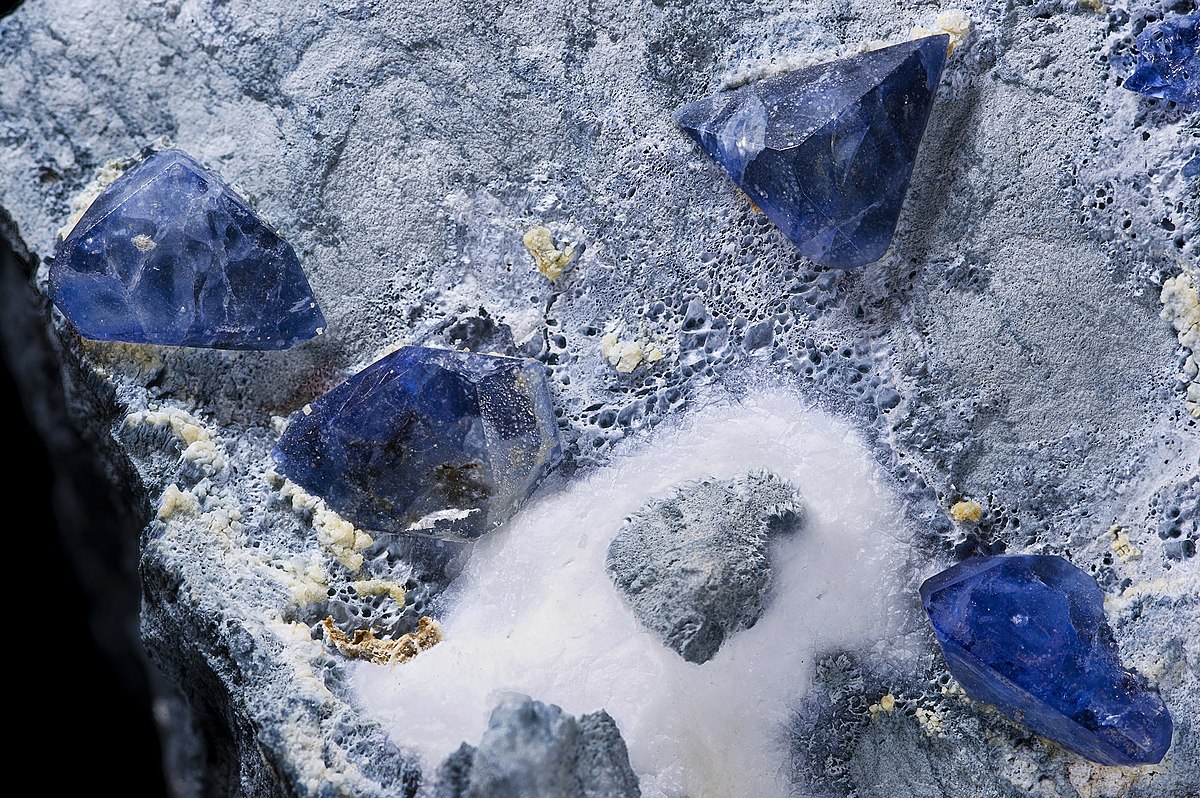

 www.mindat.org
Indeed, I just watched back how they explained the substances in the hip bag in Japanese and they said:I think it's interesting also the way they present their finding of the content of the hip bag with the distinction of "sand from Southwestern USA" and "monazite".
Mindat.org
Mindat.org is the world's leading website about minerals and where they come from.
Them describing it as being used in reflective material could rule out what we were speculating with the usage of barium titanate in electronic and automotive industry as it doesn't seem to be the same thing.Indeed, I just watched back how they explained the substances in the hip bag in Japanese and they said:
Monazite: “monazite, a mineral that should not exist in Japan”
Barium titanate: “barium titanate, used in things like reflective materials, was also detected”
The word for reflective materials used is 反射材 which if you google shows that it aligns more with the materials used on safety jackets or backpacks that reflect in the dark, or safety lights on a bike. Which makes this even more confusing perhaps.
No I do agree it is confusing. The picture they used when talking about the barium titanate was the white, fine powder type as well even though they said things like reflective materials. Better clarification is needed. It seems that in this instance they just used the simplest explanation for the audience."monazite, a mineral that should not exist in Japan”
This is also kind of a strange statement. Though rare, I found papers online going back to the 1960s talking about monazite being found in granite pegmatite in Japan, mostly in the southwest and northeast but also some that mention places as close to Tokyo as Yamanashi and Ibaraki prefecture. In Japan the monazite doesn't seem to exist in sand but they use monazite to date rocks and their historic movements. I especially remember reading about a mountain in Yamanashi prefecture in relation to finding monazite but I can't remember the name. I should be able to find it again. I remember thinking "ah, and there is mount Fuji in the corner of my screen, wonder if that has monazite".
Of course, the TMPD must have talked to experts in geology and similair fields and a bit of googling on my part can't compete with that. I'm not challenging their conclusion and statement but I would like to find what they found, that made them say monazite should not exist in Japan. Maybe the specific monazite type they found doesn't exist in Japan. But if they're releasing this much in depth info, why not just say it's monazite-(Ce) or (Nd) and so on that they found.