


You are using an out of date browser. It may not display this or other websites correctly.
You should upgrade or use an alternative browser.
You should upgrade or use an alternative browser.
US and Israeli strikes against Iran - 28 February 2026, Media, Maps & Timelines *NO DISCUSSION*
- Thread starter Sillybilly
- Start date


- Joined
- Jan 23, 2021
- Messages
- 18,625
- Reaction score
- 113,715
"Trump warns
he 'hasn't even started destroying what's left in Iran'
after destroying mega bridge in deadly strike.
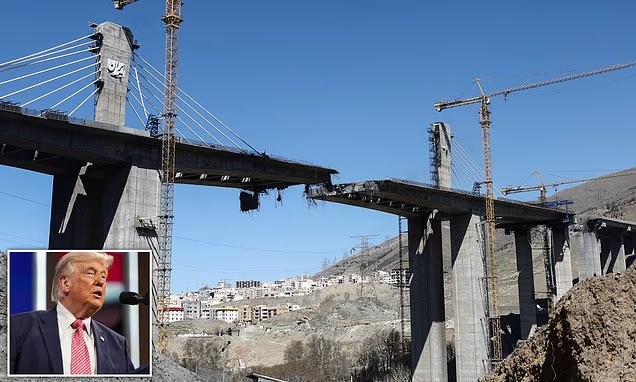
Donald Trump warned late on Thursday
that the military
'hasn't even started destroying what's left in Iran'.
Writing on the social media platform Truth Social,
the US president threatened
to strike and destroy the country's bridges and electric power plants
in his latest threat to hit the country's infrastructure.
Dozens of international law experts in the U.S. signed an open letter released earlier on Thursday
saying that U.S. strikes on Iran may amount to war crimes.
The 1949 Geneva Conventions on humanitarian conduct in war
prohibit attacks on sites considered essential for civilians.
The Geneva Conventions and additional protocols state
that parties to military conflict must distinguish between
'civilian objects and military objectives'
and that attacks on civilian objects are prohibited."
 www.dailymail.co.uk
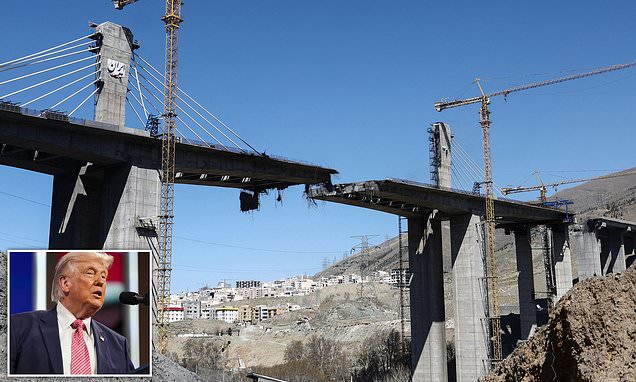
he 'hasn't even started destroying what's left in Iran'
after destroying mega bridge in deadly strike.
Donald Trump warned late on Thursday
that the military
'hasn't even started destroying what's left in Iran'.
Writing on the social media platform Truth Social,
the US president threatened
to strike and destroy the country's bridges and electric power plants
in his latest threat to hit the country's infrastructure.
Dozens of international law experts in the U.S. signed an open letter released earlier on Thursday
saying that U.S. strikes on Iran may amount to war crimes.
The 1949 Geneva Conventions on humanitarian conduct in war
prohibit attacks on sites considered essential for civilians.
The Geneva Conventions and additional protocols state
that parties to military conflict must distinguish between
'civilian objects and military objectives'
and that attacks on civilian objects are prohibited."
Trump warns he 'hasn't even started destroying what's left in Iran'
Donald Trump warned late on Thursday that the military 'hasn't even started destroying what's left in Iran.'


- Joined
- Aug 13, 2013
- Messages
- 16,400
- Reaction score
- 171,700
Iran has shot down a U.S. fighter jet, per Iranian media and a source familiar with the incident, and a search and rescue effort is underway to locate two crew.
A search-and-rescue operation was under way for the crew of a U.S. fighter jet that went down over Iran, the first known loss of a jet inside the country since the start of the war, people familiar with the matter said.
A search-and-rescue operation was under way for the crew of a U.S. fighter jet that went down over Iran, the first known loss of a jet inside the country since the start of the war, people familiar with the matter said.
Last edited:


- Joined
- Jul 7, 2018
- Messages
- 38,102
- Reaction score
- 253,286
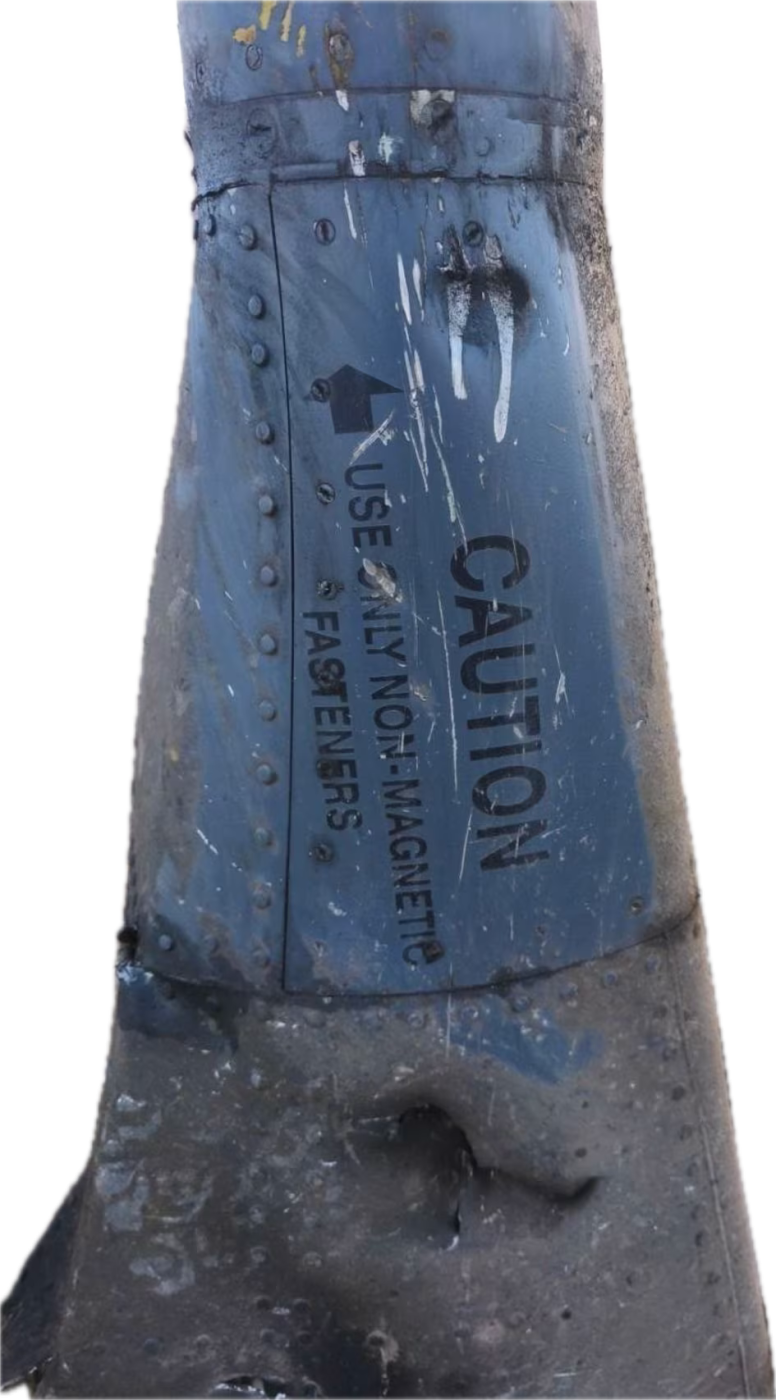
• Iran claims US jet downed: Iranian state media released photosof what it claimed is the wreckage of a US Air Force fighter jet downed by the Islamic Revolutionary Guard Corps. CNN has asked US Central Command for
• Trump threat: President Donald Trump issued a new a warningto Tehran, saying the US military “hasn’t even started destroying what’s left in Iran.” This came after a strike on a key bridge just outside Tehran killed at least eight people
• Trump threat: President Donald Trump issued a new a warningto Tehran, saying the US military “hasn’t even started destroying what’s left in Iran.” This came after a strike on a key bridge just outside Tehran killed at least eight people
Last edited:


- Joined
- Jul 26, 2016
- Messages
- 2,088
- Reaction score
- 21,513
Iran has shot down a U.S. fighter jet, per two sources familiar with the incident, and a search and rescue effort is underway to locate two crew.
The big picture: It's the first time since the beginning of the war that a U.S. jet was downed by enemy fire.
- The sources said the aircraft had a two-person crew.
- The U.S. military and the White House didn't immediately respond to requests for comment.

- Joined
- Nov 21, 2023
- Messages
- 702
- Reaction score
- 6,557
BBC are reporting that CBS have been told that one of the crew members has been rescued.

 www.bbc.co.uk
Search under way for US fighter jet shot down in Iran, US media report
Verified video, pictured above, appears to show a US search and rescue operation in southern Iran. The US is yet to comment on the reports.
www.bbc.co.uk

- Joined
- Jan 26, 2019
- Messages
- 10,988
- Reaction score
- 91,489
One crew member rescued, the second's location is unknown at this time. Seen on Breaking News on MS NOW.
An NBC link...

One U.S. pilot rescued after F-15 jet shot down over Iran
A U.S. official confirms that one of the pilots in an F-15 that was shot down over Iran has been found alive and rescued. NBC News' Courtney Kube reports on the incident and ongoing rescue operation.
 www.nbcnews.com
Last edited:
- Joined
- Jan 26, 2019
- Messages
- 10,988
- Reaction score
- 91,489
This is on MSNOW Breaking News, just reports during and interview with Former Sec. of Defense Leon Paletta. Trying to get a linkOne crew member rescued, the second's location is unknown at this time

- Joined
- Jan 17, 2004
- Messages
- 44,278
- Reaction score
- 245,768
Contradictory information again ...
"A spokesman for the Iranian Revolutionary Guard claims that Iran shot down "an American F-35 fighter jet" over central Iran.
The US Military Command for the Middle East (Centcom) refutes the statement. "All American fighter jets are intact. The Iranian Revolutionary Guard has made that same false claim at least half a dozen times," Centcom states on X."
...
American forces have rescued one crew member from a shot-down American fighter jet.
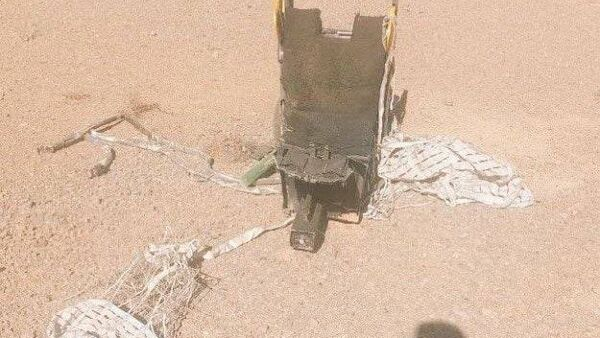
The search for the second crew member is still ongoing, and it is possible that he is still in Iranian territory. Iranian state media have shared images of wreckage and a used ejection seat, and local media reported that citizens are being called upon to help with the search, with a reward for information or the discovery of the pilot."
"A spokesman for the Iranian Revolutionary Guard claims that Iran shot down "an American F-35 fighter jet" over central Iran.
The US Military Command for the Middle East (Centcom) refutes the statement. "All American fighter jets are intact. The Iranian Revolutionary Guard has made that same false claim at least half a dozen times," Centcom states on X."
...
American forces have rescued one crew member from a shot-down American fighter jet.
The search for the second crew member is still ongoing, and it is possible that he is still in Iranian territory. Iranian state media have shared images of wreckage and a used ejection seat, and local media reported that citizens are being called upon to help with the search, with a reward for information or the discovery of the pilot."
- Joined
- Jan 17, 2004
- Messages
- 44,278
- Reaction score
- 245,768
"French container ship sails through Strait of Hormuz
A container ship from CMA CGM, the world's third-largest shipping company, is the first Western ship known to have passed through the Strait of Hormuz since the outbreak of the war in Iran on February 28.
The Maltese-flagged CMA CGM Kribi passed through this major shipping hub yesterday afternoon with loaded cargo, according to data from MarineTraffic."
A container ship from CMA CGM, the world's third-largest shipping company, is the first Western ship known to have passed through the Strait of Hormuz since the outbreak of the war in Iran on February 28.
The Maltese-flagged CMA CGM Kribi passed through this major shipping hub yesterday afternoon with loaded cargo, according to data from MarineTraffic."
- Joined
- Jan 17, 2004
- Messages
- 44,278
- Reaction score
- 245,768
"Nuclear weapons experts are warning that the U.S.-Israeli war on Iran, ostensibly launched to prevent the country from obtaining nuclear weapons, may have instead made an Iranian bomb more likely.
That is because prior to the war, Iran was held back not by technical constraints but diplomatic considerations, say two nuclear weapons experts who were involved in past U.S. efforts to sanction and contain the country.
Those diplomatic calculations have changed.
Outcomes that Iran tried for years to avoid — bombing of its cities, assassination of its senior leadership, the destruction of its air force and navy — have now occurred.
...
Drozdenko says Iran chose to stop its enrichment at 60 per cent for political, rather than technical, reasons.
...
The bomb design Iran would most likely aim for, says Fetter, "is a gun-type device, the type of device the U.S. used on Hiroshima," which is "simple and easily within the range of what Iranian scientists and engineers could do." That bomb used a conventional-explosive "gun" to blast one block of 80 per cent-enriched Uranium-235 into another, thereby creating the critical mass necessary for a fission explosion.
...
Figures in the Iranian regime who could have argued that holding back from developing nuclear weapons would prevent attack have been left discredited, or been killed. "This is what I worry has shifted the equation, the decision calculus inside Iran," said Fetter.
...
He said talk of sending U.S. troops deep into Iran to retrieve its uranium is "extremely hazardous" and "unlikely to succeed. Unless you can somehow destroy the knowhow, kill all the scientists and engineers, unless you are willing to occupy the country, I don't see how you could eliminate this capability," he said.
"In fact, such missions are more likely to move Iran in the other direction: toward a commitment to rebuild the nuclear program."
That is because prior to the war, Iran was held back not by technical constraints but diplomatic considerations, say two nuclear weapons experts who were involved in past U.S. efforts to sanction and contain the country.
Those diplomatic calculations have changed.
Outcomes that Iran tried for years to avoid — bombing of its cities, assassination of its senior leadership, the destruction of its air force and navy — have now occurred.
...
Drozdenko says Iran chose to stop its enrichment at 60 per cent for political, rather than technical, reasons.
...
The bomb design Iran would most likely aim for, says Fetter, "is a gun-type device, the type of device the U.S. used on Hiroshima," which is "simple and easily within the range of what Iranian scientists and engineers could do." That bomb used a conventional-explosive "gun" to blast one block of 80 per cent-enriched Uranium-235 into another, thereby creating the critical mass necessary for a fission explosion.
...
Figures in the Iranian regime who could have argued that holding back from developing nuclear weapons would prevent attack have been left discredited, or been killed. "This is what I worry has shifted the equation, the decision calculus inside Iran," said Fetter.
...
He said talk of sending U.S. troops deep into Iran to retrieve its uranium is "extremely hazardous" and "unlikely to succeed. Unless you can somehow destroy the knowhow, kill all the scientists and engineers, unless you are willing to occupy the country, I don't see how you could eliminate this capability," he said.
"In fact, such missions are more likely to move Iran in the other direction: toward a commitment to rebuild the nuclear program."
- Joined
- Jan 26, 2019
- Messages
- 10,988
- Reaction score
- 91,489
The young and their elders are still being executed.

 www.wionews.com
Iran executes 18-year-old musician for waging 'war against God', four more moved to solitary confinement
Iran hanged a young musician on Wednesday for the January protests. Amirhossein Hatami was accused of waging war against God and acting on behalf of the United States and Israel. Activists say four more men could be executed soon.
www.wionews.com
- Joined
- Jan 17, 2004
- Messages
- 44,278
- Reaction score
- 245,768
"The United States confirmed earlier that it had lost an F-15E fighter jet over Iran. The US fighter jet was downed days after the Pentagon claimed that Iranian air defences had been so degraded that American planes could fly unimpeded over the country.
Iranian parliament speaker Mohammad Bagher Ghalibaf mocked the United States on Friday for its “brilliant no-strategy war” in an X post after an American fighter jet was shot down over southwestern Iran. Ghalibaf also ridiculed President Donald Trump for repeatedly claiming that Iran has been defeated in the war."
 www.wionews.com
Iranian parliament speaker Mohammad Bagher Ghalibaf mocked the United States on Friday for its “brilliant no-strategy war” in an X post after an American fighter jet was shot down over southwestern Iran. Ghalibaf also ridiculed President Donald Trump for repeatedly claiming that Iran has been defeated in the war."
Downgrade from ‘regime change’ to ‘find our pilots’: Iran’s speaker Mohammad Bagher Ghalibaf mocks US over downed jet
The United States confirmed earlier that it had lost an F-15E fighter jet over Iran. The US fighter jet was downed days after the Pentagon claimed that Iranian air defences had been so degraded that American planes could fly unimpeded over the country.
www.wionews.com
- Joined
- Jan 17, 2004
- Messages
- 44,278
- Reaction score
- 245,768
The US is bombing civilian targets in Iran ... theatres, shops ... verified footage
"The American-Israeli war in Iran focuses not only on military targets. Homes, universities, infrastructure, and retail and office buildings are also being hit. The shift to these targets has major consequences for Iranians.
"We are going to hit them extremely hard in the coming weeks," President Trump said yesterday in his televised address. "We are going to take them back to the Stone Age, where they belong." Shortly afterward, the U.S. military bombed the important B1 Bridge between Karaj and Tehran."
In the scarce footage of the attack from Iran, verified by the NOS, residential homes and business premises in busy neighborhoods of the capital can be seen being targeted:

 nos.nl
"The American-Israeli war in Iran focuses not only on military targets. Homes, universities, infrastructure, and retail and office buildings are also being hit. The shift to these targets has major consequences for Iranians.
"We are going to hit them extremely hard in the coming weeks," President Trump said yesterday in his televised address. "We are going to take them back to the Stone Age, where they belong." Shortly afterward, the U.S. military bombed the important B1 Bridge between Karaj and Tehran."
In the scarce footage of the attack from Iran, verified by the NOS, residential homes and business premises in busy neighborhoods of the capital can be seen being targeted:
Beelden uit Iran
Deze door de NOS geverifieerde beelden geven een beeld van de doelwitten die de Verenigde Staten en Israël in Iran raken.
nos.nl
- Joined
- Jan 17, 2004
- Messages
- 44,278
- Reaction score
- 245,768
What do we know about the downed planes?
To summarize briefly:
To summarize briefly:
- First, an American F-15E fighter jet was shot down over Iran.
- The pilot is still alive and was rescued. However, the search for the second crew member is still ongoing, and it is possible that he or she is still in Iranian territory.
- That search and rescue operation went terribly wrong: a fighter jet deployed for the operation was also shot down near the Strait of Hormuz. The pilot of the A-10 reportedly used his ejection seat and landed safely in Kuwait.
- Two Blackhawk helicopters deployed for the rescue operation were also shot down over Iran. However, the crews of both helicopters are reportedly unharmed.
- Joined
- Jul 7, 2018
- Messages
- 38,102
- Reaction score
- 253,286
The plane was an A-10 Thunderbolt, commonly known as a Warthog. Earlier, a F-15E fighter jet was shot down over Iran and one of the two crew members was rescued, two U.S. officials have confirmed. The status of the second crew member is unknown as a search-and-rescue operation continues.
Iran’s military was also searching for the missing American from the destroyed F-15E Strike Eagle, according to three Iranian officials who spoke on the condition of anonymity to discuss military operations. The officials said the Islamic Revolutionary Guards Corps had closed off an area in southwestern Kohgiluyeh and Boyer-Ahmad province, where they believed the flyer went down

 www.nytimes.com
Iran’s military was also searching for the missing American from the destroyed F-15E Strike Eagle, according to three Iranian officials who spoke on the condition of anonymity to discuss military operations. The officials said the Islamic Revolutionary Guards Corps had closed off an area in southwestern Kohgiluyeh and Boyer-Ahmad province, where they believed the flyer went down
Iran War Live Updates: U.S. Pilot Rescued From Downed Jet and Search for 2nd Underway
The F-15E was the first American warplane confirmed shot down by Iran in the five-week war. A second U.S. combat plane crashed in the Gulf region and its lone pilot was rescued, U.S. officials said.


- Joined
- Aug 9, 2012
- Messages
- 34,605
- Reaction score
- 343,179
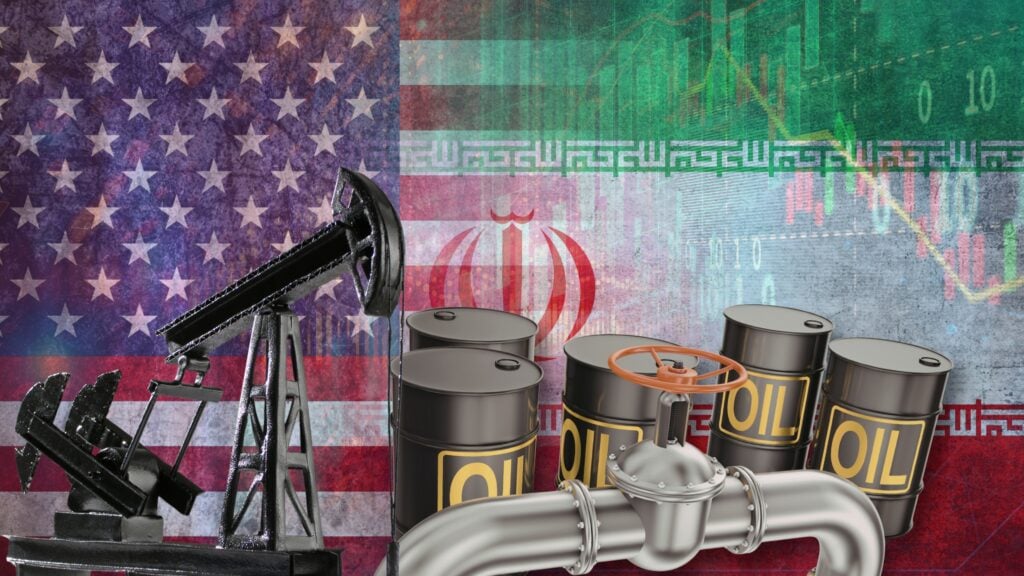
The U.S. Energy Department has unveiled plans to loan as much as 10 million barrels of crude oil from its Strategic Petroleum Reserve (SPR) located in Bryan Mound.
The oil will be loaned to companies, which will then return it with additional barrels as a premium. The Energy Department assistant secretary of hydrocarbons, Kyle Haustveit, stated that this approach would stabilize markets “at no cost to American taxpayers.”
As per Goldman Sachs, a 400 million barrel release, even at a record pace of 2–2.5 million barrels per day, would still leave a supply shortfall of over 10 million barrels daily while the Strait is closed.
 finance.yahoo.com
The oil will be loaned to companies, which will then return it with additional barrels as a premium. The Energy Department assistant secretary of hydrocarbons, Kyle Haustveit, stated that this approach would stabilize markets “at no cost to American taxpayers.”
As per Goldman Sachs, a 400 million barrel release, even at a record pace of 2–2.5 million barrels per day, would still leave a supply shortfall of over 10 million barrels daily while the Strait is closed.
US To Loan 10 Million Barrels Of Oil From Strategic Reserve Amid Iran War Supply Crunch
The U.S. Energy Department has unveiled plans to loan as much as 10 million barrels of crude oil from its Strategic Petroleum Reserve (SPR) located in Bryan Mound. The department is set to accept proposals from interested companies until 11 a.m. Central Time on April 6. This initiative is a part...
finance.yahoo.com
- Joined
- Jan 23, 2021
- Messages
- 18,625
- Reaction score
- 113,715
- Joined
- Jan 23, 2021
- Messages
- 18,625
- Reaction score
- 113,715
Similar threads

- Replies
- 45
- Views
- 15K

- Replies
- 11
- Views
- 2K
- Replies
- 7
- Views
- 5K


Guardians Monthly Goal

Goal Reached! We hit our target of 75 new Guardians!
New stretch goal: 100!
Our goal for the month is 75 new Guardians members to sign up. Have you been thinking about becoming a member?
Click here to find out how!


Online statistics
- Members online
- 97
- Guests online
- 1,904
- Total visitors
- 2,001
Totals may include hidden visitors.
Forum statistics
Community Rules
-
Be CivilTreat all members with respect. No personal attacks, harassment, or inflammatory language.
-
Victim FriendlyAlways show respect for victims and their families. No victim blaming or insensitive speculation.
-
Fact-based SourcingProvide credible sources for claims. Distinguish between verified facts and personal theories.
-
Social Media UseDo not post direct links to personal social media profiles of private individuals.
-
Copyright and PaywallsDo not copy full articles. Summarize and link to the original source instead.
-
Privacy and Personal InformationDo not post personal information such as addresses, phone numbers, or workplaces.
-
Registered Sex-OffendersDo not name or speculate about RSOs unless officially named in connection to a case.
-
Stay On TopicKeep discussions relevant to the case or topic at hand. Avoid off-topic tangents.
-
Accounts, Moderation, and DisputesOne account per person. Contact moderators privately for disputes or concerns.
-
Solicitation and FundraisingNo solicitation, fundraising, or promotion of personal ventures without approval.