

So, goodbye NATO, hello WW3. Peachy.
Trump says he is willing to 'do it the hard way' to gain control of Greenland
Donald Trump told reporters that if the US does not acquire Greenland, Russia or China will take over it.www.yahoo.com
ITV News
Trump says US will act on Greenland 'whether they like it or not'



You are using an out of date browser. It may not display this or other websites correctly.
You should upgrade or use an alternative browser.
You should upgrade or use an alternative browser.
US threatens to annex Greenland - 2025/2026
- Thread starter Snoopster
- Start date

I don't believe Trump's claim about China/Russia having any desire to acquire Greenland. I very much doubt either world power would start a war with the US over Greenland.So, goodbye NATO, hello WW3. Peachy.
JMO
I don't believe Trump's claim about China/Russia having any desire to acquire Greenland. I very much doubt either world power would start a war with the US over Greenland.
JMO
I do not think the rest of the NATO will be sitting on their butts and twiddling their thumbs when the US annexes the land formally belonging to one of them. None of these cpuntries has any interest in letting the US do that.


- Joined
- May 24, 2012
- Messages
- 16,884
- Reaction score
- 118,593

- Joined
- Jan 22, 2016
- Messages
- 5,137
- Reaction score
- 25,499
I'm not so sure about neither country having the desire to do so, but whether or not they would make a blatant bid is another matter.I don't believe Trump's claim about China/Russia having any desire to acquire Greenland. I very much doubt either world power would start a war with the US over Greenland.
JMO
Would Russia like to station missiles and nukes much closer to major US cities? Very likely if it could be achieved, and if there's one thing Europe has been finding out about Russia in recent years it's just how covert and constant their sabotage against other countries is. The number of undersea data cables damaged in the Baltic Sea is evidence of that. It would be entirely within the mindset of Putin to seek to covertly establish small bases on Greenland for spying and infiltration purposes.
China? China depends on global trade to effectively bleed the West dry and destroy local economic capabilities elsewhere. For trade it is dependent on being able to get its goods to their end markets and currently that involves passage through the Panama and Suez canals or around either the Cape of Good Hope or Cape Horn. The two canals could be closed to their trade, leaving only two much longer (and more expensive) routes, and in the case of Cape Horn one of the most dangerous stretches of ocean on the planet. Opening up and controlling a fifth route via the north pole would therefore be beneficial to them.
In terms of Greenland's mineral wealth: it doesn't need to be mined to be of strategic importance so long as you prevent the other bugger from being able to do so.
I agree, they don't want to let the US do it. Just like they didn't want to let Russia invade Eastern Ukraine, or let Trump impose tariffs that undermine their economies.I do not think the rest of the NATO will be sitting on their butts and twiddling their thumbs when the US annexes the land formally belonging to one of them. None of these cpuntries has any interest in letting the US do that.
Just like I don't want to let it rain on my parade.
JMO


- Joined
- Aug 24, 2018
- Messages
- 1,841
- Reaction score
- 13,739
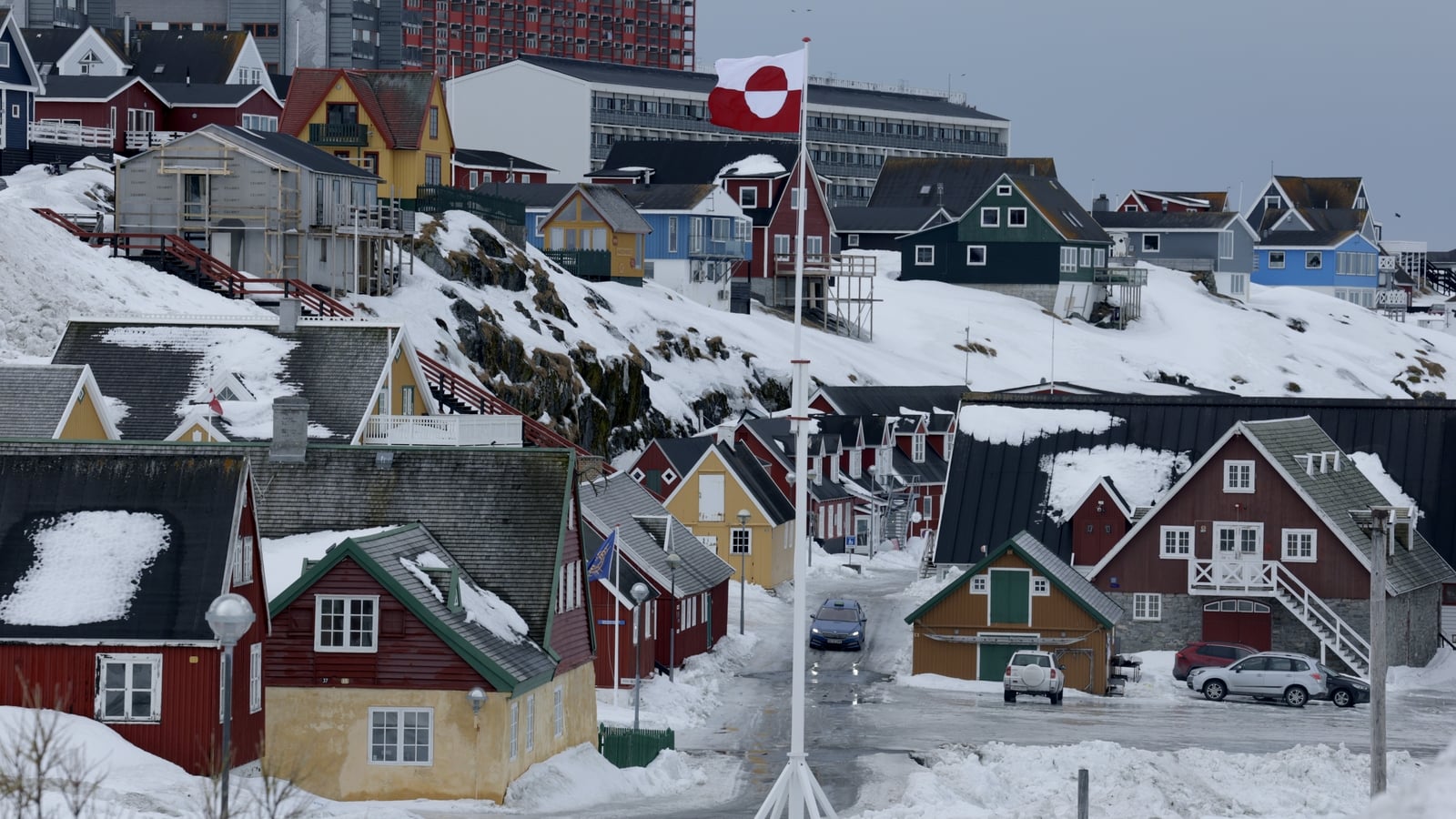
'We will not be Americans', says Greenland's parliament after Trump threat
All five political parties in Greenland's parliament have issued a rare joint statement rejecting US President Donald Trump's threats to take control of the Arctic island.
"We will not be Americans, we will not be Danes, we are Greenlanders," the leaders declared in a statement released last night.
The five party leaders, including Prime Minister Jens Frederik Nielsen, said they "strongly oppose" any US takeover of Greenland and condemned recent American statements as "extremely disrespectful".
"No other country can meddle in this. We must decide our country's future ourselves - without pressure to make a hasty decision, without procrastination, and without interference from other countries," they said.
The unity is particularly significant as it includes Pele Broberg, the leader of opposition party Naleraq, which has been the most open to closer ties with Washington.
Just days ago, Mr Broberg called for Greenland to bypass Denmark and negotiate directly with the US.
The statement emphasises that Greenland's future "must be decided by the Greenlandic people themselves" and calls for respect for "international law and the right to self-determination"...
 www.rte.ie
All five political parties in Greenland's parliament have issued a rare joint statement rejecting US President Donald Trump's threats to take control of the Arctic island.
"We will not be Americans, we will not be Danes, we are Greenlanders," the leaders declared in a statement released last night.
The five party leaders, including Prime Minister Jens Frederik Nielsen, said they "strongly oppose" any US takeover of Greenland and condemned recent American statements as "extremely disrespectful".
"No other country can meddle in this. We must decide our country's future ourselves - without pressure to make a hasty decision, without procrastination, and without interference from other countries," they said.
The unity is particularly significant as it includes Pele Broberg, the leader of opposition party Naleraq, which has been the most open to closer ties with Washington.
Just days ago, Mr Broberg called for Greenland to bypass Denmark and negotiate directly with the US.
The statement emphasises that Greenland's future "must be decided by the Greenlandic people themselves" and calls for respect for "international law and the right to self-determination"...
'We will not be Americans', Greenland parties tell Trump
All five political parties in Greenland's parliament have issued a rare joint statement rejecting US President Donald Trump's threats to take control of the Arctic island.

- Joined
- Oct 1, 2012
- Messages
- 4,446
- Reaction score
- 37,574
I would tweak #1 - Can the oligarchs directly and instantly make money......wealth flowing into oligarchs hands" (and Trump's personally of course). Because none of this is about what is good for the US obviously.But, IMO, the only questions that matter are
1. Can the US directly and instantly make money from it? Resorts, oil, critical minerals? There must be vast wealth flowing into the US economy, allowing tax cuts.
2. will it stop evil people from killing young Americans with fentanyl?
3. Will it result in a Nobel Prize?
JMO
- Joined
- Jan 22, 2016
- Messages
- 5,137
- Reaction score
- 25,499
The US mothballed all of its Greenland bases at the end of the Cold War. If the issue really was one of security then it could or should open up negotiations with Denmark to re-open some of those bases. That doesn't require a transfer of sovereignty.I agree, they don't want to let the US do it. Just like they didn't want to let Russia invade Eastern Ukraine, or let Trump impose tariffs that undermine their economies.
Just like I don't want to let it rain on my parade.
JMO
Unfortunately almost all of the NATO countries have been stupidly complacent over defence since the end of the Cold War and it has left them very vulnerable now to Putin's Russia. It's understandable that the US has been increasingly exasperated with them.
I agree, they don't want to let the US do it. Just like they didn't want to let Russia invade Eastern Ukraine,
Ukraine is not a NATO member, mind you. Denmark is.
ETA: American stance towards Putin is a big part of the NATO reaction towards the Russian invasion on Ukraine. Do not forget that.
or let Trump impose tariffs that undermine their economies.
Unlike Trump we respect the sovereignity of other countries, so he is free to impose in his own country whatever tariffs he fancies. Also, Trump's tariffs undermine mostly American economy.
Just like I don't want to let it rain on my parade.
JMO
Trump, and with him many Americans, grossly overestimate the power America has in the world. They might be going for one very unpleasant reality call.
MOO, of course.
Last edited:


- Joined
- Feb 5, 2020
- Messages
- 525
- Reaction score
- 6,156
You wouldn't have thought WW1 would have started over an archduke but it did.I don't believe Trump's claim about China/Russia having any desire to acquire Greenland. I very much doubt either world power would start a war with the US over Greenland.
JMO
- Joined
- Jun 6, 2019
- Messages
- 4,206
- Reaction score
- 36,434

Greenland is Europe’s strategic blind spot—and its responsibility
If Europe wants to ensure that no one can do to Greenland what the United States did in Venezuela, then it must stop relying on rules alone.
 www.atlanticcouncil.org
A Europe that treats Greenland as central to its own security, rather than as a liability to be explained away, can shift the Trump administration’s fixation on acquiring Greenland toward cooperating on Greenland’s security.
Greenland is not for sale. But neither should it be left exposed to a power vacuum. If Europe wants to ensure that no one can do to Greenland what the United States did in Venezuela, then it must stop relying on rules alone and start building the strategic reality that makes coercion unthinkable.

I know that the Greenlanders really want.That might work. The party leader Jens-Friederik Nielsen wants more business to finance Greenland's welfare, and Trump is likely to use this angle to achieve his goals. I don't believe the citizens want this, but I can see how he could persuade their government.
The Greenlanders clearly stated that what they want is the ability to control their own future as Greenlanders.
This would mean deciding their future on their own, not want Trump wants, not what other people expect them to want
IMO, those were the days of a crotchetly old Austrian Emperor, uncle of the archduke.You wouldn't have thought WW1 would have started over an archduke but it did.
These are the days of professional bureacrats and policy wonks, whose sabres consist of UN resolutions.
Everyone will just stall and wait for next US election cycle.
IMO, those were the days of a crotchetly old Austrian Emperor, uncle of the archduke.
Austria did not ignite the world war singlehandedly. And in 1914 old Franz Josef was already heavily ill with dementia, while Austria was run by professional bureaucrats.
These are the days of professional bureacrats and policy wonks, whose sabres consist of UN resolutions.
Everyone will just stall and wait for next US election cycle.
At this point most of the world is deeply afraid the next election cycle won't happen.
D
Deleted member 117884
Guest
snippedAt this point most of the world is deeply afraid the next election cycle won't happen.
From summer 2024, bbm:
Trump also urged Christians to turn out for him ahead of Election Day, calling it the "most important election ever." He added that if elected, Christian-related concerns will be "fixed" so much so that they would no longer need to be politically engaged.
"You won’t have to do it anymore. Four more years, you know what? It’ll be fixed, it’ll be fine. You won’t have to vote anymore, my beautiful Christians," he said.

- Joined
- Jan 17, 2004
- Messages
- 44,301
- Reaction score
- 245,913
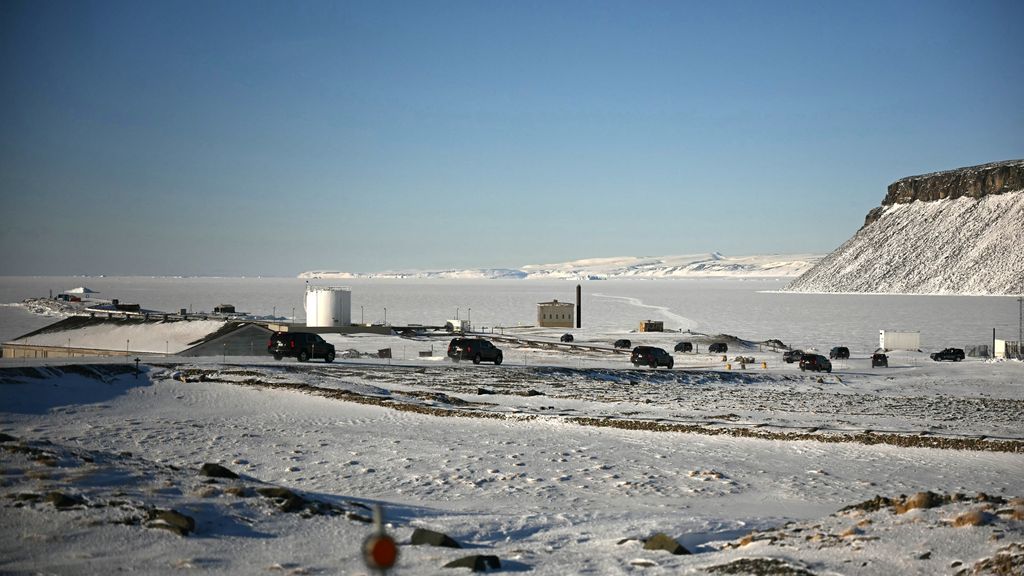
There's a new route on the Arctic Shipping Lane map: the Seabridge Route, connecting the Hudson Bay to Russia.
Why does the US want Greenland?
1. "Greenland is primarily important to the Americans for its raw materials ... uranium, only found in the ground in a few countries ... critical raw materials important for the production of military goods
...
"Because countries can use rare earth metals as leverage during conflicts, Europe wants to be able to take care of itself."
...
Denmark and Greenland aren't opposed to American mining ... want prior agreements to ensure it's done safely and to prevent Greenland residents from becoming ill.
2. ... shipping routes between different continents.
3. "How big do you want to appear on the world map?'" With the addition of Greenland, the US would gain 2,166,000 square kilometers.

 nos.nl
Why does the US want Greenland?
1. "Greenland is primarily important to the Americans for its raw materials ... uranium, only found in the ground in a few countries ... critical raw materials important for the production of military goods
...
"Because countries can use rare earth metals as leverage during conflicts, Europe wants to be able to take care of itself."
...
Denmark and Greenland aren't opposed to American mining ... want prior agreements to ensure it's done safely and to prevent Greenland residents from becoming ill.
2. ... shipping routes between different continents.
3. "How big do you want to appear on the world map?'" With the addition of Greenland, the US would gain 2,166,000 square kilometers.
Vijf vragen over Groenland en waarom de VS het wil hebben
In vijf vragen en antwoorden leggen we uit of het de Amerikanen echt om de strategische ligging van het eiland gaat of dat de grondstoffen die daar zijn een grotere rol spelen.
nos.nl
- Joined
- Jan 17, 2004
- Messages
- 44,301
- Reaction score
- 245,913
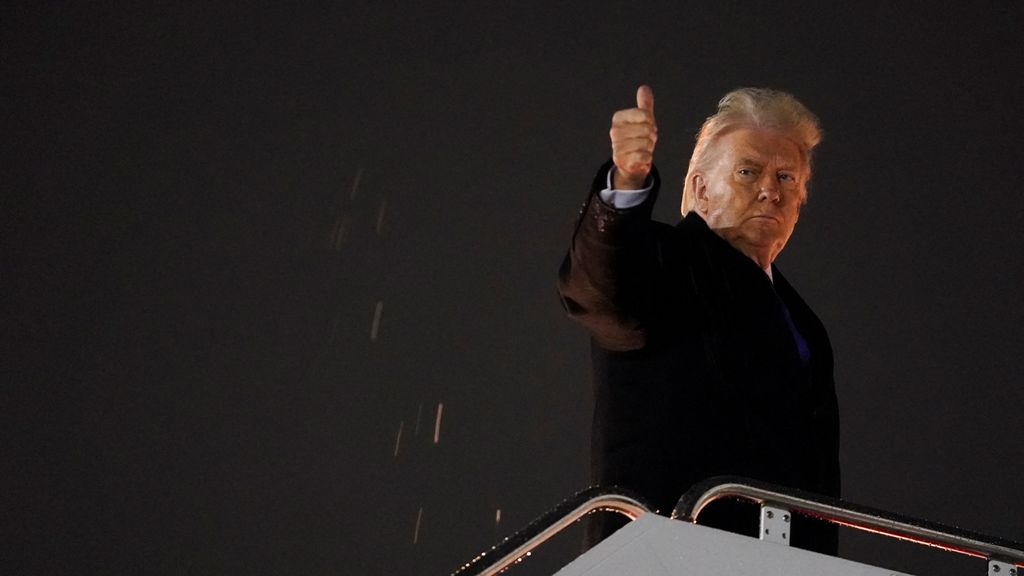
What strange remarks from the US government! The US government announced that it does not want Russia as a neighbour, therefore they must seize Greenland ... but the US is already a neighbour of Russia.
"Trump further stated that if the US does nothing, Russia or China will take over Greenland. "And we don't want Russia or China as neighbors." Incidentally, Russia is a neighbor of the US: the US state of Alaska and the easternmost tip of Russia are only a few dozen kilometers apart.
...
According to Trump, Greenland is "swarming" with Chinese and Russian warships, a claim for which there is no evidence.
...
Trump called himself "a big fan of Denmark," but he also said "that just because you arrived by boat 500 years ago doesn't mean you own the country."
 nos.nl
"Trump further stated that if the US does nothing, Russia or China will take over Greenland. "And we don't want Russia or China as neighbors." Incidentally, Russia is a neighbor of the US: the US state of Alaska and the easternmost tip of Russia are only a few dozen kilometers apart.
...
According to Trump, Greenland is "swarming" with Chinese and Russian warships, a claim for which there is no evidence.
...
Trump called himself "a big fan of Denmark," but he also said "that just because you arrived by boat 500 years ago doesn't mean you own the country."
Trump: Groenland wordt Amerikaans, 'of ze nou willen of niet'
Al sinds zijn tweede termijn begon, bijna een jaar geleden, heeft Trump erop gehamerd dat het gigantische, dunbevolkte eiland in de Atlantische Oceaan moet worden ingelijfd door de VS.
nos.nl
- Joined
- Aug 24, 2018
- Messages
- 1,841
- Reaction score
- 13,739
Trump's Greenland confession exposes his real motives
... Asked why he wanted to take over the territory, Mr Trump was remarkably candid.
"Ownership is very important," he said.
"Because that's what I feel is psychologically needed for success."
Those, of course, are extraordinary comments - not least because Mr Trump acknowledged that, under America's existing 1951 treaty with Denmark, the US already has the right to establish military bases in Greenland.
His country’s security needs are already met. But he apparently needs ownership - not for strategic reasons, but for psychological ones.
When pressed on whether Greenland or NATO mattered more, Mr Trump said simply: "It may be a choice."
This confirms what his advisors have been signalling all week.
Stephen Miller, his deputy chief of staff, declared that America should "conduct itself as a superpower" - by which he means demonstrating power through force.
This isn’t about specific threats or interests. Rather, it’s about power assertion as an end in itself.
Mr Miller has openly dismissed what he calls "international niceties" - the treaties and multilateral frameworks that have governed relations since World War II.
Last week’s seizure of Venezuelan President Nicolás Maduro wasn't just about Venezuela.
It was a proof of concept - demonstrating that the US could defy international law without immediate consequences.
For the Trump administration, Venezuela offered something valuable: a chance to test the limits of American power against a target where the costs seemed manageable.
Mr Maduro was an international pariah, so the potential blowback appeared limited.
But if Venezuela was low-risk theatre, Greenland would have immediate, catastrophic consequences.
This isn’t about defying international norms in a vacuum - it’s about threatening a NATO ally, which would trigger the collapse of the Western security architecture that’s existed since 1945...
 www.rte.ie
... Asked why he wanted to take over the territory, Mr Trump was remarkably candid.
"Ownership is very important," he said.
"Because that's what I feel is psychologically needed for success."
Those, of course, are extraordinary comments - not least because Mr Trump acknowledged that, under America's existing 1951 treaty with Denmark, the US already has the right to establish military bases in Greenland.
His country’s security needs are already met. But he apparently needs ownership - not for strategic reasons, but for psychological ones.
When pressed on whether Greenland or NATO mattered more, Mr Trump said simply: "It may be a choice."
This confirms what his advisors have been signalling all week.
Stephen Miller, his deputy chief of staff, declared that America should "conduct itself as a superpower" - by which he means demonstrating power through force.
This isn’t about specific threats or interests. Rather, it’s about power assertion as an end in itself.
Mr Miller has openly dismissed what he calls "international niceties" - the treaties and multilateral frameworks that have governed relations since World War II.
Last week’s seizure of Venezuelan President Nicolás Maduro wasn't just about Venezuela.
It was a proof of concept - demonstrating that the US could defy international law without immediate consequences.
For the Trump administration, Venezuela offered something valuable: a chance to test the limits of American power against a target where the costs seemed manageable.
Mr Maduro was an international pariah, so the potential blowback appeared limited.
But if Venezuela was low-risk theatre, Greenland would have immediate, catastrophic consequences.
This isn’t about defying international norms in a vacuum - it’s about threatening a NATO ally, which would trigger the collapse of the Western security architecture that’s existed since 1945...
Trump's Greenland confession exposes his real motives
US President Donald Trump has built his political brand on "telling it like it is" - cutting through diplomatic niceties to say what others won't, writes our Deputy Foreign Editor Edmund Heaphy.
Then take your minions and go back to Europe, Trump. Native Americans will be happy.Trump called himself "a big fan of Denmark," but he also said "that just because you arrived by boat 500 years ago doesn't mean you own the country."
Guardians Monthly Goal

Goal Reached! We hit our target of 75 new Guardians!
New stretch goal: 100!
Our goal for the month is 75 new Guardians members to sign up. Have you been thinking about becoming a member?
Click here to find out how!


Staff online
-
 GhostwheelPyrrhonist
Online statistics
- Members online
- 126
- Guests online
- 2,032
- Total visitors
- 2,158
Totals may include hidden visitors.
Forum statistics
Community Rules
-
Be CivilTreat all members with respect. No personal attacks, harassment, or inflammatory language.
-
Victim FriendlyAlways show respect for victims and their families. No victim blaming or insensitive speculation.
-
Fact-based SourcingProvide credible sources for claims. Distinguish between verified facts and personal theories.
-
Social Media UseDo not post direct links to personal social media profiles of private individuals.
-
Copyright and PaywallsDo not copy full articles. Summarize and link to the original source instead.
-
Privacy and Personal InformationDo not post personal information such as addresses, phone numbers, or workplaces.
-
Registered Sex-OffendersDo not name or speculate about RSOs unless officially named in connection to a case.
-
Stay On TopicKeep discussions relevant to the case or topic at hand. Avoid off-topic tangents.
-
Accounts, Moderation, and DisputesOne account per person. Contact moderators privately for disputes or concerns.
-
Solicitation and FundraisingNo solicitation, fundraising, or promotion of personal ventures without approval.